How climate, geography & resources shaped Iran’s crisis
The Little Ice Age (LIA) lasted from the Medieval Warm Period in the early 14th century until the mid-19th century, when the average global temperature dropped by 2 degrees Celsius. The cooling in this period was largely triggered by volcanic eruptions, which injected sulphur dioxide into the stratosphere, forming sulphate aerosols that reflected sunlight back into space and lowered the earth’s surface temperature for a few years. This was the period when glaciers all over the Northern Hemisphere grew and expanded. During this period, especially in the 17th and 18th centuries, growing agricultural crops became uncertain. Erratic weather prevailed, as some areas faced long droughts while others experienced heavy rains and flooding. Iran faced adversity for a longer period compared to other regions in the Northern Hemisphere.
The Caspian Sea lies along a portion of the northern boundary, the Persian Gulf along the south-western border, and the Gulf of Oman along the southern border of Iran. From east to west in the northern part of the country runs the Alborz mountain range, while the Zagros mountain ranges run close to the south-western coast, and in continuation, the Makran mountain ranges run closer to the southern coast. The area surrounded by the two large mountain ranges in the centre of the country is a rain-shadow region, where agriculture depends on irrigation systems like the famous qanat system of underground wells. The agricultural land in the central region is interspersed with grasslands, where animal herders and their livestock spend a large part of the year. There are extensive rainforests along the Alborz mountain ranges.
Cooling related to volcanic eruptions is not uniform. Oceans cool more slowly than land, leading to variations in climate across the region. During the LIA in the 17th and 18th centuries, the Safavid dynasty was ruling Iran, and the regions that faced drought could not produce enough food for the population. In addition, people faced epidemics, and nearly one-third of the population was wiped out. There was unrest in the country, and the Safavid empire collapsed. After this, the country faced seven decades of internal war, when people like Nadir Shah built large armies and hoarded grains. The country was weakened when the British and Russians intruded in the 19th century.
The qanat system is an intricate network of gently sloping underground tunnels that connect vertical shafts, moving water from aquifers in hillsides to villages and farmlands without pumps. The system relies on gravity, thus requiring no energy and minimising water losses through evaporation. Farmers practised unsustainable agriculture. Ninety per cent of water goes towards irrigating crops, and changing climate patterns could not sustain it. The aquifers were largely emptied. Certainly, climate change has further strained the already vulnerable irrigation framework. Decades of unsustainable use have led to aquifers being fully drained. In such a situation, the earth tends to compress, reducing the capacity of the aquifers. Climate change has amplified the problem people have created. Water concerns have also driven political protests, which Iran has faced on and off over past centuries and decades.
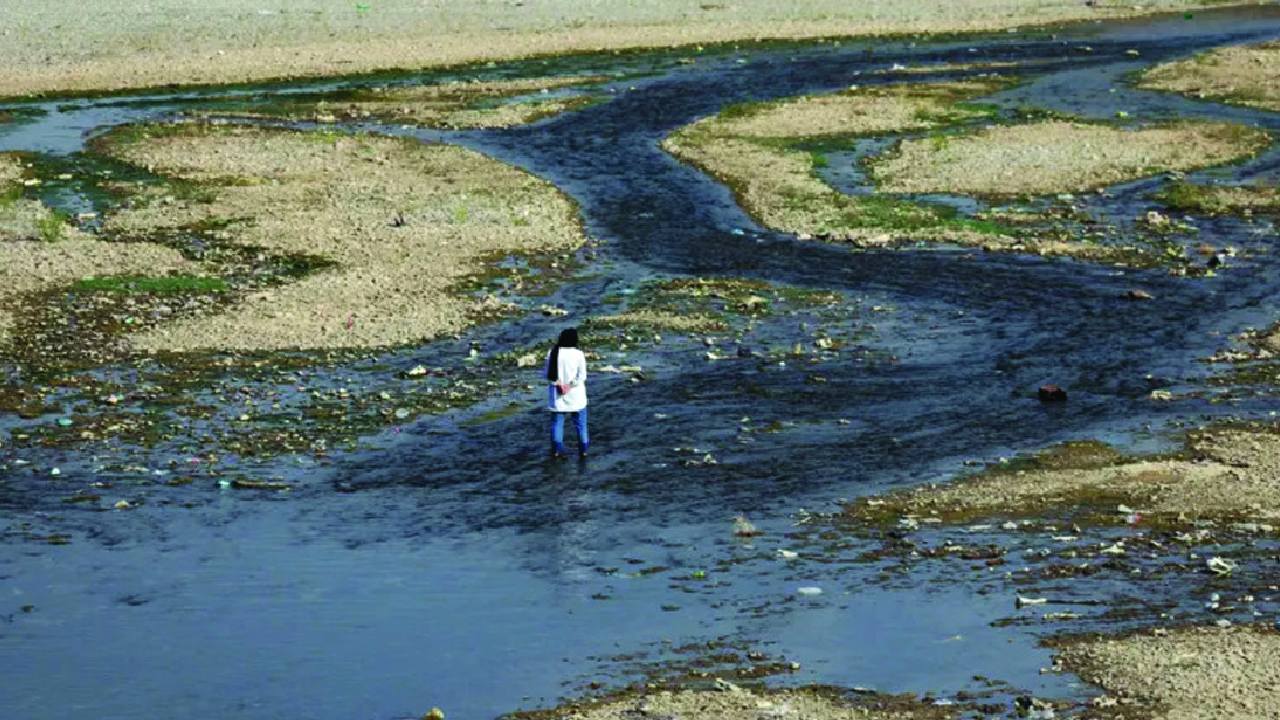
Iran’s oil wealth has been the source of numerous property disputes, often causing heartburn and ill-will among communities, and sometimes generating enormous violence. Before the 2021 ‘Women, Life, Freedom’ protests began, there were many environmental protests, which were widespread. One of the most notable protests was in Isfahan, where the River Zayanderud had gone dry. This was not because of excessive water use for agriculture, but because the Islamic Republic regime had diverted water for agriculture in the central region, overlooking the water requirements of marginalised agriculturists.
Iran is a country with 208 billion barrels of oil reserves, third in global ranking behind Venezuela and Saudi Arabia. As oil is one of the biggest sources of revenue for the country, it has led to corruption in high offices and distorted the country’s politics. Oil reserves were industrialised at the beginning of the 20th century. In 1908, natural gas at a commercial level was also discovered while extracting oil. Foreign oil companies did not install technologies to gather gas, mainly because it was expensive. The management continued discarding the gas, and people held the government headed by Prime Minister Mohammad Mossadegh responsible. In 1953, the Prime Minister was removed in a coup, and Shah Reza Pahlavi took control of the country.
The Shah owned all natural resources and could sell these to foreign investors. Investors and industries needed to build infrastructure to manage oil reserves for production, refining, storage, transport and sale.
People owning properties on the surface were often in conflict with investors who had rights over oil reserves below the surface. Workers in the oil industries also became politically active from the mid-20th century.
Both the Shah’s rule and the post-1979 Islamic Republic constructed massive gas refineries and laid extensive pipelines across the country, despite it being challenging and expensive. Iranians’ confidence grew due to self-sufficiency, as the country underwent massive industrialisation from 1945 to 1975. Gaseous discharge from refineries and industries reduced air quality in the region.
Iranians valued clean air and the natural environment. They were aware of declining air quality in major cities of America, Europe and the Soviet Union, which were industrialising rapidly. This was a period when pollution control laws were not yet in place. The horrific smog of London in the 1950s and 1960s, caused by burning coal and wood for heating, led to many deaths. Poor air quality also killed people in Los Angeles. The topography of Tehran is unfavourable for pollution control. It lies in a mountainous region, where the city sits in a bowl that traps poor-quality air and smog in winter. There was a section favouring industrialisation, as they used fossil fuels, drove cars, and aspired for a better lifestyle and prosperity.
Extensive economic inequality and corruption were responsible for the 1979 revolution and the downfall of the Shah’s regime. The Islamic Republic that came to power based its ideology on welfare schemes for disadvantaged groups and rapidly built natural gas networks in villages and working-class neighbourhoods that were previously neglected. After some positive work in its formative years, the Islamic Republic government also faltered. Corruption became more rampant and wealth inequality grew.
Iran’s foreign conflicts and Western sanctions have cut its economy off from neighbouring countries. Iran’s Revolutionary Guard has come to control exports through smuggling. A small section of Iranian society controls the oil business, leading to wealth inequality and discontent. Present oil output is nearing pre-sanctions levels, with discounted crude offered to Chinese independent refiners. Due to severe strain from inflation, currency collapse, and difficulties repatriating oil revenue, protests continue across the country. US military action in Venezuela may increase buyers’ caution towards sanctioned crude and bring further hardship for Iran.
The writer is former Head of Forest Force, Karnataka and teaches ‘Economics’ in Karnataka Forest Academy; views are personal