Honouring the Soldier beyond service: India’s unfinished duty to its veterans
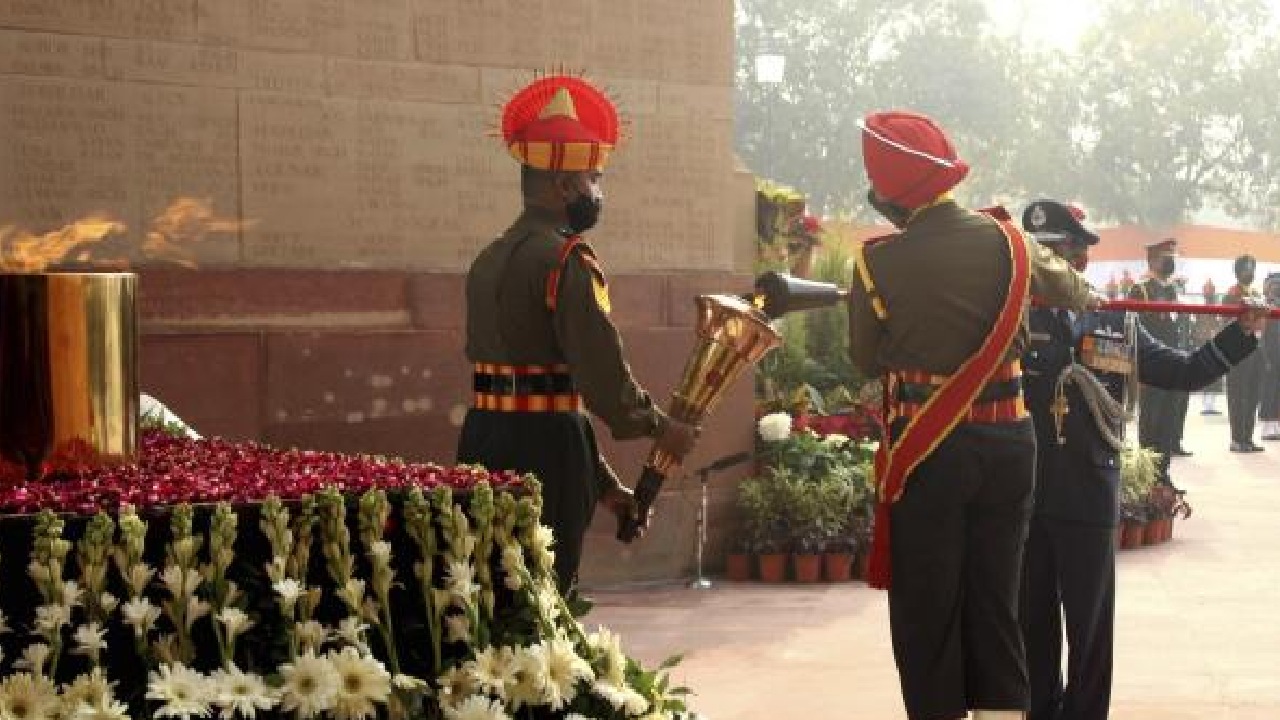
“As we express our gratitude, we must never forget that the highest appreciation is not to utterwords, but to live by them” ‘John F Kennedy’ At the time of our independence the Indian defence forces continued to be commanded by British officers designated as Commander-in Chief, first by General Lockhart till Dec 31, 1947 and later by General Bucher who stayed in office till 14 Jan 1949. General (later Field Marshal) KM Cariappa got the privilege of being the first Indian C-in-C of India from Jan 15, 1949 to Jan 14, 1953. These two dates are commemorated as Army Day and Veterans’ Day respectively. Indian defence forces are pure volunteers known for selfless devotion to the Nation and readiness to make the ultimate sacrifice in the line of duty. Nation must honour their services by looking after their interests post-retirement and by ensuring welfare support to the widows and children of the martyrs.
India has actually done well to establish various organisations and mechanisms to provide required support to the retiring community during transition and after; as also to address their grievances, if any. The intent behind most such measures is laudable yet many of them somehow fall short in delivery!
Important Milestones
Armed Forces Veterans Day was instituted in 2016 and this year we are celebrating the tenth. A lot of attention has been devoted to Veterans’ issues since last so many years but last ten years have seen more focus in this regards. An attempt is made here to list out important milestones in our journey so far to look after the interests of our soldiers once they hang up their boots.
- Resettlement Division was set up under the Department of Defence in 1986.
- Department of Ex-Servicemen Welfare was established in 2004 having the following:-
- Pension Division.
- Resettlement Division.
- Sainik Board consisting of 34 Rajya Sainik Boards and 410 Zila Sainik Boards.
- Directorate General of Resettlement.
- Ex-servicemen’s Contributory Health Scheme under which a total of 427 polyclinics are functioning.
- Armed Forces Tribunal Act, 2007; effected in 2009. “Various pay commissions which have improved considerably the financial health of both in — service and veteran communities.
- One Rank One Pension decision.
- The protocol of sending home the mortal remains and according military funerals to the martyrs established during the Kargil War.
Shortfalls and Unmet Expectations
On one hand it is heartening to go through the above list but on the other hand it is disappointing to observe serious shortfalls. Mostly it is due to the bureaucratic apathy, encouraged by restraint of a disciplined community resigned to suffering at the hands of a callous administration and political treachery.
List of grievances is very long but I will restrict myself to major aspects:
- Armed Forces Tribunals. In addition to the Principal Bench at Delhi, there are 10 regional benches at Chandigarh, Chennai, Guwahati, Jammu, Jabalpur, Jaipur, Kolkata, Kochi, Lucknow and Mumbai. The staffing is inadequate and apart from four, the rest are almost non-functional, not having been posted with judicial and/or administrative members for long. Nearly 28,000 cases were pending in various AFTs by end of 2025 and plight of the affected parties can only be imagined.
- Appeals Against AFT Decisions.Much against the basic tenets of welfare of veterans, govt officials are prone to file appeal after appeal against AFT judgements delivered against them. This persistent line of action delays justice to the affected parties some of whom are fighting for redressal for a decade or more! This pathologically negative attitude of the Ministry has been adversely commented upon by the High Courts. The cases are dragging on and it has become a case of “taareekh parr taareekh.” There seem to be absolutely no political direction to the babudom for removing the legal and procedural road blocks repeatedly being put in place by them.
- Pay Commission Woes. Application of the Fitment Factor and pay bands have been creating confusion and various anomalies have sprouted up. One famous case, decided in favour of veterans but not being implemented by MoD, is of Brigadiers drawing more pension than Major Generals! There are other similar examples wherein a little concern would have resolved problems easily but the confusion remains and will, in all probability, be carried forward to the 8th Pay Commission!
- ECHS. There is a severe shortage of funds cumulatively going up to more than 10,000 crores, as we stand today. Delays in release of funds, administrative restrictions and diversion have created havoc in this otherwise beautiful system which was meant to be cashless and capless. There are shortages of medicines and many hospitals have stopped providing treatment due to a huge backlog of unpaid bills.
- Non Functional Upgrade (NFU). Introduced in 2008 for Group ‘A’ Services, NFU was designed to offset the limited promotional opportunities in rigid bureaucracies. Its benefits are being enjoyed by the Civil Services, the Police Services, the Foreign Service and even the Central Armed Police Forces. However, the defence forces have been kept out of the system in spite of the 7th Pay Commission Chair having recommended their inclusion. In actual fact the pyramid is much steeper in the armed forces, service conditions much tougher and the retirement ages much less; yet the logjam continues!
- Negative Outlook towards Pensions. There is a repeated outcry about rising pension bills. Admittedly it constitutes about 24 per cent of the Defence budget and stands at `1.61 Lakh Crores for the FY 2025-26. It is a big number but it needs to be kept in mind that the agreed terms of engagement cannot be done away with. We have to find additional resources for our defence budget by reprioritisation, stopping the waste and pilferage. Schemes like downsizing, Agniveer and the like are not permanent solutions.
Inherent Bias and Apathy
Something strange is affecting the veteran community in India apparent in the all-pervasive disdain and widespread neglect. It appears that Indian soldier is remembered and honoured only during crises and forgotten thereafter.
- Remember a politician saying not so long ago that soldiers get paid to get killed?
- Remember how the veterans protesting peacefully demanding One Rank One Pension were brutally lathi charged by Delhi police in 2015?
- Remember a retired Colonel and his son getting beaten up by Punjab Police personnel last year and the continued disinclination of police deptt and the State govt to carry out unbiased investigation? Ultimately the case was transferred to CBI under orders of the High Court and now some progress is being seen.
- Remember the case of daughter of a deceased officer being duped of their house which could be restored to her only after intervention by CM of Uttar Pradesh?
The pattern points to an inherent bias against soldiers once their service ends. While this may not be evident on paper, the conduct of the police, bureaucracy and civil administration towards veterans suggests otherwise. Despite some positive initiatives, far more must be done by both society and the government. Chanakya's warning remains relevant: when a soldier must demand his dues, the ruler loses moral authority. It is time we faced this reality.
The writer is a Major General and has been decorated with Sena Medal; views are personal