High fares, weak connectivity cast shadow over Noida Airport launch
The much-awaited Noida International Airport at Jewar is set to begin commercial operations on June 15, marking a major milestone in India’s aviation infrastructure expansion. However, even before the first flight takes off, concerns are growing over whether the airport will be able to attract enough passengers amid higher airfares, limited connectivity and inadequate transport infrastructure.
Positioned as a major alternative to Delhi’s Indira Gandhi International Airport (IGIA), the new airport is expected to ease congestion in the National Capital Region and boost economic development in western Uttar Pradesh. Yet, recent passenger feedback and airfare trends suggest the airport could face a challenging start.
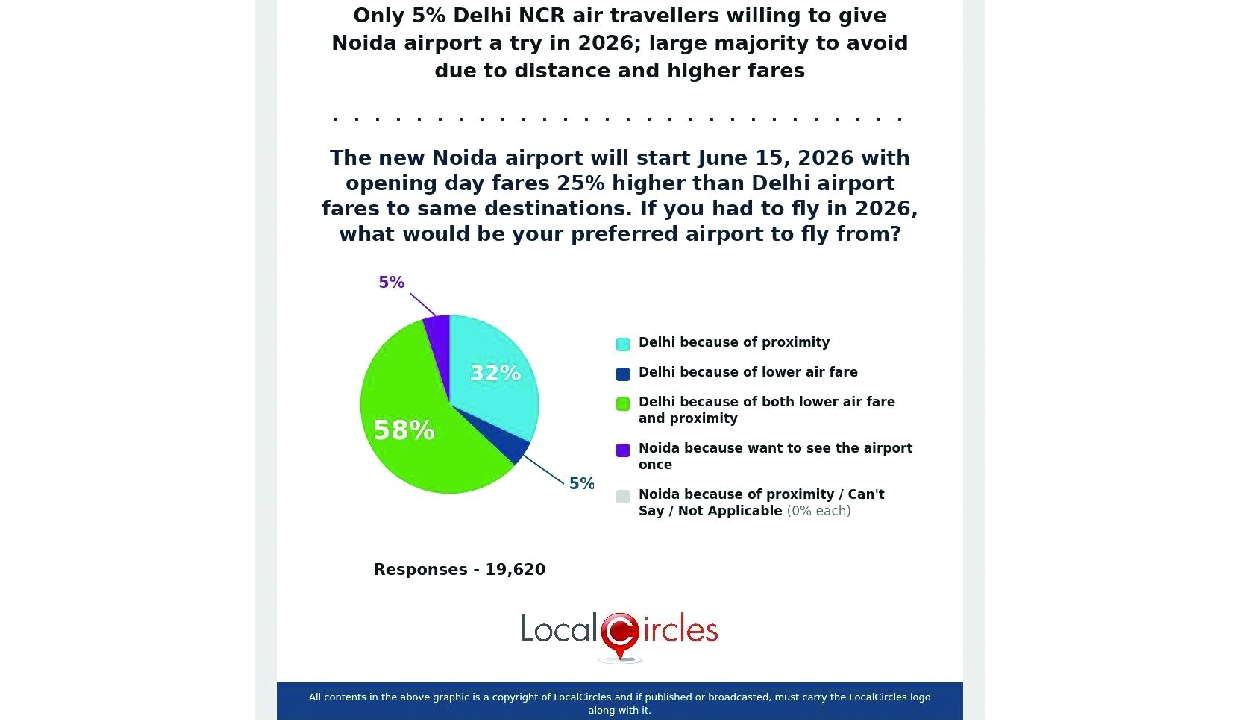
A LocalCircles survey conducted earlier this month among more than 19,000 air travellers across Delhi, Noida, Gurugram, Ghaziabad and Faridabad found that 95 per cent of respondents would still prefer flying from Delhi airport if ticket prices from Noida remain significantly higher. Around 58 per cent cited both lower fares and easier accessibility as the primary reasons for choosing Delhi, while 32 per cent preferred it mainly because of proximity.
Only 5 per cent of respondents expressed willingness to use the Noida airport, largely out of curiosity to experience the newly built facility.
Not a single respondent identified Noida airport as more convenient or better connected than Delhi.
Airfare comparisons have further highlighted the challenge. Indicative fares for travel shortly after launch show flights from Noida to major destinations such as Hyderabad and Kolkata costing considerably more than similar services from Delhi. In some cases, fares were over 20 to 100 per cent higher due to limited competition and fewer non-stop flight options from the new airport.
Airlines have also raised concerns over the airport’s proposed tariff structure. IndiGo and Air India have reportedly informed the Airports Economic Regulatory Authority (AERA) that landing charges and passenger fees at Noida airport are substantially higher than those at Delhi airport. Industry estimates suggest that the higher charges could significantly increase airline operating costs, which may eventually be passed on to passengers.
Apart from pricing concerns, travellers have flagged the long road journey to Jewar as a major inconvenience. With no metro or rapid rail connectivity available at launch, passengers from central and west Delhi, Gurugram and Faridabad may need up to two-and-a-half hours to reach the airport. Concerns over night travel safety and limited transport options have also been raised, especially by women and senior citizens.
The airport is expected to initially operate with limited airline participation and no international flights, reducing flexibility for passengers in case of cancellations or missed connections.
Experts believe that while the airport has long-term potential due to lower aviation fuel taxes in Uttar Pradesh and future expansion plans, immediate success will depend on rationalising airport charges, improving connectivity and attracting more airlines. Without swift corrective measures, India’s newest airport may struggle to achieve the passenger volumes envisioned during its launch phase.