Health for all: Reclaiming the soul of Indian healthcare
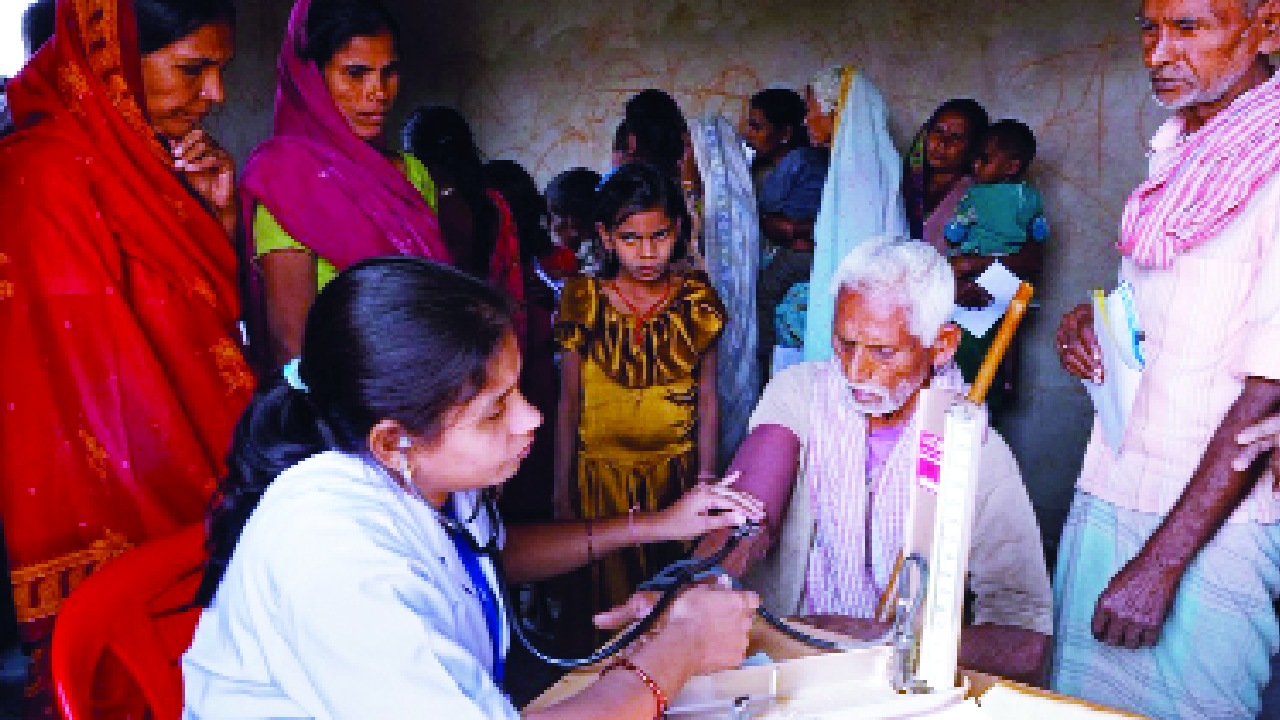
India’s medical institutions, once revered as sanctuaries of healing, are today rapidly degenerating into centres of unchecked commercial exploitation. What was meant to serve humanity has, in many cases, become a profit-driven enterprise, indifferent to human suffering.
The Hippocratic Oath, solemnly taken by every doctor, clearly states: “I will use treatment to help the sick according to my ability and judgment, but never to injure or wrong them.” Yet, in today’s healthcare ecosystem, this sacred pledge is being brazenly violated. Healing has been replaced by billing, and compassion by calculation. Medical colleges and hospitals increasingly function like corporate entities, where patients are viewed not as human beings in distress but as revenue-generating units. Unnecessary diagnostic tests, inflated bills, denial of ethical care, and coercive treatment practices have become disturbingly common.
Even more alarming is the unholy nexus between hospitals and insurance companies, which often results in inflated claims, denial of genuine treatments, and the ruthless exploitation of helpless patients. The poor and middle class suffer the most, stripped of dignity at their most vulnerable moments. Equally dangerous is the widespread circulation of spurious, substandard, and unnecessary medicines, prescribed not for healing but for profit. This amounts to nothing less than a silent public health crime. Regulatory bodies such as the National Accreditation Board for Hospitals (NABH), the National Medical Commission, and State Medical Councils appear to have reduced themselves to mere licensing authorities, frequently turning a blind eye to grave ethical violations. Accreditation has become more procedural than principled, more bureaucratic than moral. It is deeply troubling that the Government of India, along with institutions such as the NABH, Central Consumer Protection Department (CCPD), Indian Medical Council, and the Indian Medical Association, has failed to exercise effective moral and regulatory authority.
Instead of protecting patients, the system often shields powerful medical lobbies. Institutions such as the National Human Rights Commission (NHRC), State Human Rights Commissions (SHRCs), and allied bodies have, in many cases, failed to act decisively. Their silence in the face of blatant injustice amounts to institutional abdication.
The State cannot remain a mute spectator while citizens are reduced to victims within systems meant to protect them. Healthcare is not a commodity; it is a moral obligation and a constitutional responsibility. India urgently needs stringent laws, uncompromising enforcement, and exemplary punishment for those who betray medical ethics. The nation must reclaim the soul of its healthcare system. The time has come to bridge the widening chasm between corporate interests and clinical care. This demands a fundamental shift in how healthcare is governed, centred on three imperatives: legislative accountability, transparent supervision, and decisive state action. Legislative accountability requires the enactment of a national framework that holds hospitals legally and criminally liable for predatory billing and medically unjustified procedures.
Transparent supervision must transform regulatory bodies from passive licensing offices into active guardians of ethics, while incorporating independent civil society oversight to curb the influence of medical lobbies. Decisive state action presupposes that the State can no longer remain a mute spectator to the unholy practices prevailing in the healthcare sector. We must dismantle systems that prioritise ledger entries over human lives. India must urgently reclaim the soul of its healthcare system by restoring human dignity to the centre of medical practice. The nation expects—and deserves—nothing less.
Professor Richard Hay is a former Member of Parliament; views are personal
Leave a Comment
Comments (9)
Prof Richard Hay the former member of Parliament has come out against the rot that has set in tdays health care field, as he righty pointed about the falling standards and ethics it is high time the state should interfere to restore the faith in the health care sector. The spiralling cost of treatments and the lose of faith by the common man has to be addressed by the state and as he rightly said it is high time to reclaim the soul of the healthcare sector by restoring the human diginity to the centre of medical practice
Apt & urgent call to be addressed. Prof. Richard has rightfully explained in depth the present pathetic scenario of our health care system and immediate action required to rectify the same with corrective measures. Let us hope & pray this will be an eye opener to the concerned authorities K.Thomas Alexander
Professor Richard Hay’s critique is a powerful and necessary intervention. He captures a growing public sentiment that the "temples of healing" have, in many instances, been converted into "marketplaces of exploitation." His commentary is a sobering reminder that while India’s medical technology has advanced, the moral infrastructure of the healthcare system has suffered a significant decline. Professor Hay deserves immense credit for his courage and clarity in addressing this crisis. Here is why his stance is so impactful:
This insightful observation comes from the distinguished Professor Richard Hay. The Indian healthcare system has shown considerable promise, with its foundation rooted in rural areas. Furthermore, all Indians can secure medical appointments and receive subsequent treatment promptly, a privilege that remains a distant aspiration in many foreign nations, where obtaining an NHS appointment is quite tricky. However, there is growing concern about the current landscape, as the medical sector increasingly resembles a commercial enterprise that often exploits individuals; consequently, access to advanced treatments is becoming a daunting challenge for the economically disadvantaged. Therefore, the government must take action on this matter to ensure that all citizens have equal access to advanced medical facilities, irrespective of their financial status.
Alarming!!! This detailed report is an eye opener for the State as well as the common man. Hope the Govt machinery will curb this menace as earliest.