Growing menace of online harassment of women

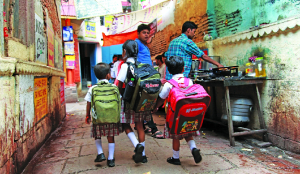
Growing up in Delhi’s slums, I witnessed women endure catcalls and groping on buses, teasing at school gates, and unwanted advances in alleys. We fought back through community patrols and awareness campaigns, achieving small victories. Now those same predators have traded street corners for smartphone screens. Anonymity, instant messaging, and artificial intelligence have created new avenues for harassment, targeting women and girls in their homes, classrooms, and even temple courtyards.
Technology has become a double-edged sword. On one hand, mobile phones and social media connect young women to education, jobs, and networks. On the other, reports show that the majority of online abuse is directed at women. In India, complaints of cybercrimes against women have more than doubled in recent years. Globally, a staggering share of aggressive posts, deepfake images, and abusive messages target women and girls. Many abandon social media altogether due to harassment, widening the digital gender divide.
What makes this wave of violence particularly insidious is its intrusion into the lives of schoolgirls. In Rajasthan’s Beawar district, men befriended teenagers on social media and gifted them smartphones, then recorded meetings to blackmail the girls, sparking outrage. In Lucknow, a university student who met a man on Instagram was gang raped by him and his friends. Such incidents are tragically common: promises of friendship or love often evolve into threats, extortion, or assault. I refuse to accept that keeping girls offline is the solution. Instead, we must create safe digital environments and equip young people to navigate them. The Ladli Foundation, in partnership with Girl Effect, has launched a Technology-Facilitated Gender-Based Violence (TFGBV) programme across 45 government schools in Delhi. Over the coming year, we will reach over 50,000 adolescent girls through sensitisation sessions, interactive workshops, and thematic classroom activities promoting positive online behaviour. Student Impact Clubs will sustain peer-led awareness, while exhibitions and participatory activities will allow students to express their understanding and promote a culture of digital safety and gender sensitivity.
The programme is ambitious: we aim to sensitise 45,000 students using structured modules and expert talks, provide legal literacy on India’s criminal codes, the IT Act, and the POCSO Act, and establish 45 digital safety clubs. More than 180 teachers will be trained to handle TFGBV complaints sensitively, while parents will attend orientation workshops to understand online risks. Each school will also nominate five Digital Safety Ambassadors — 225 peer leaders in total — to champion safe internet behaviour and act as first responders. All successes, challenges, and case studies will be documented to inform future advocacy. Online exploitation rarely stays online. Predators often begin by praising girls’ posts or encouraging glamorous reels, coaxing them to share photos or personal details before threatening exposure. Victims are isolated and lured into in-person meetings under the guise of romance or jobs, sometimes resulting in sexual assault, trafficking, or forced prostitution. Schoolgirls, unprepared for such manipulation, are particularly vulnerable. Many hesitate to report abuse for fear of blame or mobility restrictions, while families often lack the digital awareness to recognise warning signs. We cannot respond by locking girls at home. Digital literacy must be part of school curricula, teaching children to protect data, spot fake profiles, and report abuse. Parents must stop treating technology as taboo and engage in open conversations about online friendships. Communities should form self-help groups and volunteer networks to support victims in filing complaints and removing abusive content. Law enforcement agencies need specialised training and resources to investigate cybercrimes promptly, preserve evidence, and support survivors.
Technology companies also bear responsibility. Social media platforms must prioritise safety by design, with easy reporting mechanisms, stronger account verification, and local-language moderation. Deepfake detection and rapid removal of non-consensual images should be standard. Governments should update laws to specifically address online stalking, grooming, and sextortion, with criminal penalties and swift removal of abusive content.
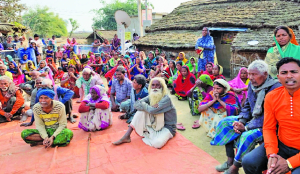
As a social reformer who has dedicated my life to protecting uneducated women, I see this digital battle as an extension of the one we fought on the streets. Through programmes such as Saheli, Sashakt, and Shagun, we have empowered thousands of girls with education, vocational skills, and legal support. Now, with Girl Effect, we extend that empowerment online. The internet should be a platform of opportunity, not oppression. By working together — parents, teachers, police, technology companies, and civil society — we can transform screens from sites of exploitation to spaces of empowerment, ensuring every girl can safely explore the world online and offline.
The writer is Founder and Director of the Ladli Foundation; views are personal