Govt overhauls six-decade-old sugarcane law; seeks comments on draft by May 20
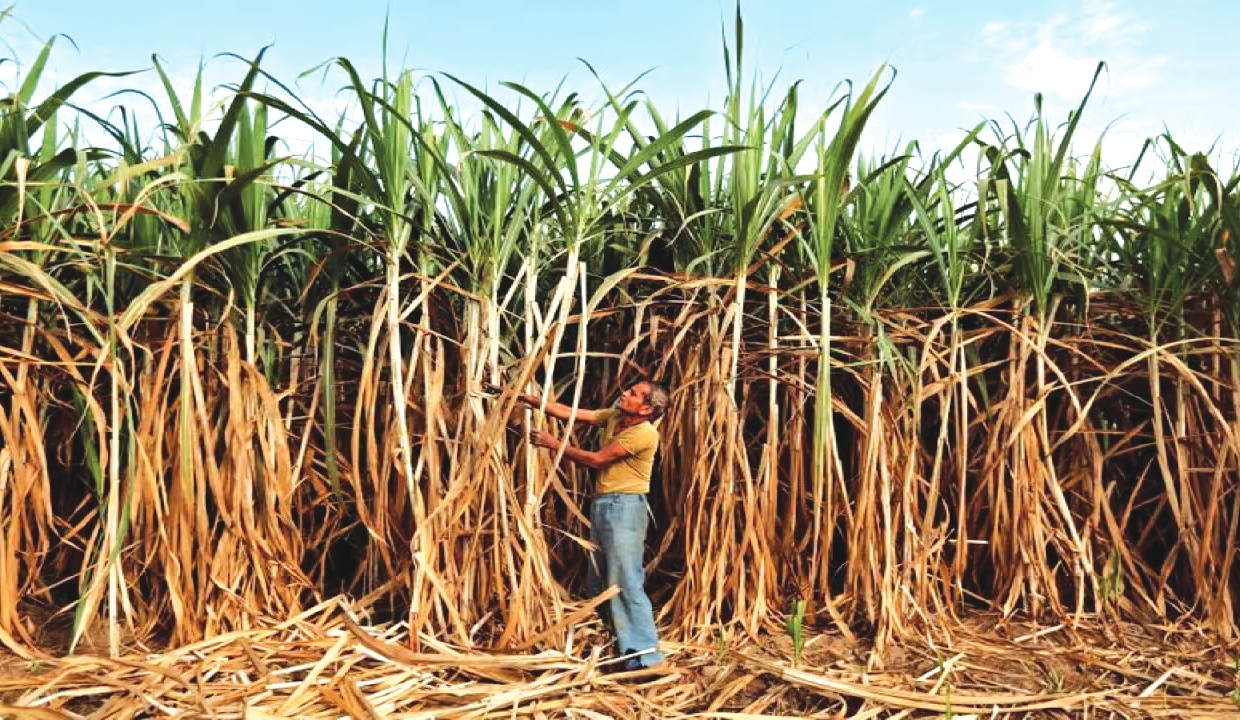
The Centre has proposed replacing the 1966 Sugarcane Control Order with a sweeping new regulatory framework that brings ethanol production, digital compliance, and a formal factory approval regime under a single law for the first time, seeking public comments by May 20.
The Union Food Ministry’s draft Sugarcane (Control) Order 2026 keeps the skeleton of the old law intact — Fair and Remunerative Price rules, cane movement controls, 14-day payment deadline, and 15 per cent annual interest on delayed payments — but brings in an entirely new architecture suited to an industry that has changed beyond recognition since the Nehru era.
The most significant departure from 1966 is the explicit integration of ethanol into the sugarcane regulatory framework. The draft expands the definition of a sugar factory to cover ethanol production from sugarcane juice, syrup, sugar, and molasses.
A concrete conversion formula has been introduced: 600 litres of ethanol will be treated as equivalent to one tonne of sugar for production calculation purposes.
Ethanol-only units that do not crush cane on their own premises are exempted from the performance bank guarantee requirement — a deliberate policy nudge to grow standalone ethanol capacity without loosening controls on integrated sugar-cum-ethanol mills.
Clauses 6A through 6G introduce what the old order never had: a formal IEM-based approval process for new factories, minimum distance rules, performance bank guarantees raised to Rs 2 crore, and hard deadlines for both “effective steps” and commercial production.
The draft also creates, for the first time, a factory lifecycle regime — covering transfer restrictions before commercial production, reinstatement of derecognised projects, and automatic derecognition if a factory remains closed for seven consecutive sugar seasons.
The by-product explanation is also tightened to recognize imputed value from value-added uses such as ethanol, bio-fertilizer, and power generation, while excluding bagasse used only for boiler operation in the main sugar factory.
Each factory will be assigned a plant name and plant code for tracking, and reporting can now be submitted digitally, including through APIs.
Search and seizure provisions have been updated to align with the Bharatiya Nagarik Suraksha Sanhita, 2023.
Prakash Naiknavare, Managing Director of the National Federation of Cooperative Sugar Factories Limited, noted that the 1966 order predates the ethanol economy entirely.
“There is no act that covers ethanol or emission fuels. We are examining the draft and will submit the industry’s collective comments after deliberations,” he told PTI.
All India Sugar Trade Association (AISTA) Chairman Praful Vithalani flagged the tightening of khandsari regulation, noting that, prima facie, the draft brings khandsari units under stricter oversight amid rising diversion of sugar for that purpose.
India is the world’s second-largest sugar producer after Brazil.