The Modi years takeaway is a compounded governance philosophy
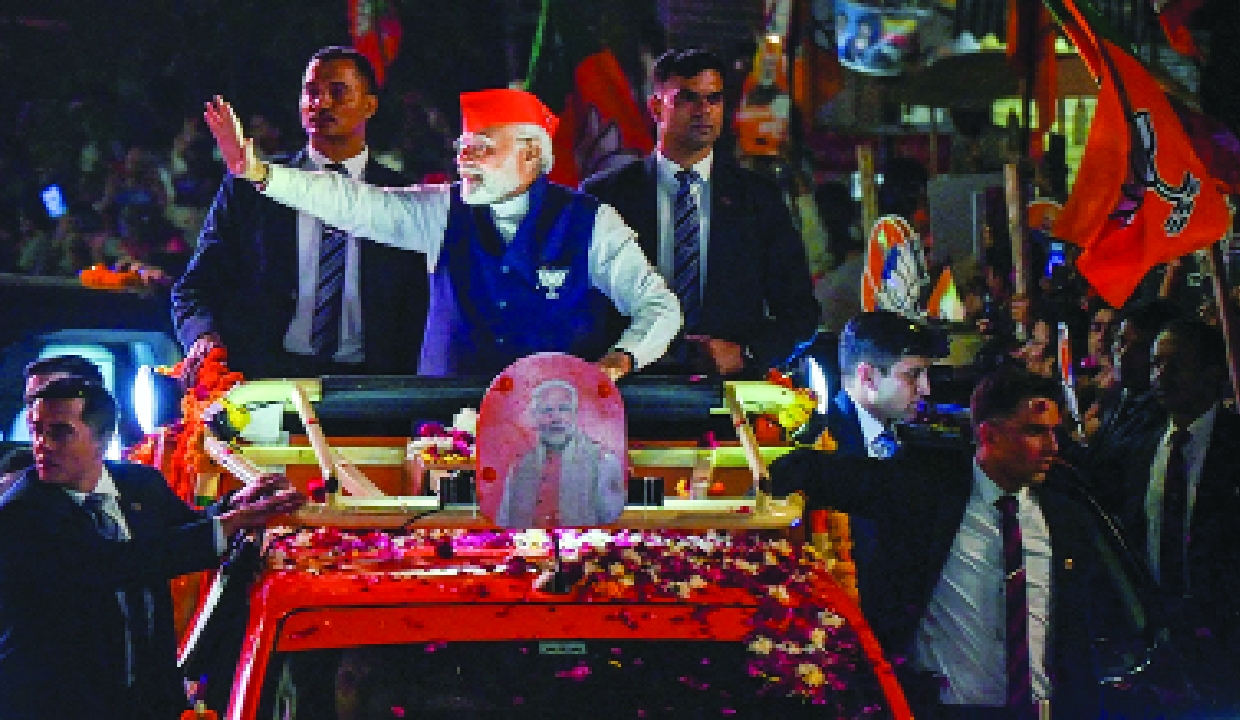
When Prime Minister Narendra Modi was sworn in for a third consecutive term on June 9, 2024, the ceremony attracted a usual pageantry of commentary. The opposition made comparisons to Nehru, questioned the Prime Minister’s mandate, attempted to poke holes in electoral propriety and debated coalition arithmetic. What received less attention was the democratic significance of the moment. India had, for the first time in decades, returned the same leader to office three times in a row. This return had not occurred as a result of the absence of an opposition, but through the persistence of electoral preference.
This is a reality that was and remains one that is worth sitting with. India is not a country that hands out political longevity with ease. Recent elections, fought ferociously across states, are a burning example of this. India has always had a restless electorate, combine this with a now-raucous press, a federal structure that distributes power restrainedly and a democratic culture that has on several occasions punished incumbent leaders who confused being in office with life-long entitlement. What results is a battleground that very few would dare to enter, let alone repeatedly, and with the intention to conquer. For any leader to survive this environment for over a decade, that too while attempting historic, one may even say audacious, structural reforms, warrants a justification that goes beyond just personality or effective communication.
When examined carefully, it is clear that the explanation lies in governance.
Prime Minister Modi’s tenure as India’s leader will historically be characterised by the fact that he led the government to choose a more challenging path, even when it faced the constant temptation of resting on electoral victories and avoiding hazards in order to safeguard political futures. The tendency to give in to such temptations would be classified as a rational political strategy, given that it does not meddle with the status quo. This is, however, also the reason why so many developing countries stay developing for so long.
Thus, what distinguished the past decade in India was the sustained willingness to attempt reforms in domains that had resisted change for generations. These reforms, while argued to be politically profitable in the short term, were timely and essential because the cost of their deferral was becoming near catastrophic. Direct benefit transfers to citizens eliminated layers of intermediaries that had been funnelling public resources for decades. The push for financial inclusion through Jan Dhan accounts brought millions of citizens into the formal economy. The construction of rural sanitation infrastructure at large addressed a public health crisis that India had long acknowledged, consciously ignored and consistently failed to resolve, given the monumental effort that would be required to effect change.
These reforms were not glamorous. They were overwhelmingly domestic and thus did not attract the kind of international attention that other economic reforms, such as liberalisation in 1991, had gained. Their core architecture, however, remains common. These reforms identified foundational failures, sought to build the institutional capacity required to address them and executed these ambitions at a scale that actually resulted in outcomes. The ability to not only foresee a vision, but importantly, to see this vision to its end, whether through delivery or coordinated execution, is a combination that is rarer in governments than most citizens realise.
Prime Minister Modi’s focus on digital governance deserves particular attention, given that it represents the acceptance of the developing world. India’s UPI payments infrastructure and the ‘India Stack’ are models that are now studied by researchers and policymakers across the globe. The Aadhaar biometric identity system, despite all the debates it generated about privacy and exclusion, created a foundational layer that made other key interventions, such as subsidy delivery, welfare targeting and tax compliance, more efficient and streamlined. India thus built a digital public infrastructure that most developed economies are still trying to retrofit into their systems.
Our robust digital public infrastructure is of importance also because it systematically challenged the deeply seated notion that large, complex democracies, struggling with poverty and institutional fragility, cannot execute technologically sophisticated systems at scale. Prime Minister Modi’s vision for India’s digital infrastructure is evidence against that assumption. Through these innovations, possible only with political will, bureaucratic coordination across ministries and sustained investment over years, India finally benefits from a contemporary, technologically adept model of governance that previous administrations shunned as being too grandiose for a country like India.
India’s repositioning on the global stage is another significant reform. The country has shifted from a posture of relative passivity in international affairs to one of strategic calculation, thus balancing sparring countries and challenging international affairs with considerable diplomatic sophistication. Resultantly, India now projects a form of soft power that enhances the idea of India as a model for the Global South. Whether one agrees with the Government’s foreign policy or not, it is unarguable that its approach represents a coherent strategic vision.
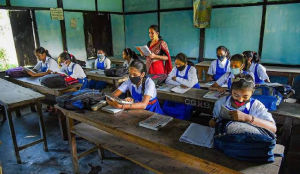
If there are any takeaways from the Prime Minister’s tenure, it is that politics, at its best, is not a job. It is a vocation that demands unfailing commitment to people, ideas and the stubborn willingness to change lives. What separates this vocation from a mere occupation is precisely what is often overlooked in assessments of Prime Ministerial tenure. This is the importance of consistency. The Prime Minister’s governing philosophy and belief that the State’s job is to build systems that deliver and ensure development is one that has compounded over time. This consistency is a thread that runs across the Government’s efforts, whether to reform foreign policy, ensure women’s empowerment, effect infrastructure delivery, carry out education reform or allow financial inclusion to better the livelihoods of marginalised communities.
Longevity in office is not, by itself, a virtue. India has no shortage of leaders who occupied office for extended periods and left behind only decaying institutions, suppressed oppositions and economies that worked for a chosen few. The test is thus not duration, but the transformation that any duration brings about. By that measure, the question to ask of Prime Minister Modi’s time in office until now is whether India emerges from it with stronger institutional capacity, broader economic participation and a more credible position in the world than it entered with?
Any naysayer would be left with little option but to answer in the affirmative. Despite a seemingly uneven record, as is reasonably expected after a decade of complex and often deficient governance in a country of India’s scale and diversity, the Government’s attainment of improved infrastructure, digital inclusion and favourable global positioning, remains undisputed. For a country that spent decades watching its potential outpace its execution, these changes represent a fundamental shift that has altered India’s permanent trajectory.
History will record years. What matters more is who believed in India and who strived to ensure that those years translated into a transformation story.
The writer is Managing Partner at Parinam Law Associates; Views presented are personal.