Life term for Tahir Hussain in Ankit Sharma murder case
Rejecting the death penalty plea, the court says the case falls short of the rarest-of-rare threshold
A Delhi court on Friday sentenced former AAP councillor Tahir Hussain and four others to life imprisonment for the murder of IB officer Ankit Sharma in the 2020 Delhi riots.
The court observed that although case did not fall within the rarest-of-rare category warranting the death penalty, the “manner of the crime was of utmost brutality”. The Delhi Police had sought death penalty for Tahir Hussain and four other accused. The judgment was pronounced in the presence of Hussain and others amid tight security.
Hussain’s family was so present in the court. The courtroom was packed with lawyers and senior Delhi police officials, including Crime Branch’s Joint Commissioner and DCP.
Pronouncing the judgment, Additional Sessions Judge Praveen Singh said, “The savagery did not end with the murder. His body was dragged into a drain nearby as if the hatred was still not satiated.” The judge said the prosecution failed to establish that they had such a violent disposition or criminal propensity that their continued existence, even in prison, would pose a menace to society. “The final test that law requires me to undertake before I conclude that this case invites capital punishment is whether the convicts are beyond redemption and there is no chance of reformation,” the judge said.
“The State has not brought anything on record to establish that any of the convicts has a violent disposition or a propensity towards crime. It has also not been shown that any of the convicts had previously been involved in any violent crime… I find myself unable to agree that the convicts are beyond reformation or have such a fiendish character that their continued existence, even in prison, will be a menace to society,” he added.
The judge also refused to accept arguments advanced by the prosecution during sentencing that Hussain had instigated or led the unlawful assembly by using his residence as an operational base.
“It must be recalled that the prosecution has failed to prove the allegation that Tahir had instigated or let any unlawful assembly. The allegation of Tahir Hussain putting his house as a launchpad or base for riots was neither a part of the charges framed against him, nor was specifically sought to be proved in evidence,” the judge said.
On being asked about his sentence, Hussain said, “Justice may be delayed, but it will not be denied. I will get justice from the High Court. The match was fixed.”
The court further treated the educational background of four of the convicts as a mitigating circumstance. It observed that Qasim, Nazim and Javed were illiterate while Anas had studied only up to class 4, making them more susceptible to misinformation and communal propaganda in the atmosphere prevailing during the riots.
Reacting to the judgement, Delhi law minister Kapil Mishra expressed hope that the sentence would be converted into the death penalty by the Delhi High Court. In a post on X, Mishra wrote, “The cruelty with which Ankit Sharma was killed, stabbed with knives even after death, the body thrown into a drain—this is certainly the ‘Rarest of Rare’. It is hoped that in the High Court, this life imprisonment will be converted to the death penalty.”
Tahir was also fined Rs 1,000 under IPC Section 188, Rs 20,000 each under Sections 153A, 147 and 148, Rs 50,000 under Section 365 and Rs 5 lakh under Section 302, with default sentences prescribed for non-payment.
Hussain’s co-convicts were awarded life imprisonment under Section 302 IPC with a fine of Rs 25,000 each. They were also sentenced to six months under Section 188, three years under Section 153A, two years under Section 147, three years under Section 148 and seven years under Section 365 IPC, along with fines ranging from Rs 1,000 to Rs 10,000 under the respective provisions. All the sentences will run concurrently.
The judge, however, said that the offences had been committed with complete disregard for law and human life and said the convicts must face the full force of law for the remaining offences.
“All the sentences of all the convicts shall run concurrently. Benefit of section 428 Cr.P.C/ 468 BNSS shall be given to the convicts. Out of the aforesaid fine imposed upon the convicts, Rs.5 lakh shall be paid as compensation to the family of the victim”, the judgement said.
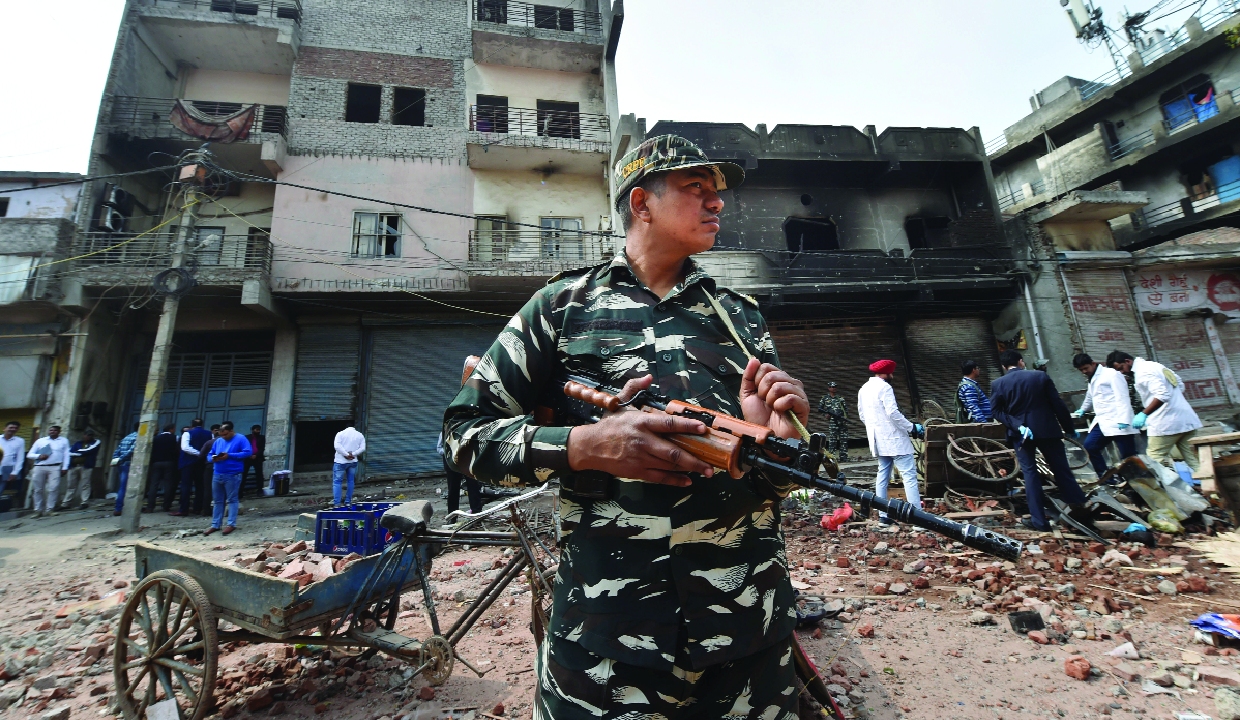
Sharma, 26, IB officer, was dragged by the mob and attacked with knives, sticks, rods and stones before his body was dumped in a drain during the violence that swept through northeast Delhi in February-end. The body with at least 51 knife wounds was found the next day.