“You should not be here”, Trump confronts CNN journalist amid escalating media access row
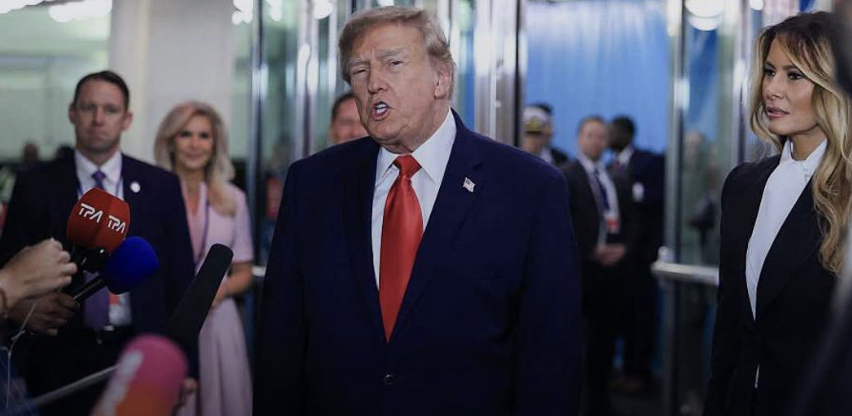
US President Donald Trump confronted CNN journalist Kaitlan Collins at the United Nations on Tuesday, telling her that she “should not be here” as he arrived at the UN headquarters ahead of his address to the General Assembly.
Trump said he was surprised to see CNN covering him, claiming the network had said it would not cover him. Collins later said on air that CNN had made no such statement.
The Trump administration had barred CNN, along with MS NOW and Politico, from White House grounds days earlier and removed CNN from presidential press pool duties. However, CNN was admitted to the UN as regularly credentialed media.
The exchange came amid an escalating dispute between Trump and news organisations whose coverage he has criticised as “fake news”. The three outlets filed a joint lawsuit on Monday, asking a judge to declare the administration's ban unconstitutional.
The White House was given until Tuesday to respond, with a court hearing scheduled for Wednesday afternoon.
Trump later defended the restrictions, saying negative coverage was dangerous for the country. Asked whether he would allow the three outlets back into the White House if the court ruled against the administration, Trump said he probably would because he expected the judge to rule against the White House.
Trump was referring to US District Judge Timothy Kelly, whom he appointed in 2017 and who ordered CNN journalist access restored in a similar case in 2018.
Trump also said he believed the administration had a right to “clean out fake news”. Since announcing the ban on Friday, he has cited “purposely negative stories” and generally referred to “fake news” as justification, without identifying specific reports.
The dispute is part of a wider and long-running conflict between Trump and media organisations he considers unfavourable. He has challenged news outlets through court proceedings and regulatory action, while also criticising individual journalists in person and on social media.
After her exchange with Trump, Collins said CNN had never said it would stop covering the president and that the network would continue to cover him each day.
CNN was scheduled to serve as the network pool for Trump's trip to New York under a system that rotates coverage of certain presidential events among five major networks. However, after the administration removed CNN from the pool, the other participating networks agreed not to replace it and suspended pool coverage until further notice.
Other media organisations also took steps in support of the affected outlets. The Associated Press, along with organisations including The Washington Post and The New York Times, decided not to publish photographs of presidential events on Monday.
The duration of the White House ban and the collective media action remains unclear.
Trump continued to receive extensive coverage at the UN through UNTV, the official broadcast arm of the United Nations, as well as journalists covering other international leaders.
A sign reading “I stand with AP, CNN, MS NOW, Politico” was also seen in a White House workspace.
Robert Thompson, director of Syracuse University's Bleier Centre for Television and Popular Culture, said the lack of continuous coverage could eventually affect the president, although he noted that the dispute was unlikely to deprive audiences of important civic information because people now receive news through multiple channels.
However, Thompson said Trump's remarks describing negative media coverage as “dangerous” raised deeper concerns about press freedoms. (with inputs from Associated Press)