Mehbooba Mufti, Mirwaiz Oppose Waqf Board plan for common sermon
The Jammu and Kashmir Waqf Board’s plan to introduce common themes for Friday sermons (khutbas) across its affiliated mosques, shrines and Jamia Masjids has triggered sharp Opposition in the Union Territory.
Chief Minister Omar Abdullah, PDP president Mehbooba Mufti, and the Muttahida Majlis-e-Ulema (MMU), headed by Mirwaiz Umar Farooq, have rejected the move, calling it unacceptable interference in religious affairs.
The controversy erupted after verbal instructions were given to Maulanas, Muftis, Imams and Khateebs during a recent meeting in Srinagar to deliver a common sermon.
An executive magistrate associated with the Board, Ishtiyaq Mohi-ud-Din, during the meeting reportedly said the Board had issued a directive nearly a month earlier to preachers to deliver a common khutba, or sermon. The Board has also sought suggestions on extending the arrangement to mosques outside its administration.
Board Chairperson Dr Syed Darakhshan Andrabi, a senior BJP leader, announced the constitution of a Core Committee of Muftis, Imams and Khateebs to identify and finalise common topics for Friday sermons and other religious occasions.
Themes were described as focusing on religious awareness, moral values, social harmony, unity, and matters of public and community interest in accordance with Islamic teachings, including issues such as drug abuse, youth problems, family concerns and social evils. Andrabi described the initiative as an effort to bring Imams across sects together to strengthen faith, reform society, uphold humanity and eradicate social evils.
Reacting strongly on Tuesday, Chief Minister Omar Abdullah posted on X: “This is an unacceptable attempt by the BJP to interfere in the religious affairs of Muslims and will not be accepted under any circumstances. The BJP-appointed Chairperson must immediately halt this misplaced attempt to please her masters.”
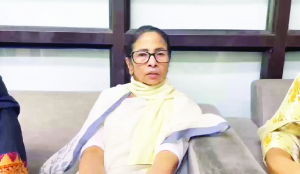
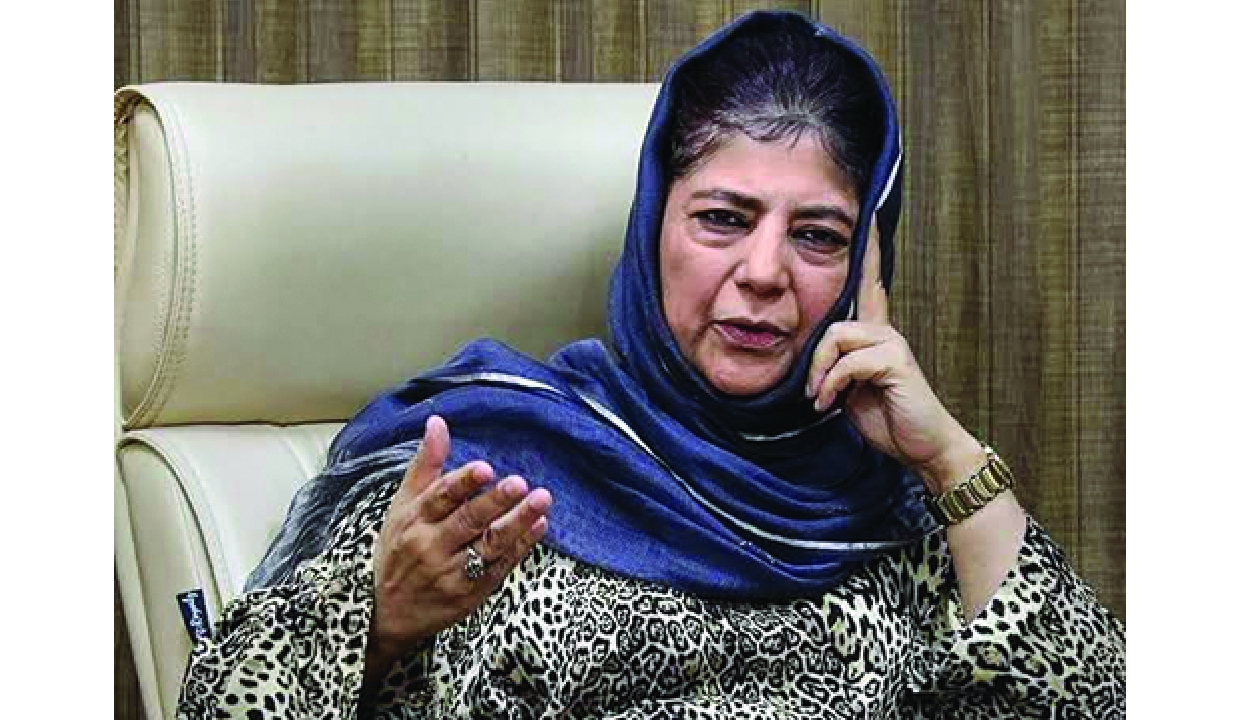
PDP president Mehbooba Mufti expressed strong concern, describing the proposal as interference in Muslim religious practices. She said Friday sermons are primarily shaped by the issues and circumstances confronting a particular region or locality, and imposing a uniform template disregards the diversity of local realities and the role of religious scholars. Mufti accused the BJP of using Jammu and Kashmir as a “laboratory” to test measures that could later be extended elsewhere, compared the push for uniformity to proposals for a Uniform Civil Code, and demanded that the administration of Waqf properties in J&K be transferred to the elected government. She further suggested that any coordination on sermons should be handled by the MMU headed by Mirwaiz Umar Farooq, and emphasised that faith cannot be dictated nor religious institutions subjected to arbitrary control.
The Muttahida Majlis-e-Ulema, an amalgam of leading religious and socio-religious organisations headed by Mirwaiz Umar Farooq, issued a statement rejecting the move. It said: “Even the suggestion that a statutory body could determine or regulate what is to be preached from the Mimbar (pulpit) is ridiculous, and will never be accepted by the Muslims of Jammu and Kashmir.” The body urged the Waqf Board to remain within its administrative responsibility of managing, maintaining and protecting Waqf properties rather than creating controversy.
Amid the backlash, Dr Syed Darakhshan Andrabi addressed a press conference in Srinagar on Tuesday and clarified that the Board has issued no order making uniform Friday sermons mandatory.
“There is no order. There is no order anywhere,” she said. She stressed that neither she nor any Board official could dictate sermon subjects, asserting that independent religious scholars, preachers and sermon-givers would decide. “Even Darakhshan Andrabi cannot take any decision, nor can my officer take any decision. It is the decision of the independent scholars... that we should try to remove the vices in society.” Andrabi said the proposed Core Committee would consist of religious scholars and that she would not be part of it. She highlighted the intent to address pressing social issues affecting youth, such as drugs, suicides, family concerns and mental trauma, and defended the initiative as a constructive effort. Responding to allegations of BJP interference, she said: “Where did BJP interfere? If I am the leader of BJP, I am proud.”