Delhi Police issues notice ordering joint foot patrolling on weekends
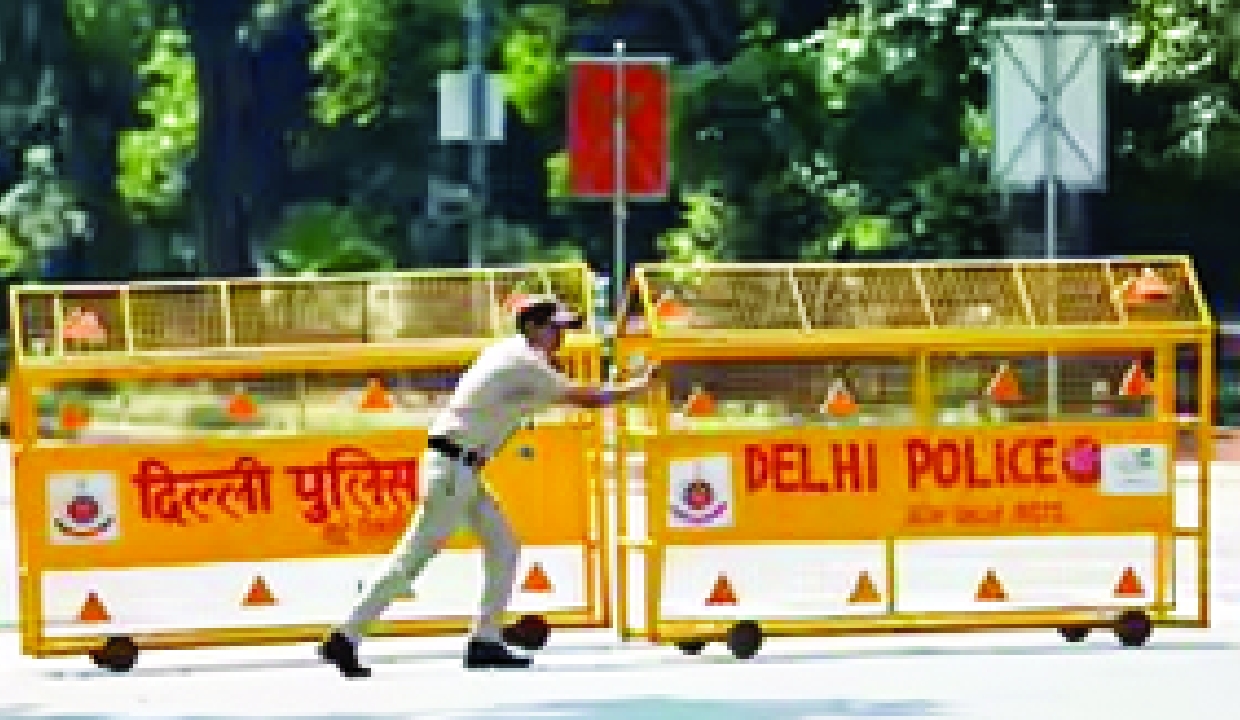
In a move to ease traffic woes and strengthen law and order, Delhi Police has issued a circular mandating joint foot patrolling by district and traffic police personnel on weekends and two additional days every week from 5 pm to 8 pm. According to a circular issued by Delhi Police Commissioner Satish Golchha, district and traffic DCPs (deputy commissioner of police) to carry out joint foot patrols every Saturday and Sunday, and on two additional days each week from 5 pm to 8 pm to improve Delhi police mechanisms and foster better coordination with local communities.
This comes after the Lieutenant Governor TS Sandhu directed Delhi police commissioner issue directions to improve direct public interaction, regulate traffic, remove temporary obstructions and encroachments, and address local issues in a time-bound manner. Sandhu has been emphasising visible, proactive, and interactive policing as the strongest deterrent against crime and traffic violations since he took over.
The circular issued by the Commissioner of Police, Delhi, Satish Golchha, addressed to all Special CPs, Jt. CPs and DCPs, etc., seek to ensure joint foot patrolling by District Police and Traffic Police officers on Saturdays, Sundays and two additional days every week from 1700 hrs to 2000 hrs. To minimise time spent on the ground, the police have been directed to minimise office work and in-house meetings between 5 pm and 8 pm. This three-hour window will now be dedicated entirely to field duties, allowing personnel to focus on patrolling, surveillance and public engagement during peak evening hours.
As per the circular, the District and Traffic Police teams will also conduct dedicated patrols on four days each week to clear road obstructions, remove encroachments that cause traffic snarls, and reduce delays across major corridors and residential areas.
Senior officers have also been tasked with stepping out of their offices to interact directly with Residents’ Welfare Associations (RWAs) and Market Traders’ Associations (MTAs) in their respective jurisdictions. These on-the-ground meetings are intended to collaboratively identify and address local security concerns and recurring traffic issues.
All DCPs shall monitor implementation personally. ACPs shall ensure effective execution in their respective subdivisions. DCP (Traffic) and DCP (District) shall maintain close coordination for joint action on recurring problem areas. Compliance reports shall be submitted through the respective DCPs to the Special CP/Law & Order/Zones and the Special CP/Traffic Management Division. The objective of the exercise shall be to ensure direct field supervision and immediate corrective action on the ground. No office work, meeting, conference, or indoor review should be scheduled during the aforesaid time, as far as possible.
The entire period shall be devoted exclusively to field presence, public interaction, on-spot supervision, and immediate corrective action. District and Traffic teams should identify and remove temporary encroachments and general obstructions. They should address traffic bottlenecks and ensure smooth vehicular movement. They should take appropriate action against illegal parking and misuse of road space. They should inspect vulnerable points, public places, markets, and congestion-prone stretches.
The compliance report, due every Monday, shall be submitted by each district and Traffic to the Special CP/Law & Order/Zones and the Special CP/Traffic Management Division. Photographs and videography of the joint patrolling and action taken shall also be undertaken and compiled, a senior police officer said.
Police sources said the guidelines are part of an ongoing effort to make policing more proactive and citizen-centric. Increased foot presence, they believe, will act as a deterrent to crime, while the focused traffic drives will help improve mobility in a city that continues to grapple with congestion.
The measures come at a time when both safety perceptions and traffic management remain high-priority concerns for Delhi residents. With the new field-centric approach, the Delhi Police expects to register a visible improvement in both domains in the coming weeks. “Any lapse in compliance, a casual approach, non-participation by supervisory officers, or failure to submit reports on time shall be viewed seriously,” said the police official.