From potential to prosperity: Bihar’s unfinished revolution
There is something irresistibly powerful about the soil of Bihar — its social fabric, value systems, and milieu. Bihar has long been a land of revolutions — ideological, political, and social — that have shaped not only its destiny but also that of India. Yet, as the state emerges from one of its most defining assembly elections in decades, the paradox could not be starker: a land blessed with fertile soil, abundant water, a youthful population, and a legacy of scholarship remains trapped in economic morass. The saga of a state infinitely rich in potential yet persistently poor in economic outcomes continues to confound economists and policymakers. Over the past two decades, another conundrum has emerged: Bihar has recorded among the fastest GDP growth rates in the country, yet remains at the bottom of all human development rankings. Swaminathan
Aiyar in 2010 inexplicably dubbed Bihar “India’s miracle state”, but its lived reality still tells a story of deprivation and missed opportunities.
The Economic Morass
With a population of 130 million, Bihar would rank as the world’s tenth-largest country. It has 9 per cent of India’s population, but only 3 per cent of its land mass, and contributes barely 3 per cent to national GDP. With an FY 2024–25 GSDP of Rs9.9 lakh crore and a budget expenditure of Rs3.17 lakh crore, the state remains overwhelmingly dependent on central transfers (74 per cent of its revenue), while its own tax revenue is a meagre Rs59,000 crore.
Nearly a third of Biharis live in poverty, and the state’s per capita income — Rs67,000 — is just a third of the national average. In the country’s youngest state, with a median age of under 20 in 2011, agriculture contributes around 20–25 per cent to GSDP and employs 80 per cent of the workforce, while industry’s share languishes at 18 per cent. Urbanisation, at 13 per cent, stands where the national average was in 1901.
The Mirage of Growth
Between 2005 and 2015, Bihar’s GSDP grew at over 10 per cent annually — second only to Gujarat. Even in recent years, its growth rates have exceeded national averages, touching 13.5 per cent in FY 2024–25. This is particularly salient, as a high growth rate is paramount for expanding the economic pie. Yet, as Arvind Panagariya cautioned, such revival from a low base is merely a reversal to the mean, not an economic “model”. Bihar has been growing, but is it also developing? Roads are being built, but jobs remain scarce; schools have multiplied, yet learning outcomes lag; millions continue to migrate in search of work while local industries stagnate.
This schism between economic expansion and human development defines Bihar’s crisis. It ranks lowest across NITI Aayog’s SDG metrics and has the highest poverty rates. Despite higher spending on health and education, outcomes remain muted. Gross enrolment ratios in schools have improved, but dropout rates in higher education exceed 50 per cent. Health infrastructure is grossly inadequate — only one district hospital was built between 2012 and 2019; the number of referral hospitals remained stagnant at 70 in 2019; and per capita health spending is the lowest among major states.
Industry’s contribution to GSDP remains around 18-20 per cent, versus 31 per cent nationally, and the state contributes just 0.5 per cent to India’s industrial output. Jobless growth threatens to turn Bihar’s demographic dividend into a demographic disaster: over 7 per cent of its population has migrated. If the trend persists, the state risks social unrest, à la the “tunnel effect”, as warned by Albert Hirschman, where growing expectations collide with stagnant opportunities.
The Burden of History
Bihar’s backwardness stems from both historical legacies and contemporary failings. Even a century ago, Bihar (then part of the Bengal Presidency) had among the lowest per capita government expenditures of tax revenue (Mukherji & Mukherji, NIPFP), penalised for its active participation in the national movement. The British-era Zamindari system, coupled with the Permanent Settlement, disincentivised productivity and entrenched inequality. Post-independence, while Zamindari was abolished, the failure to implement land reforms — unlike in West Bengal — remains one of the state’s great unfulfilled missions.
The Freight Equalisation Policy of 1952 further crippled Bihar’s industrial prospects. By ensuring that coal, steel, and cement cost the same nationwide, it nullified undivided Bihar’s locational advantage and favoured coastal states. The state thus suffered from Sachs and Warner’s classic “resource curse”: a strong correlation between abundant natural resources and poor economic growth.
Being a state that has often defied the dominant national political trend, state and central governments have frequently been at ideological odds, resulting in lower per capita central spending — barely half the national average. Even development institutions like NABARD lend more to economically advanced states, owing to commercial viability, deepening Bihar’s capital deficit. Agriculture suffers from low Total Factor Productivity (TFP) and poor labour mobility. Though the sector contributes only a quarter of GSDP, it employs four-fifths of the workforce, making per capita agricultural GDP barely one-tenth of Punjab’s. Bihar’s credit-deposit ratio of 34, against 75 for India as a whole, reflects chronic under-lending to local enterprises. Capital raised in Bihar finances growth in better-off states, perpetuating a vicious cycle. Small industries, accounting for 90 per cent of Bihar’s manufacturing, remain trapped in a low-equilibrium of inefficiency and small scale — fearing loss of incentives and subsidies if they expand, and thus missing out on economies of scale.
Weak entrepreneurial culture and dependence on the mai-baap sarkar further stifle innovation. Migration has become socially normalised, and caste remains an enduring fault line. While visible improvements — roads, electricity, law and order — are evident, “invisible” institutional reforms, industrialisation, and job creation remain elusive.
Bihar’s Economic Revolution
Unlocking agriculture’s latent potential: Bihar’s transitional climatic zone supports a diverse cropping pattern of wet and dry crops. Fertile soil, water availability, and hardworking labour should have made it a basket case of agricultural success. Yet, with an average landholding of only 0.4 hectares, per capita agricultural income stands at a mere Rs7,000. Microfinance access for the 91 per cent of small and marginal farmers remains weak, and public expenditure on agricultural research — critical for yield improvement and scientific cropping — has declined. Still, Bihar’s agricultural growth rate — 4.5-5 per cent annually over the past decade — outpaces the national average, and production of major crops such as maize, rice, and wheat has increased. This has been achieved largely through better roads and power supply, not through focused efforts specific to revitalising the sector. With concerted policy action, Bihar could replicate Madhya Pradesh’s mission-mode success: near-saturation levels of irrigation, ensuring certified seeds and fertilisers, strengthening market linkages, providing assured power supply, and capacity-building for farmers.
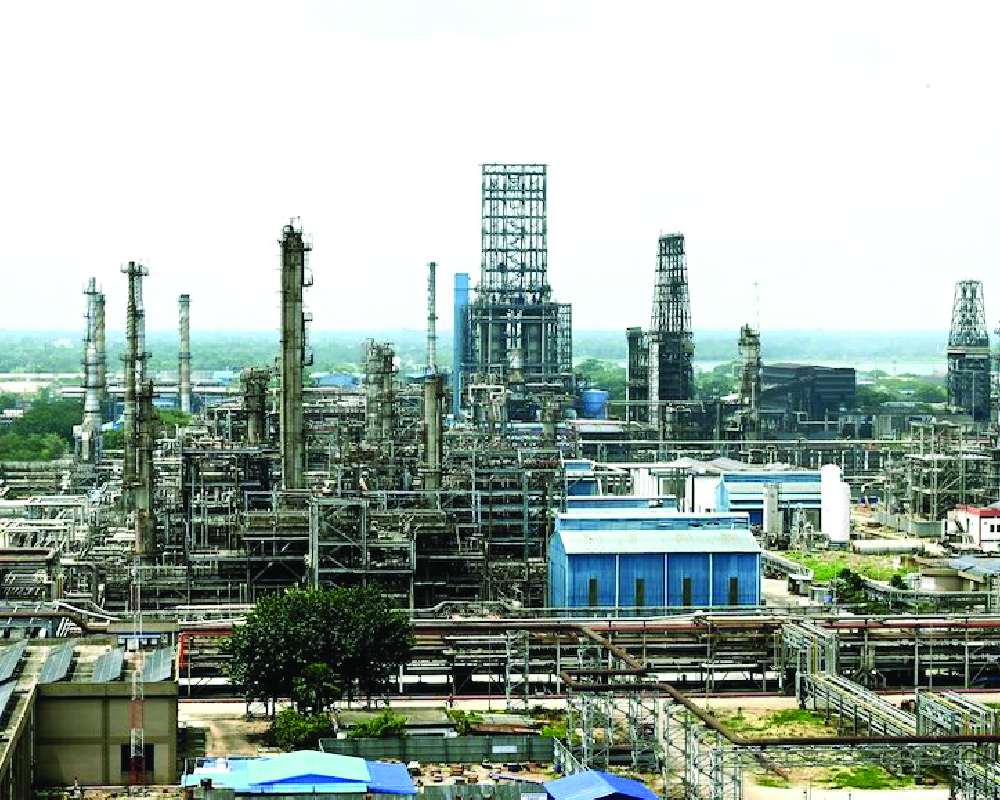
Reviving industry: Bihar has only 3,500 factories — of which 2,900 are operational — employing an average of 40 workers per unit, far below the national average of 77. Average annual wages are Rs1.2 lakh, less than half the national mean. Unsurprisingly, industrial development here is often seen as a bridge too far. Yet opportunities exist. Bihar enjoys proximity to eastern and northern markets, access to mineral-rich neighbours and eastern ports (Kolkata and Haldia), and a large pool of low-cost labour. Pockets of industrial activity such as Dalmianagar (cement and paper), Barauni (petrochemicals), and Patna (light manufacturing) endure even today. Despite the creation of Jharkhand, mineral-specific plans are required for proper exploitation of the mica reserves of Munger, Gaya, and Nawada to turn them into another Giridih, or Rohtas’ dolomite belt, or the bauxite and salt production potential of Munger. Cottage industries — sericulture, vermiculture, glasswork, pottery, and Bihar’s famed Madhubani paintings — can absorb surplus rural labour.
While the sugar mills of South Bihar closed down, the remaining eleven, mostly in West Champaran and Gopalganj, contribute 3.5 per cent of India’s production. Their revival under the Ganna Vikas Yojana through incentives and subsidies for high-yielding seeds, and the mills’ diversification into ethanol, bio-fertilisers, and electricity, show early promise.
The promise of agro-based industries: With a comparative advantage of low-cost labour and abundant produce, agro-industries in Bihar have grown 16.4 per cent annually over the last decade — five times the national rate. Bihar ranks fourth in vegetable and eighth in fruit production, is a top-five mushroom producer, and egg and fisheries output have also increased. Besides the famous makhana and litchi, the mangoes and bananas of Muzaffarpur and Darbhanga also have export potential. Chillies and tobacco are important cash crops on the banks of the Ganges. The state’s dairy cooperative COMPFED has turned ‘Sudha’ into one of East India’s most recognised brands — through efficient collection networks, chilling centres, diversified products, quality branding, and capacity-building with NDDB and IIM-A. Bihar, the fourth-largest producer of jute, can capitalise on the global shift away from plastics. Bamboo cultivation, aided by its reclassification as grass and Bihar’s suitable climate, can increase green cover and double farmer incomes.
Agro-processing clusters with cold chains, logistics, and farm-to-market linkages can transform Bihar from India’s granary into its “green factory”, adding value and creating jobs.
Tourism, education, and renewable energy
Bihar’s tourism potential is immense: the Buddhist and Jain circuits (Bodhgaya, Rajgir, Nalanda); Hindu and Sikh pilgrimage sites (Vishnupad Temple, Patna Sahib); and the Valmikinagar tiger reserve. Yet poor marketing — one cannot recollect a single advertisement by Bihar Tourism — prevents the state from realising this advantage. Bihar needs a campaign with recall value akin to Madhya Pradesh’s “Heart of Incredible India”, along with trained guides and better maintenance of heritage sites.
In renewable energy, Bihar’s vast open lands and year-round sunlight make it ideal for solar and wind projects. The ongoing Kajra solar plant (301 MW) in Lakhisarai is a step forward, but large-scale adoption requires sector-specific interventions from the state.
Biharis revere education, viewing it as non-negotiable — the only reliable ticket out of poverty. The state’s rigorous school curriculum and the success of its students in national examinations attest to its intellectual capital. Patna’s thriving coaching ecosystem, which currently caters mostly to students from Bihar, can be transformed into a national education hub through strategic institutional support and partnerships — retaining talent that now migrates to Delhi or Kota, and attracting students from other states.
Reforming Governance and Honouring the Social Contract
For Bihar’s transformation, governance reform is the cornerstone. As Hernando de Soto argued, societies grow when they enforce property rights and the rule of law. Bihar needs “enabling institutions” — transparent procurement, time-bound project delivery, digitised land records, and citizen accountability mechanisms. Implementing the Bandyopadhyay Commission’s land reform recommendations is essential for unlocking the productive capacity of land and reducing inequality.
While the state must enable growth, it must also reclaim its role in delivering public goods. Dani Rodrik’s call to “reinvigorate state capability” applies squarely to Bihar. The government must invest heavily in health, primary education, and infrastructure, ensuring that programmes function effectively at the grassroots. “Expanding capabilities”, as Amartya Sen reminds us, through well-delivered education and health programmes, is key to inclusive growth — empowering people to participate in and share the benefits of prosperity.
Conclusion
Bihar must reclaim both its dignity and its destiny, and its transformation demands the “fierce urgency of now” on the part of its newly elected government. The state’s redemption lies in building strong institutions and investing in its true assets — its soil, its youth, and its indomitable resilience. The soil of Bihar has always been fertile — for crops, for ideas, and for dreams. The land of revolutions now awaits its long-overdue economic one — its tryst with destiny.
The writer is an Indian Revenue Service (IRS) officer of the 2014 batch. He studied Economics at the LSE, and worked previously as an investment banker in London; views are personal