From abundance to alarm: Punjab’s soil crisis
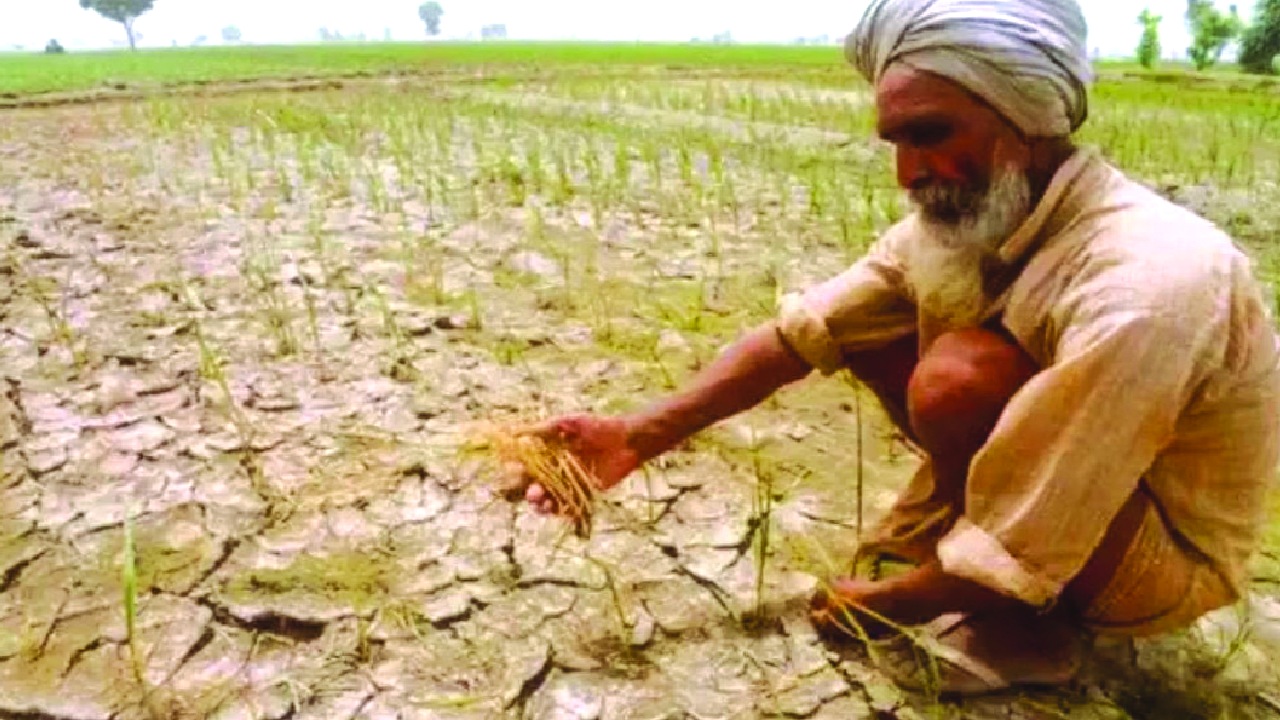
Guru Nanak Dev Ji’s timeless words —"Pavan Guru, Pani Pita, Mata Dharat Mahat" — frame nature as our teacher, father, and great mother. Vande Mataram, India’s national song, similarly celebrates a land of flowing rivers and fertile fields. Yet, as the nation marks 150 years of Vande Mataram, which sings of abundance, the ground beneath our feet tells a far grimmer story. India’s soil — once the bedrock of food security and rural prosperity — is now exhausted, contaminated, and dangerously out of balance. Nowhere is this crisis more evident than in Punjab, the epicentre of India’s first Green Revolution.
In the race to build roads, factories, and livelihoods — undeniable necessities - we forgot a simple truth: development that damages air, water, and soil ultimately harms people, animals, birds, and even micro-life.
From Delhi to northern states choking under severe AQI levels, to poisoned groundwater and declining farm productivity, climate change and pollution are no longer abstract warnings. They are lived realities. The right to a clean environment — repeatedly affirmed as intrinsic to the Right to Life — is now being tested by prolonged policy inertia.
Punjab’s Evidence Is Alarming
Recent findings from the Central Ground Water Board’s Annual Ground Water Report 2025 are deeply disturbing. Punjab has emerged as the worst-affected state in India, with uranium levels exceeding the permissible limit of 30 ppb in 62.5 per cent of post-monsoon groundwater samples - up sharply from 32.6 per cent in 2024, a staggering 91.7 per cent year-on-year increase. Sixteen of the state’s 23 districts fall within contaminated zones, with Sangrur and Bathinda reporting uranium concentrations above 200 ppb.
This is no longer merely an environmental concern; it is a public health emergency. Elevated uranium levels are linked to kidney disease and cancer. Excess nitrates and fluoride raise the risk of Blue Baby Syndrome and skeletal disorders.
Rising salinity and residual sodium carbonate are rendering once-fertile land increasingly unproductive. Zameen bhi beemar, pani bhi zahreela, aur insaan bhi — the crisis is systemic. Compounding the problem is the excessive use of chemical inputs.
Punjab’s fertiliser consumption stands at 247.61 kg per hectare, nearly double the national average. Pesticide usage, at 77 kg per hectare, places the state among the highest users in the country.
What once delivered bumper harvests now depletes soil organic carbon, destroys microbial life, contaminates food chains, and inflates the fertiliser subsidy bill beyond INR 2 lakh crore annually — without commensurate productivity gains.
A nation aspiring to Viksit Bharat cannot build prosperity on poisoned water and dying soil.
The human toll is equally stark. In districts such as Bathinda, Mansa, and Ludhiana, up to 60 per cent of soil samples reportedly contain toxic pesticide residues, including chemicals long flagged as hazardous. These toxins migrate through water and food systems, accumulate in human bodies, weaken immunity, and burden future generations with genetic and metabolic risks. Farmers and rural communities — those closest to the land - suffer first and most.
Regulatory Blind Spots
India’s pesticide governance remains trapped in another era. The regulatory backbone — the Insecticides Act of 1968 and Rules of 1971 — is outdated. The proposed Pesticide Management Bill, 2020, though well intentioned, leaves critical gaps: inadequate farmer protection, weak labelling norms, limited grievance redressal, and no mandatory provision of personal protective equipment for small and marginal farmers.
Training deficits compound the problem. Over nearly three decades, fewer than six lakh farmers have received Integrated Pest Management training in a country with over 15 crore cultivators. Aggressive marketing by agrochemical companies often fills this knowledge vacuum, turning retailers into the primary — and frequently unreliable — advisers. Yeh sirf faslon ka nahi, naslon ka sawal hai.
Soil Intelligence and the Path Forward Punjab’s revival lies not in abandoning productivity, but in rebuilding its foundation. The future of agriculture must be diagnostic-led, biology-based, and digitally empowered.
The Soil Health Card scheme demonstrated that data-driven nutrient management works. Punjab now needs a Digital Soil Health Mission that integrates satellite imagery, AI analytics, weather models, and real-time soil sensors to deliver farm-level advisories. Decentralised soil-testing labs run by FPOs, rural youth, and women’s groups can transform soil testing from a periodic ritual into a continuous intelligence system. Equally vital is restoring the soil microbiome. Decades of chemical overuse have disrupted microbial networks essential for nutrient cycling, moisture retention, and crop resilience. Integrated Nutrient Management - combining chemical, organic, and biological inputs based on real diagnostics - can reduce costs, limit leaching, and rebuild long-term fertility.
Biostimulants offer a promising bridge. Inputs such as seaweed extracts, protein hydrolysates, and beneficial microbes enhance nutrient uptake and stress tolerance without damaging soil ecology. India’s decision to regulate biostimulants under the Fertiliser Control Order from June 2025 will boost quality assurance, farmer confidence, and global competitiveness.
India also holds immense untapped potential in seaweed-based biostimulants. Seaweed cultivation requires no freshwater, fertilisers, or arable land, and can generate over INR 13 lakh per hectare annually — creating livelihoods while reducing chemical dependence. For Punjab, this opens a pathway to align agriculture with a broader bio-economy.
Punjab’s agricultural renewal must become a coordinated national mission. Policy incentives should reward soil restoration, not just output, through carbon credits, preferential finance, and benefits linked to improvements in soil organic carbon. Massive investments are needed in farmer education, mandatory safety protocols, and transparent data systems to close regulatory gaps.
Research institutions — ICAR, agricultural universities, and IITs — must accelerate the development of crop-specific biological solutions. Rural bio-economy hubs that process agro-waste, seaweed, and organic residues can generate jobs while supplying clean inputs at scale.
Punjab once fed India through the Green Revolution. Today, it must lead Green Revolution 2.0 — regenerative, climate-resilient, and rooted in living soil. Because when soil heals, farmers prosper, consumers remain healthy, and the nation stands stronger. ‘Mitti bachegi, tabhi bhavishya bachega.’
The author is Vice-Chairman of the Sonalika ITL Group, Vice-Chairman of the Punjab Economic Policy and Planning Board, and Chairman of the ASSOCHAM Northern Region Development Council; views are personal