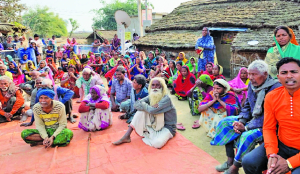
Empowering rural communities
In India, agriculture is far more than a means of earning a livelihood; it is a way of life that has shaped villages, traditions, culture, and social relationships for centuries. Farming rhythms influence festivals, food habits, family structures, and community bonds, making agriculture deeply woven into Indian identity. Even today, nearly half of India’s population depends directly or indirectly on farming and allied rural activities. Because such a large section of society relies on the countryside, empowering rural communities is not only vital for economic growth but also essential for building a just, inclusive, and resilient nation. As India moves towards the vision of Viksit Bharat, or a developed India, it is important to reflect on leaders who placed villages and farmers at the heart of national development. Among them, Chaudhary Charan Singh stands out as a powerful and enduring voice of India’s farmers.
Chaudhary Charan Singh (1902-1987) is widely remembered as a champion of rural India and an unwavering advocate for farmers’ rights. Born into a farming family in present-day Uttar Pradesh, he experienced rural life closely and understood its struggles, uncertainties, and strengths from a young age. This lived experience shaped his political thinking and convinced him that India’s progress could never be complete if villages remained neglected. For him, agriculture was not a backward sector to be replaced by industry but the backbone of the nation’s economy, society, and democracy. He believed that the well-being of farmers ultimately determined the well-being of the country. At a time when national policies largely focused on rapid industrialisation and urban growth, Charan Singh questioned this imbalance in development priorities. He argued that small and marginal farmers, who formed the majority of India’s agricultural population, were the real custodians of food security and social stability. Ignoring their needs, he warned, would widen inequality and weaken democratic foundations. For Singh, empowering farmers was not merely about increasing production; it was about ensuring dignity, self-respect, and a meaningful voice for rural citizens in shaping India’s future.
Charan Singh’s vision of agrarian politics extended beyond cultivation. One of his most significant contributions lay in land and tenancy reforms, particularly in Uttar Pradesh. He worked to protect the rights of sharecroppers and actual cultivators, giving them greater security over the land they tilled. By challenging exploitative landlord systems and feudal structures, these reforms sought to restore dignity to farmers and reduce rural inequality. He firmly believed that secure ownership and tenancy rights were essential for social justice and economic independence in villages.
Rural indebtedness was another major concern for him. For generations, farmers had been trapped in cycles of debt, often at the mercy of moneylenders charging exorbitant interest rates. Charan Singh strongly supported the expansion of cooperative banks and institutional credit so that farmers could access loans on fair and transparent terms. Affordable and timely credit, he believed, was crucial for breaking poverty cycles and enabling farmers to invest in seeds, tools, irrigation, and improved farming practices.
Singh also consistently emphasised the importance of fair prices and stable markets for agricultural produce. He understood that small farmers were particularly vulnerable to price fluctuations and market exploitation. Without fair returns, farming became unsustainable and demoralising. Measures such as minimum support prices, regulated markets, storage facilities, and better market access were therefore central to his thinking. Protecting farmers’ incomes, he argued, was as important as increasing output, because economic security gave farmers confidence and stability. Infrastructure and decentralisation formed another pillar of his rural vision. Charan Singh believed that basic facilities such as roads, irrigation, electricity, and storage were necessities rather than luxuries for rural development. Equally important was local decision-making. Development, he argued, could not be imposed from above; it worked best when communities actively participated in planning and governance. His faith in grassroots democracy reflected his belief that empowered villagers strengthened the nation’s democratic fabric.
Although Indian agriculture today faces challenges such as climate change, shrinking landholdings, market pressures, and digital inequality, the core principles of Charan Singh’s ideas remain relevant. Most farmers still cultivate small plots, making it essential that reforms, technologies, and digital platforms serve them rather than only large agribusinesses. His emphasis on local knowledge, crop diversification, water conservation, and community participation offers lessons for resilience.A truly developed India cannot exist without strong villages and empowered farmers. The vision of Viksit Bharat goes beyond economic indicators to include dignity, equality, sustainability, and opportunity. Charan Singh’s life and work remind us that national progress begins in India’s fields and villages, and that adapting his vision to present realities is essential for shared and lasting development.
The author is an Assistant Professor of Political Science at the University of Delhi; views are personal