Elder care is not optional, it is a social responsibility
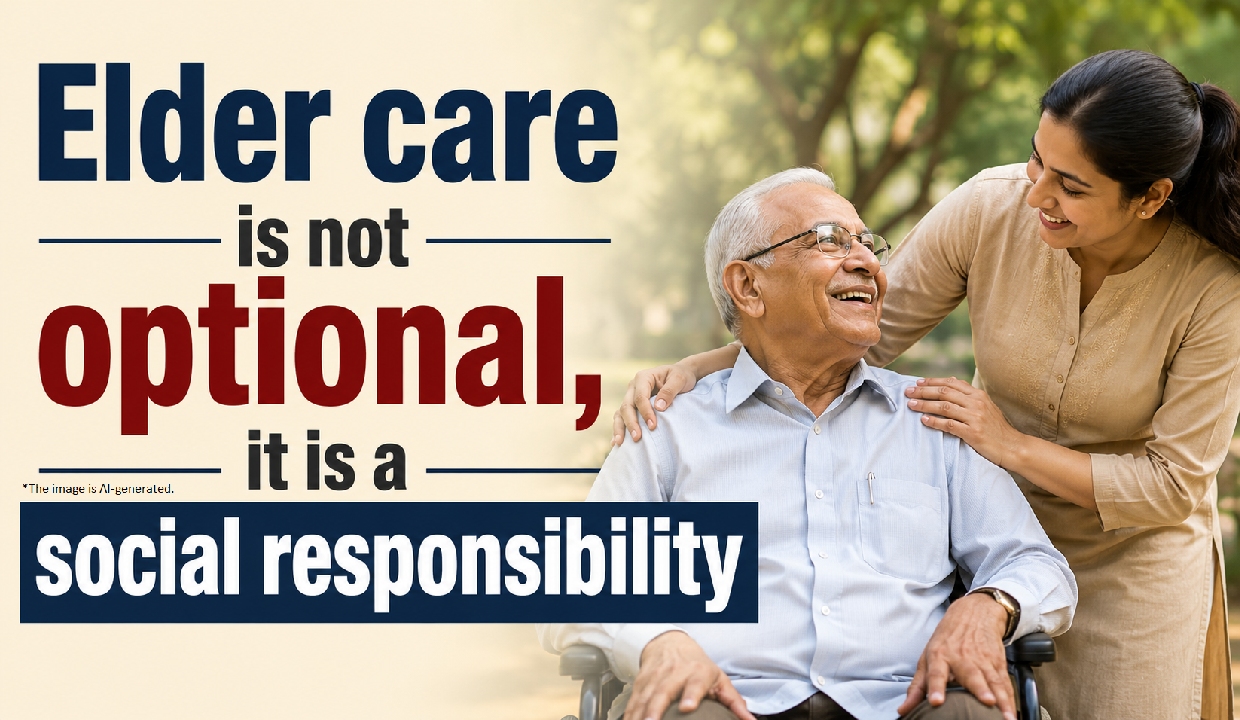
In India, there was a time when caring for the elderly was not discussed as an option-it was simply a way of life. Respect and regard for ageing parents were not choices, but deeply internalised social norms woven into everyday living. Today, that understanding is steadily weakening. Elder care is increasingly being treated as a matter of choice, shaped by convenience rather than commitment. This shift reflects not just a cultural change, but a deeper gap in how India is preparing for an ageing society.
India is home to nearly 144 million senior citizens, and this number is expected to rise sharply in the coming decades. Yet despite these numbers, programmes focused on improving their living conditions remain strikingly few. As a result, ageing is rarely accompanied by dignity; instead, it is often marked by neglect and invisibility. Equally concerning is the growing proportion of elderly living alone or only with a spouse. These people are more vulnerable to fraud, theft and even violent crime due to limited mobility and predictable routines.
Beyond these visible risks lies a quieter crisis-elders battling illness without support, spending days without meaningful interaction, and in some cases, passing away unnoticed. These are not isolated incidents, but symptoms of a systemic apathy towards elder care. The reasons behind this shift are well known. Migration, expensive urban housing, demanding work lives and changing priorities have reshaped family structures. At the same time, many elderly individuals choose to remain in familiar surroundings, rooted in their communities. What has emerged is a widening gap between generations-not just physically, but emotionally. India is moving away from informal, family-led elder care, but has not built adequate formal systems to replace it. As a result, a growing number of seniors are left to navigate ageing largely on their own. India has legal provisions such as the Maintenance and Welfare of Parents and Senior Citizens Act, 2007, which obligate children to provide for their parents’ basic needs. Additionally, the National Policy on Older Persons and schemes under the Integrated Programme for Senior Citizens aim to provide financial security, healthcare access and shelter. While important, such frameworks address only one part of the problem. Care cannot be reduced to obligation alone. It is not just about financial support, but about presence, attention and dignity. Law can enforce duty, but it cannot create care or emotional security. Many elderly individuals remain unaware of their legal rights, limiting their ability to seek support. At the community level, Resident Welfare Associations (RWAs) can play a far more structured role by maintaining registries of elderly residents living alone, enabling periodic welfare checks, and creating emergency response systems. Such decentralised mechanisms can significantly reduce both isolation and risk. Similarly, the role of local police must move beyond symbolic outreach. Old-age homes are an important part of the solution.
They provide shelter, healthcare and companionship. However, their limited reach and affordability prevent them from becoming a universal solution. There is also significant scope for corporate engagement. Elder care can be meaningfully integrated into Corporate Social Responsibility (CSR), particularly through partnerships with credible non-governmental organisations to build community-based care models. In earlier days, elder care was part of a social fabric that ensured continuity between generations.
Rebuilding this fabric requires more than policy-it demands a conscious effort to restore intergenerational bonds. Families, schools and communities must create spaces where younger generations remain connected to their elders. If ageing is to become one of India’s defining realities, elder care must move from being seen as a private concern to a shared social responsibility.
The writer works for the elderly care and founder of Wishes and Blessings NGO; Views presented are personal.