Did you know?
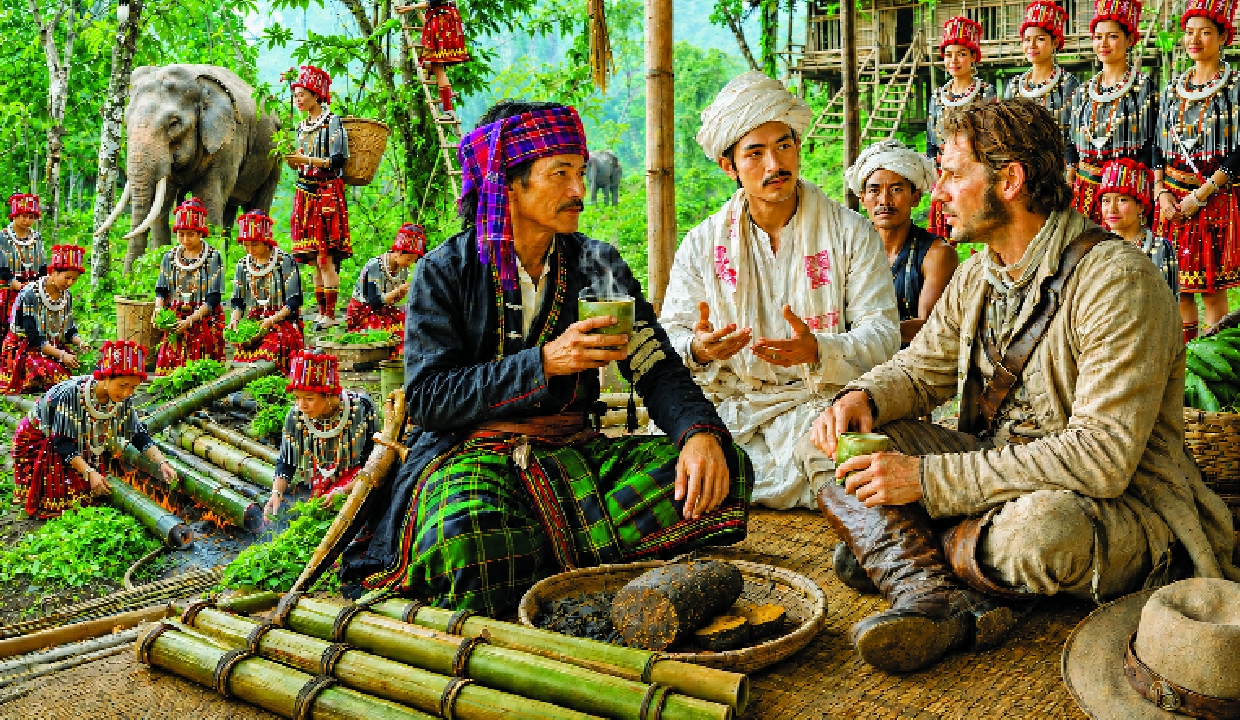
Long before British enterprises established commercial tea plantations in Assam during the 1830s, the region’s indigenous Singpho tribe had already mastered the art of tea cultivation and brewing. For centuries, the Singphos harvested wild tea leaves (Camellia sinensis var. assamica) that grew naturally in the fertile Upper Brahmaputra Valley.
To process their harvest, they perfected a unique and sustainable method: stuffing fresh tea leaves tightly into hollow bamboo tubes and roasting them over an open fire. Once dried and aged, this traditional technique yields a deeply organic, smoky, and full-bodied tea known locally as Phalap.
When Scottish explorer Robert Bruce, accompanied by Assamese nobleman Maniram Dewan, observed the Singpho chief Bessa Gaum drinking this distinctive beverage in 1823, it sparked the discovery that would later revolutionize global tea history. Today, Phalap remains a prized cultural treasure, standing as a living testament to Assam’s ancient agricultural heritage.