Delimitation & women’s quota: A paradigm shift
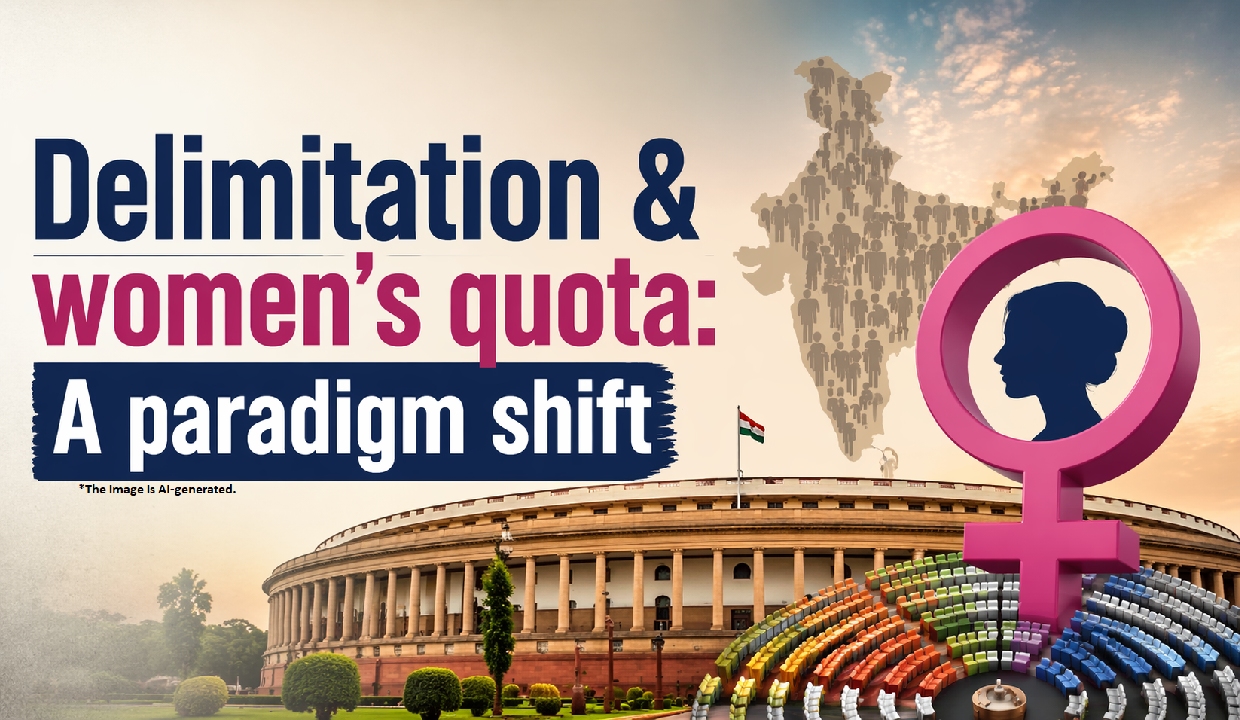
As seat redistribution shifts power to northern States and women’s quotas hinge on boundary changes, the reform push will reshape representation and the federal balance
Indian parliament, as it has been since independence, is about to change radically. Presently, it has 545 Lok Sabha seats and reservation of seats for the Scheduled Castes and schedule tribes. The proposed bills being tabled in parliament will not only change the number of seats in Lok Sabha but will also give women 33 per cent reservation, a long-standing demand to bring about gender parity in governance.
As the Union government’s move to introduce three Bills on delimitation and women’s reservation, there is considerable resistance from the Opposition and regional parties from the South, that feel that it would shift the political fulcrum in the North and penalise the southern states for effectively controlling their population. These bills will once and for all change the balance of political power across regions and genders. The proposed expansion of the Lok Sabha from 545 to 850 seats under the Constitution (131st Amendment) Bill will be based on the population, and densely populated states of the North will see a definite surge in their seat allocation. The allocation of seats to States will now be based on population figures drawn from the 2011 Census for the upcoming delimitation exercise.
This puts an end to the long-standing freeze on seat reallocation, which was done to incentivise and reward States that successfully controlled population growth. The implications are immediate and far-reaching. States such as Uttar Pradesh, Bihar, and Rajasthan — where population growth has been higher — will have higher parliamentary representation.
Conversely, southern States like Tamil Nadu and Kerala, which have achieved demographic stabilisation, will have lesser representation. Experts believe that representation in Parliament must be a reflection of historical, cultural, and developmental diversity and should be evenly spread.
Yet another aspect of the proposed bill — the women's representation will be deferred until after delimitation is completed, and has been given a 15-year window. By tethering women’s reservation to a potentially contentious delimitation exercise, the government risks delaying a reform whose time has arguably long been overdue. Critics argue that if the seats can be increased based on the 2011 census, why cannot the women's representation be based on the same census?
The opposition’s reservations are therefore twofold. First, there is a substantive concern over federal imbalance. Second, there is a procedural unease. The haste with which these Bills are being pushed raises questions about the adequacy of consultation. Championing women’s reservation allows the ruling party to claim the credit for gender reform, but in practice, it is just deferring it for another 15 years.
A process seen as unilateral, risks eroding legitimacy, even if the outcomes are defensible. Ultimately, delimitation and women’s reservation are the basis of the idea of representation itself. The challenge before the government is not just to legislate change, but to incorporate suggestions from all quarters to make in inclusive and truly representational.