Cultivating a greener future
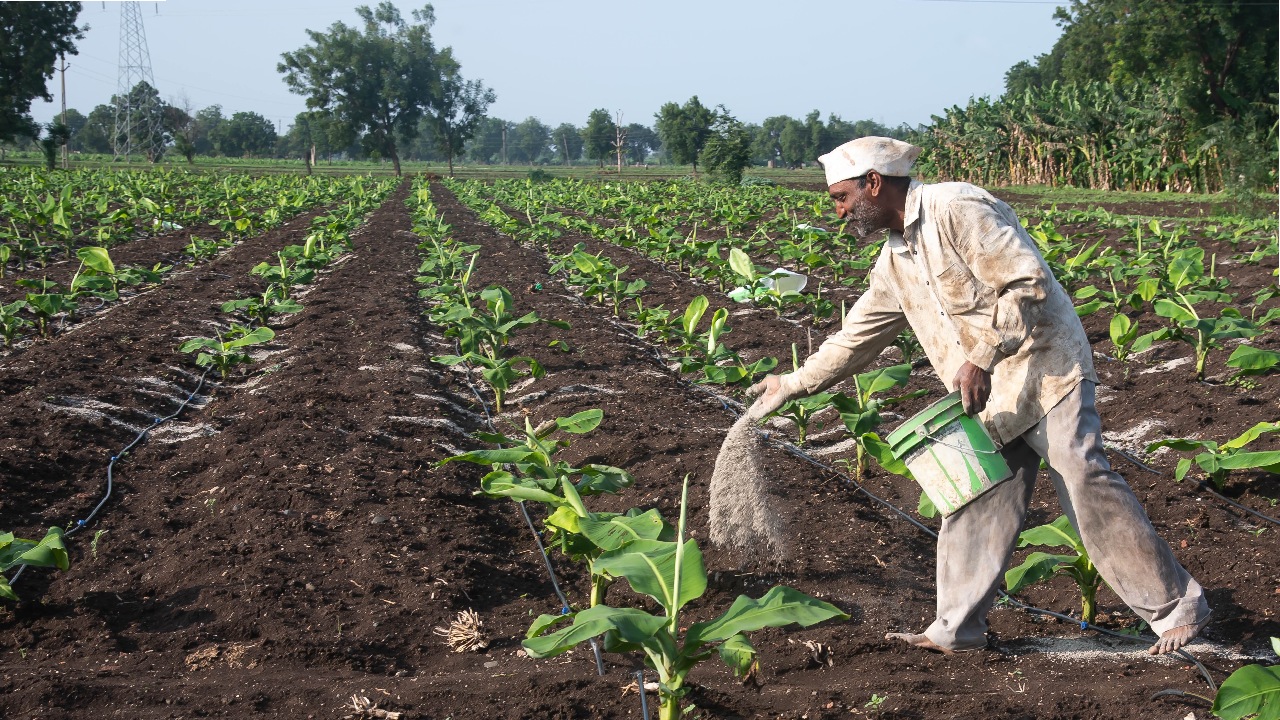
For decades, the story of Indian agriculture has been one of intensive growth, but this progress has come at a hidden cost to our most precious resource: the soil. Today, as we face the dual challenges of a growing population and a changing climate, the ‘more is better’ approach to chemical fertilisers is hitting a wall. To ensure our long-term food security, India must pivot towards Integrated Nutrient Management (INM)-a holistic strategy that marries modern science with traditional wisdom to restore our land’s vitality.
The Crisis Beneath Our Feet
Indian agriculture is characterised by small and marginal landholdings and a heavy reliance on nitrogenous chemical fertilisers. Years of imbalanced use and continuous monocropping have led to severe soil degradation. We are now seeing ‘multi-nutrient deficiencies’, where soils are desperately short of secondary and micronutrients such as sulphur, zinc, and boron. When soil health declines, so does ‘factor productivity’— meaning farmers have to apply more fertiliser just to achieve the same yield they once obtained with less. This cycle increases production costs and leaves crops more vulnerable to erratic rainfall and droughts, which are becoming more frequent under Indian climatic conditions.
What Is Integrated Nutrient Management?
Integrated Nutrient Management does not advocate abandoning chemical fertilisers. Instead, it promotes their judicious use alongside organic and biological inputs, creating a balanced nutrient regime for the soil. INM includes:
- Chemical fertilisers, applied in precise doses based on soil requirements
- Organic manures, such as farmyard manure (FYM), compost, vermicompost, and green manures
- Bio-fertilisers, including beneficial microorganisms like Rhizobium, Azotobacter, and mycorrhizae that fix nitrogen and mobilise phosphorus
- Crop residues, recycled back into the soil to enhance organic matter
The Pillars of Soil Health
To understand why INM works, we must examine the three pillars of soil health: physical, chemical, and biological.
Physical: INM improves soil structure and water-holding capacity. For a farmer in a rainfed region, this means the soil acts like a sponge, retaining moisture for longer during dry spells.
Chemical: It balances pH levels and ensures that macro — and micronutrients are available to plant roots rather than being locked in the soil or washed away.
Biological: Perhaps most importantly, INM stimulates microbial diversity and earthworm populations. These ‘tiny engineers’ are critical
for nutrient cycling and sustaining productivity in intensive systems such as rice-wheat or sugarcane belts.
Best Practices for the Indian Farmer
Moving INM from the laboratory to the field requires practical, site-specific strategies. National initiatives such as the Soil Health Card Scheme are already providing a roadmap by recommending fertiliser applications based on actual soil tests rather than guesswork. Key management practices include the split application of nitrogen to match critical crop growth stages and the use of slow-release options such as neem-coated urea. Simple, low-cost tools such as the Leaf Colour Chart (LCC) in rice help farmers decide exactly when to apply urea, reducing waste and environmental run-off. Furthermore, integrating legumes into cropping systems can naturally enhance nitrogen fixation, benefiting overall system productivity.
Field-Level Impact and Economic Gains
The relevance of INM is most visible at the farm level. Long-term field experiments across India show that the integrated use of fertilisers and organics sustains higher yields than chemical fertilisers alone.
For the average farmer, the benefits are tangible:
- Lower costs: Partial substitution of expensive chemicals with on-farm organic resources reduces dependence on external inputs.
- Resilience: Improved root growth and soil tilth make crops more ‘climate-resilient’, helping them withstand drought stress.
- Quality: The inclusion of micronutrients such as zinc and iron leads to visible improvements in both crop yield and produce quality.
A Sustainable Path Forward
Beyond the individual farm, INM aligns with India’s national priorities for environmental sustainability. By minimising nutrient losses through leaching and volatilisation, this approach reduces environmental pollution and greenhouse gas emissions. As we look towards the future of Indian agriculture, it is clear that we cannot continue to ‘mine’ our soils indefinitely.
Integrated Nutrient Management provides a scalable, farmer-centric pathway that ensures farming systems remain viable for generations to come. It is time to treat soil not merely as dirt, but as a living system that requires a balanced, sustainable diet to feed the nation.
The writer is a Scientist at the ICAR-Indian Institute of Pulses Research, Kanpur, Uttar Pradesh; views are personal