Cuba’s energy crisis deepens amid sanctions
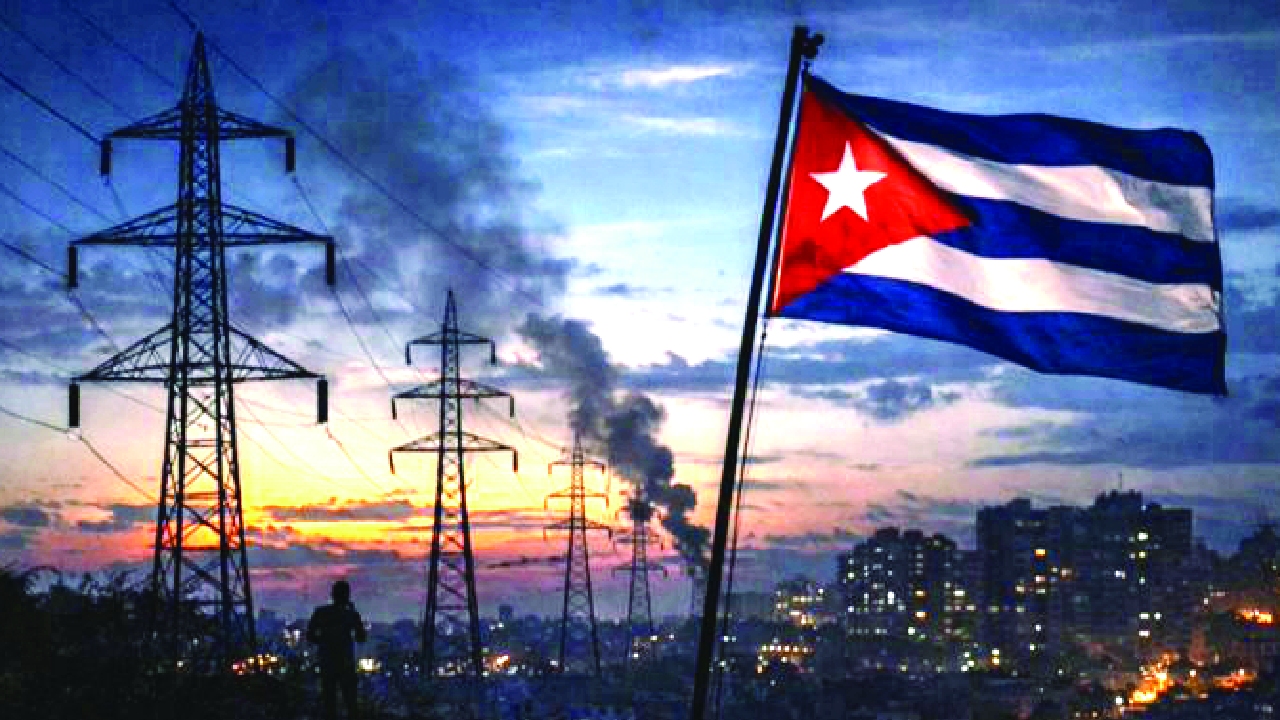
Cuba, an island nation that depends heavily on external support for energy, is currently facing an acute energy crisis, with prolonged nationwide blackouts, fuel shortages, and disruptions to daily life, leaving even hospitals struggling to carry out surgeries and pump water.
The situation has worsened after Venezuelan oil supplies, long a source of subsidised fuel for Cuba, were disrupted following the January 3, 2026, US intervention in Venezuela that led to the ouster of President Nicolás Maduro and the restructuring of the country’s oil sector. This, along with longstanding US sanctions and Cuba’s economic challenges, has restricted Cuba’s ability to secure alternative supplies and has pushed an already fragile economy into crisis. The situation has become further complicated by the impact of repeated natural disasters, which place significant stress on the island’s already fragile power grid, which lacks the resilience to recover quickly from such disruptions.
This is not the first time Cuba has faced such a situation. In 1991, after the collapse of the Soviet Union, Cuba lost its main source of subsidised oil and went through a severe economic crisis known as the “Special Period.” However, in the 2000s, Venezuela replaced the Soviet Union as Cuba’s key energy partner, helping stabilise the situation. Nonetheless, owing to Venezuela’s political and economic crisis since 2014, including plummeting oil production and hyperinflation, this agreement was disrupted, leaving Cuba’s energy sector vulnerable. Without sufficient funding or consistent oil imports, Cuba’s energy infrastructure has deteriorated, heightening its susceptibility to outages.
For the US, the recurring energy crisis is mainly due to Cuba’s socialist command economic model. For them, Cuba’s state-controlled system has low productivity, limited investment, and does not generate enough revenue to pay for essential imports such as fuel. In this regard, the loss of Venezuelan oil has simply exposed these underlying weaknesses. The US also points to the growing exodus of Cubans, many of whom seek asylum in the United States, and the rise of black markets as evidence of deep economic distress and systemic failure. More broadly, the US maintains sanctions not only to exert economic pressure but also with the objective of encouraging changes in Cuba’s economic model and, ultimately, its political system as a pathway to reform. In this regard, President Donald Trump has stated that Cuba will collapse on its own, without the need for direct intervention. Echoing this, Secretary of State Marco Rubio said, “they’re in a lot of trouble, and the people in charge, they don’t know how to fix it, so they have to get new people in charge.”
Cuba, however, maintains that long-standing US sanctions are a major reason for the energy crisis. Sanctions limit access to international banking, make it difficult to buy fuel, and discourage other countries from doing business with Cuba. In their view, even if they want to diversify energy sources or improve infrastructure, sanctions make it very hard to do so.
Cuba also frames the present crisis as part of a long-standing struggle for survival against imperialist forces by invoking historical episodes such as the 1959 revolution led by Fidel Castro to overthrow the regime of Fulgencio Batista aligned with US interests, and the Bay of Pigs invasion in 1961. By recalling how the country endured US sanctions, authorities reinforce the message that Cuba has withstood such pressure before and will continue to do so.
Meanwhile, to come out of the crisis, the Cuban government led by President Miguel Díaz-Canel has taken several steps. These measures include contingency plans that prioritise scheduled power cuts, fuel rationing, and the safeguarding of essential sectors such as healthcare and food distribution. Further, the government has also made efforts to stabilise the economy; however, on the other hand, this has placed additional strain on the energy sector. For instance, the “macroeconomic stabilisation programme,” launched in late 2022 and formalised in 2024, led to cuts in gasoline subsidies. The resulting rise in fuel prices, combined with ongoing shortages, has placed additional strain on Cuba’s key industries, particularly the sugar sector, which plays a central role in generating export revenue needed to finance energy imports. Also, the removal of subsidies has increased financial pressure on households, forcing many to turn to the black market for fuel. Thus, these measures raise questions about their long-term sustainability.
At the international level, Cuba has long advocated within the United Nations General Assembly for the lifting of US sanctions and its removal from the list of State Sponsors of Terrorism (reinstated during the second Trump administration), arguing that these measures hinder economic development and cause significant hardship for its people.
Externally, the government continues to receive limited oil shipments from countries such as Russia and Mexico despite the sanctions. However, these deliveries provide only temporary relief and cannot replace the scale of support previously provided by Venezuela. Moreover, these countries have been sceptical due to Cuba’s difficulty in paying debts.
Other than oil shipments, Cuba is also actively receiving international assistance to support its transition to renewable energy, particularly solar power, from countries including India and China. Nevertheless, this remains a long-term process, and sanctions continue to impose significant constraints.
Regardless of the debates over whether sanctions or economic policies are the core reasons, one fact remains undeniable: ordinary Cubans suffer the most. A lasting solution will require sustained dialogue between US and Cuban stakeholders to find common ground, as well as serious internal introspection. Until that happens, the crisis will be less a geopolitical struggle and more an everyday fight for survival for the Cuban people.
The writer is associated with Indian Council of World Affairs (ICWA), New Delhi-based think-tank, specialising in US-Latin America ; views are personal