CM Rekha Gupta warns officials over water supply failures
With Delhi entering its harshest summer stretch, Chief Minister Rekha Gupta on Monday ordered an aggressive citywide tightening of water supply management. She directed officials to prevent shortages, respond to every complaint without delay and face strict action in case of negligence.
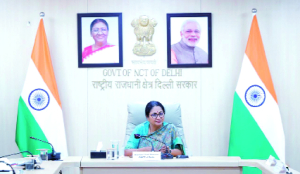
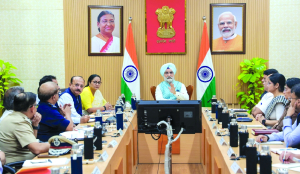
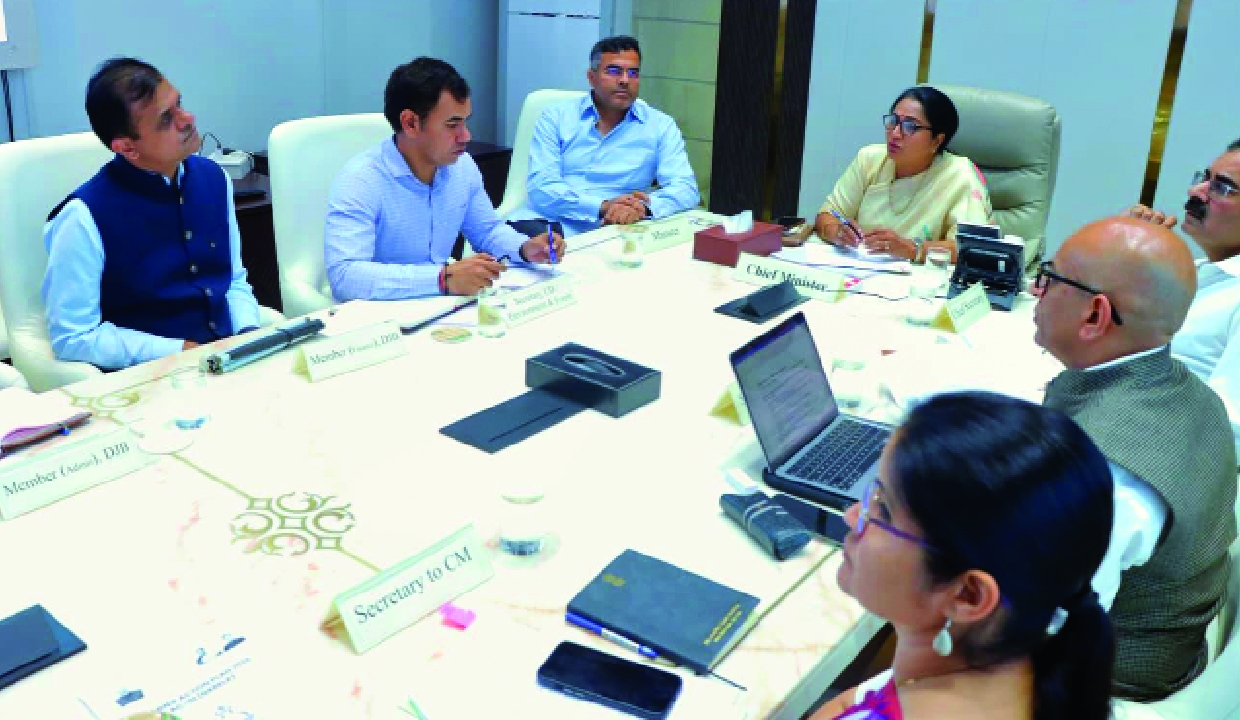
At a high-level review meeting held at the Secretariat, the Chief Minister made it clear that the Government was treating this summer as both a supply emergency and a test of administrative delivery, with all major treatment plants, emergency tanker systems and grievance units placed under intensified monitoring.
“Our effort is not confined to temporary relief. We are working simultaneously on durable measures to end Delhi’s recurring drinking water distress,” the Chief Minister said during the meeting attended by Water Minister Parvesh Sahib Singh, Chief Secretary Rajiv Verma and senior officials of the Delhi Jal Board.
The review comes as rising temperatures begin to sharply increase water consumption across the Capital, particularly in the city’s chronically underserved outer colonies. Officials informed the Chief Minister that all major water treatment plants, including Sonia Vihar, Bhagirathi, Chandrawal, Wazirabad, Haiderpur, Nangloi, Okhla, Bawana and Dwarka, have been instructed to run at peak operational capacity through the summer.
Delhi is also maintaining close coordination with Haryana to monitor ammonia levels in incoming raw water, a recurring issue that can disrupt purification and reduce treated supply to households. To plug immediate shortages, the Government has expanded its groundwater extraction and tanker distribution network.
The number of working tubewells has been raised from 5,834 to 6,200, while operational water tankers have increased from 1,166 to 1,210. Officials said another 100 tankers have been kept in reserve for emergency deployment.
Fixed water supply points across Delhi have also been scaled up sharply from 8,700 to 13,000, while the number of filling hydrants has been marginally increased from 198 to 202.
The Government has identified several high-stress constituencies where summer shortages are historically severe and where tanker movement will be concentrated. These include Sangam Vihar, Matiala, Chhatarpur, Deoli, Tughlakabad, Palam, Bijwasan and Bawana. Officials said constituency-wise micro planning has now been completed, with colony-specific tanker routes, officer deployment charts and local supply schedules prepared in advance. The complaint response system has also been tightened.
Round-the-clock helplines 1916 and 1800117118 have been placed on active monitoring, and every complaint is now being routed directly to the concerned junior engineer for immediate handling. A central control room, chatbot-enabled reporting system and PPP-based call centres have also been added to improve response time.
Across the city, 28 water emergency centres have been activated with staff, communication equipment and CCTV-backed supervision to handle local disruptions. In parallel, the Government is pushing infrastructure upgrades intended to improve supply beyond this season.
The Chief Minister directed officials to fast-track commissioning of the second 50 MGD water treatment plant at Dwarka Water Treatment Plant. Preparations are also underway to operationalise a 2 MGD recycling facility at the Bawana Water Treatment Plant. Officials said 520 additional tubewells have been installed over the last year, and 172 kilometres of ageing water pipelines have been replaced to reduce breakdowns and transmission losses.
Valve regulation, sewer cleaning, underground reservoir maintenance and a citywide leakage repair drive are also underway. Delhi enters every summer with the same fear: taps running dry before the heat peaks.
This year, the Government is betting that tighter control on pipes, pumps, tankers and complaints can prevent that familiar crisis from spilling onto the streets.