Chile’s dangerous turn back to ‘Order’
“Dictatorships are one-way streets. Democracy boasts two-way traffic,” wrote Alberto Moravia, the Italian novelist and journalist who knew fascism not as theory but as lived suffocation. Winston Churchill, less subtle but equally alert to human frailty, reminded us that democracy is the worst form of government except for all the others that have been tried. Here we confront a brutal truth: democracy is noisy, reversible, and humiliatingly slow, while authoritarianism offers speed, clarity, and silence. When societies tire of argument, they often mistake silence for order. Chile has just done so again.
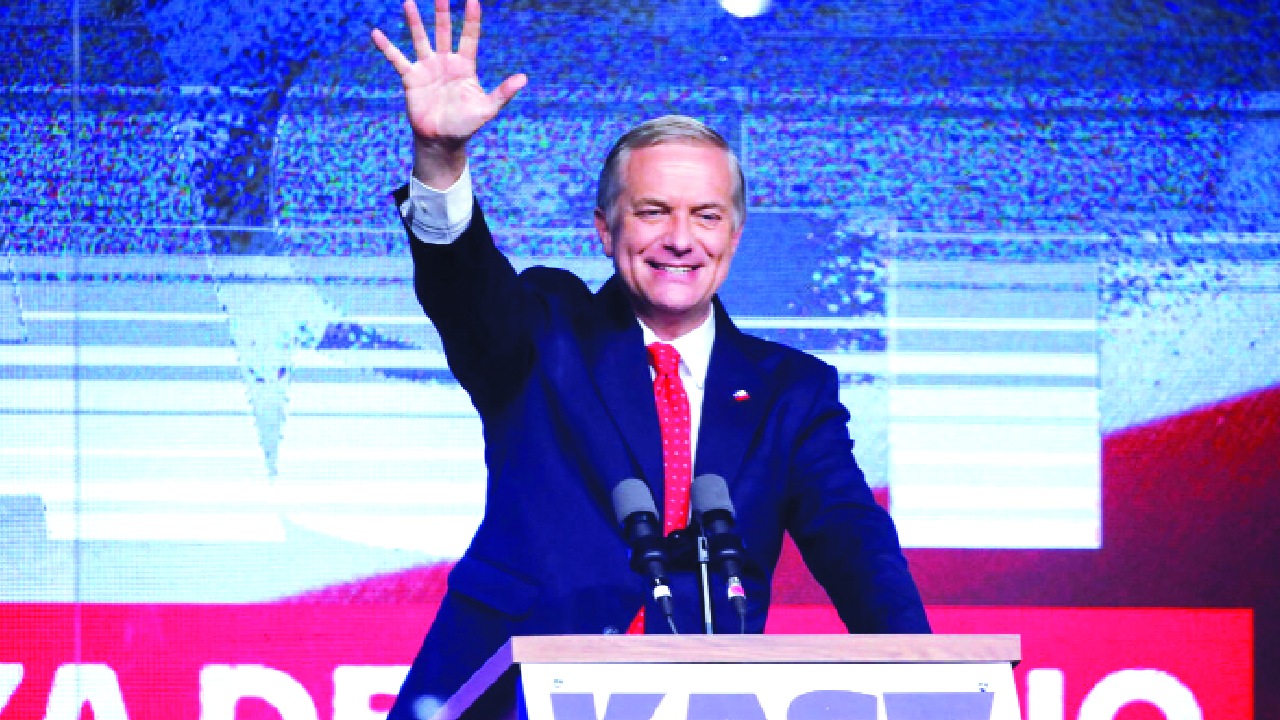
Chile’s welcome of José Antonio Kast into La Moneda in Santiago is not a sudden lapse of judgement nor a collective bout of historical amnesia. It is something far more unsettling: a recognition, half-conscious and deeply conditioned, of an old arrangement that never quite went away. Kast, who won the 2025 Chilean presidential election with about 58 per cent of the vote in the run-off against Jeannette Jara on 14 December 2025, embodies the return of a ruler who praises Augusto Pinochet’s “order” and treats the dictatorship as a regrettable necessity rather than a
criminal rupture. This is not a break with Chile’s post-1990 story but a continuation of it. The past was never buried; it was merely repainted.
Kast is often described as an aberration, an imported virus from the global far right. This is comforting and false. He is native to Chile’s modern order. Born in 1966, he belongs to the generation raised during military rule, trained politically in parties that served the junta faithfully, and rewarded by an economy shaped through force. His father’s biography is no footnote. Michael Kast was a member of the Nazi Party and served in the Wehrmacht before leaving Europe through Catholic escape routes that ferried defeated collaborators into Latin America. Chile was not alone in receiving such men, but it is distinctive in how smoothly they were absorbed into its business and political elite. The Kast family fortune, built through food processing and property, was made possible by a country open to authoritarian migrants and closed to serious moral reckoning. That continuity matters not because sons inherit guilt, but because they inherit social position, networks, and habits of thought.
Chile has never held a trial of its economic system. It prosecuted some torturers, slowly and partially, but left untouched the legal and commercial scaffolding erected under Pinochet. The 1980 constitution, written under bayonets, survived for decades with only cosmetic edits. It protected private wealth with zeal while treating social rights as optional. When people voted in 1988 to end the dictatorship, they did not vote to dismantle its machinery. They were told stability required restraint, memory must not become vengeance, and markets knew best. That bargain produced growth and humiliation in equal measure.
The social uprising of 2019 shattered the politeness of that arrangement. Millions demanded dignity, not charity. Yet when the moment arrived to convert revolt into law, the system proved resilient. Two constitutional drafts failed, each in different ways, and the political centre retreated into fear. Gabriel Boric, the youngest president in Chile’s history, who came to power at the age of 36, was elected on the energy of the streets but governed as if the streets no longer existed. Reform stalled, prices rose, crime became the daily anxiety of ordinary life, and patience evaporated. Into that exhaustion stepped Kast, promising discipline without ambiguity.
It is tempting to blame voters for choosing harshness over hope. That would be lazy. People do not vote for authoritarians because they crave cruelty; they do so because democratic institutions have taught them that protest changes little, while order, however ugly, at least acts. This is the generational loop that Chile has never escaped. Those who lived through the dictatorship remember fear and silence but also recall predictable wages and cheap credit. Their children inherited debt, privatised pensions, and lectures about fiscal virtue. When democracy delivers neither security nor fairness, it loses its claim to loyalty. External interference deepens this cycle. Chile’s tragedy cannot be told honestly without naming Washington. Declassified documents leave no room for doubt: the United States worked systematically to block Salvador Allende’s election and then to make his presidency ungovernable. Richard Nixon ordered the CIA to “make the economy scream”. Henry Kissinger warned that Chile’s democracy was too important to be left to Chileans. The Church Committee hearings of the 1970s revealed bribery, media manipulation, and the deliberate encouragement of a coup climate. No apology followed. No compensation was offered. The price was paid entirely by Chileans, through prisons, disappearances, and a market order imposed at gunpoint.
This matters today because the moral authority of Chilean democracy was weakened at birth. When people are told for generations that their votes can be overridden by generals and foreign powers, faith corrodes. Germany faced a similar reckoning after 1945 and chose a different path. It criminalised denial, dismantled fascist networks, rewrote its basic law, and embedded memory into education. Its institutions were rebuilt with suspicion of concentrated power. Chile did none of this thoroughly. It opted for reconciliation without exposure, continuity without accountability. As a result, authoritarian language remained socially usable.
Other countries show the same pattern. The Philippines overthrew Marcos, only to elect his son decades later, his crimes blurred by time and disinformation. Argentina periodically flirts with strongman nostalgia, though its trials of junta leaders have provided some resistance. Where reckoning is shallow, repetition becomes likely. Where institutions teach citizens that history is settled when it is merely suppressed, the dead past returns asking for applause.
Kast’s rhetoric fits this script precisely. He does not deny abuses outright; he relativises them. He frames torture as excess, repression as context, protest as threat. He speaks fluently the language of legality while preparing the tools of coercion. His voters are not all reactionaries. Many are exhausted workers, small business owners, and parents anxious about crime and migration. They are responding to lived insecurity, not ideological manifestos. That is precisely why this turn is dangerous. It is ordinary.
There is a cruel irony here. Chile is wealthier, more educated, and more connected than ever, yet its politics has narrowed. The choice presented was not between radical change and careful reform, but between stalled reform and restored hierarchy. Democracy’s two-way traffic, as Moravia put it, was gridlocked. People chose the one-way street because at least it moves.
Why do some societies refuse this return? Because they break the chain early and publicly. Because they accept that memory is not a luxury but a civic duty. Because they redesign institutions to make regression costly. Germany’s federal courts, its ban on extremist parties, and its public rituals of shame have served this function for decades. They are not guarantees, but they raise the price of nostalgia. Chile lowered that price by treating its dictatorship as an awkward family secret rather than a crime scene. The deeper problem is not Kast himself but the social agreement that made him plausible. An economy that privatises risk and socialises discipline breeds resentment without direction. When progressive governments promise transformation and deliver management, they teach cynicism. When elites wait out reformers and then present order as salvation, they are not surprised by the outcome. They planned for it.
Chile has not embraced fascism, but it has welcomed familiarity. It has chosen a ruler who reassures property, flatters memory, and threatens dissent. That choice did not emerge from nowhere. It was cultivated across decades of unresolved history, foreign meddling, institutional timidity, and political fear. Democracies can survive disappointment, but not repeated proof that disappointment is permanent. This is precisely what is unfolding across many democratic societies, and what is likely to deepen in the years ahead. We are knocking to wake the dead in the hope that they will solve the very problems they created after we once rejected them. What irony: we, the voters, are willing participants in the disaster we not only perpetuate but also glorify as the path to emancipation.
The writer is a columnist based in Colombo; views are personal