Challenges before Nepal’s regime
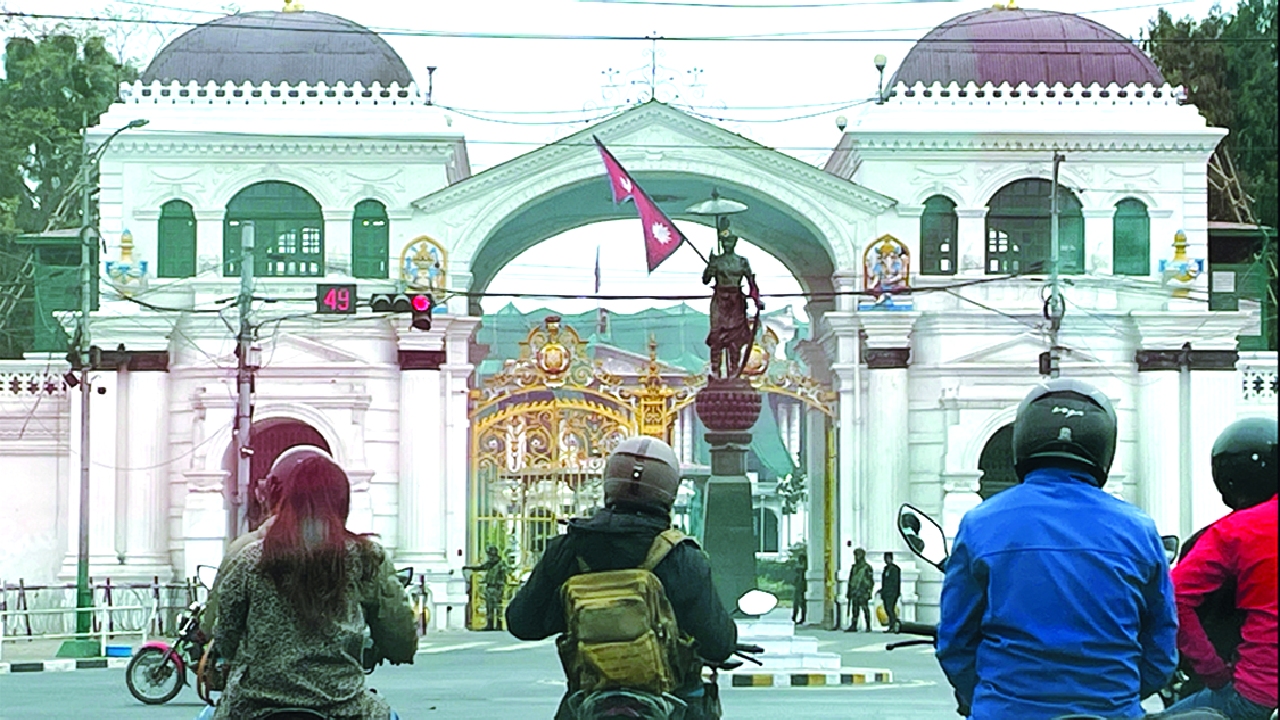
Within hours of assuming office, the Balen Shah-led regime in Nepal began to prioritise future tasks, especially those related to the economic challenges looming ahead. On March 29, it released a ‘Good Governance Blueprint, 2082,’ which proposed extensive policy, legal, and structural reforms to woo investments, and create an investment-friendly environment. “The blueprint, released with the target of preparing a basis for economic growth under private sector leadership, has indicated removing obstacles to the mobilisation of internal and foreign investment, and transforming the state's role from regulator to facilitator,” stated a report on a news website.
Balen Shah chose Swarnim Wagle, a 51-year-old economist with academic degrees from the London School of Economics, Harvard University, and Australian National University, as his finance minister to steer the country’s economy. Earlier, Wagle was a senior economist at the World Bank, and worked as the chief economic advisor for Asia and the Pacific at the UNDP. In his political career, the former Nepali Congress leader joined the Rastriya Swatantra Party (RSP) in 2023, after falling out with the former’s top leadership. His appointment reminds us of India’s choice of Manmohan Singh in 1991.
Rank-wise, Wagle will be second only to Prime Minister Balen Shah. “At the core of the government’s economic agenda is… a choice widely seen as an attempt to reassure markets and development partners,” according to a past media report. Days before the new cabinet took oath on March 27, a World Bank’s report, ‘Unlocking Nepal’s Growth Potential,’ examined the Himalayan nation’s past growth since 1996, challenges it faced now, and included recommendations for accelerated growth. While it remarked that Nepal “continued its remarkable success in reducing poverty, and has virtually eradicated extreme poverty,” it found the economy struggling “to keep pace… and has not generated enough quality jobs in the non-agricultural sector.”
According to the document, “In 1995, an estimated 55 per cent of Nepalis lived in extreme poverty, defined by the $2.15 per day threshold. By 2023, this figure had plummeted to just 0.37 per cent. The speed and scale of Nepal’s success in eliminating extreme poverty are unparalleled among its peers…. The broad-based and deep reduction is evident in the poverty headcount ratio measured at $6.85 per day, which fell from 90 per cent to below 50 per cent over the same time.” The key factor was migration, and the inflow of remittances.
“By 2021, over seven per cent of Nepal’s population had migrated abroad mainly in search of employment due to limited domestic job opportunities. Most of these migrants are young men, primarily seeking work in Gulf Cooperation Council (GCC) countries and Malaysia. This large-scale outmigration led to a substantial increase in remittances, and the number of households receiving them. By 2023, remittances accounted for around a quarter of Nepal’s GDP, playing a crucial role in sustaining the economy and lifting many out of poverty. The direct impact of remittances on poverty has been significant,” it added.
According to other reports, remittances remained “strong over the past two years, with monthly inflows exceeding 100 billion Nepali rupees (close to `62 billion).” Official data indicates that more than a trillion Nepali rupees came into the nation by mid-January of the fiscal year. However, “the sobering reality” is that the economy struggled to generate domestic quality jobs. Between 1996 and 2023, the economy grew at an average real annual rate of 4.2 per cent, which is respectable, but lagged that of peer nations. “Within South Asia, Nepal’s growth rate ranks just sixth out of eight countries. Both structural and aspiration peers outperformed Nepal as well,” the Bank’s report stated.
Another media report stated that among the key indicators, inflation was under control, remittances were high, and foreign exchange reserves a “more than adequate,” which were “positive signals.” But the “economic momentum is slow, (although) there is no immediate risk of a crisis.” But one of the major concerns is the “inability to channel excess liquidity in banks into productive investment. Another challenge is reviving weakened domestic consumption.” The World Bank is hassled about the constraints on growth and job creation. Any economy that is built on remittances, or post-box economy, as Kerala was once dubbed, is unsustainable, as examples from the Indian states indicate.
“Overall labor productivity remains low. Weak competition in logistics and transport, as well as subpar infrastructure have limited exports, which have not contributed to… growth over the past decades. Appreciating real exchange rates and domestic trade policies, including high tariffs and excise taxes, have further constrained exports. The manufacturing sector has been in steady decline… while the tourism sector, a key growth and job opportunity, remains underdeveloped. The development of hydropower has progressed slowly…. Limited infrastructure, regulatory challenges, and digital literacy gaps are holding back… digitalisation,” stated the Bank’s document.
According to the Bank, “Nepal’s Rupee was pegged to the Indian Rupee in 1993 (at about 1.6 NPR), without any subsequent adjustments to the peg. Higher inflation in Nepal compared to the main trading partners, India and the United States, has appreciated bilateral RERs. While average inflation… decreased over the past decades, the average inflation differential compared to India still turned positive after 2014 and led to a real appreciation.” Before the national elections, Shah’s party promised to review the exchange rate with India.
More importantly, the existing policies did not lead to high growth rates, even as incomes, while growing, remained below the peers. The last plan document envisioned an annual growth of more than seven per cent until 2029. Baseline projections estimate the long-term growth to hover around four per cent. At the latter rate, Nepal’s income levels will reach only 65 per cent of structural peers’ levels, and less than a third of its aspirational peers by 2050. “Bridging this gap requires a decisive policy shift,” suggested the Bank’s report.
Hence, unlocking opportunities is a good and great first step for the new Balen Shah regime. However, as luck has it, the government assumes power when the world is embroiled in geopolitical, diplomatic, military, economic, and social crises. This explains why a recent media report warns, “Amid these conditions, rising tensions in the Middle East pose a growing risk to remittance inflows from Gulf countries. This could further suppress domestic demand, and impact foreign exchange reserves. The government will need to act to mitigate these risks.” Clearly, the risks are higher, red signals are flashing frenetically, and the remittances-based economy is under pressure. Can Shah wrap a new rap to revive the lives of ‘Sadak Balak?’
(The author has more than three decades of experience across print, TV, and digital media) ; views are personal