Carriers of Mahabharata tales face uncertain future: Eviction notices to Yamuna Bazar residents
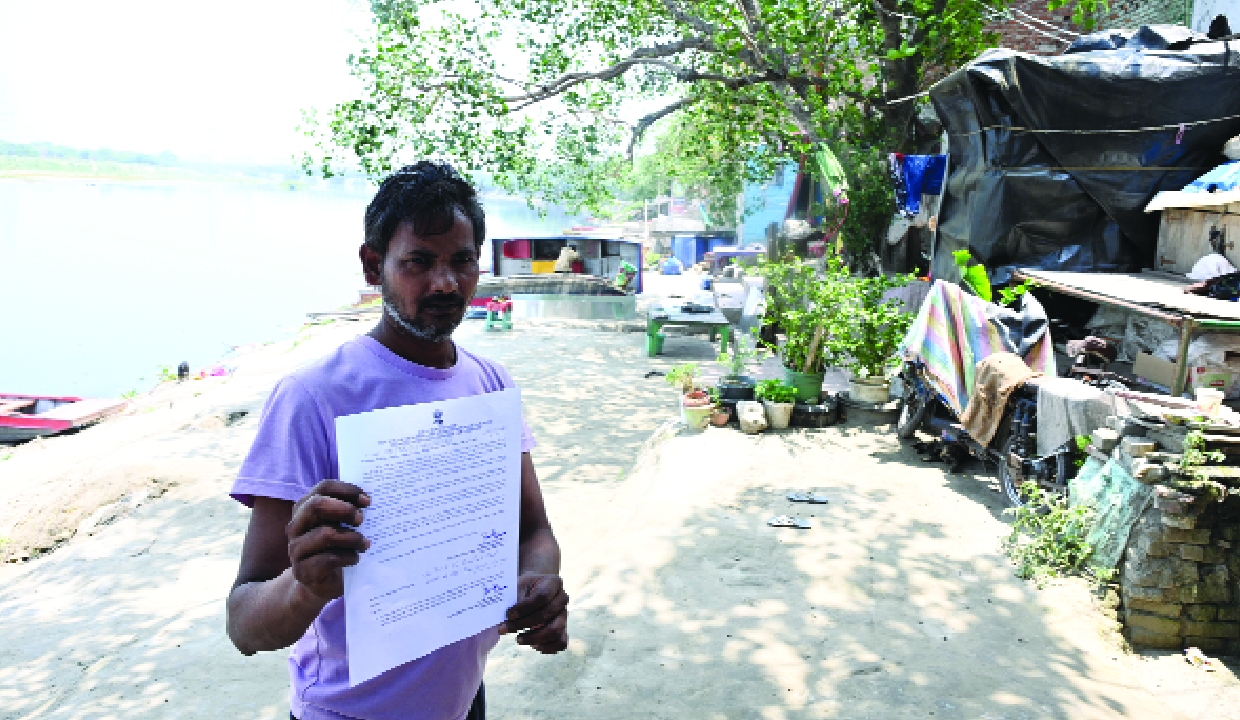
It has been more than 200 years of continuity — of smoke from funeral pyres rising above the Nigambodh Ghat, priests performing aartis, and families making the river their very own. That timeless link threatens to snap, perhaps forever, with eviction notices being served to those living in Yamuna Bazar. It could be over in just 15 days, said the residents.
That’s the time the Delhi Disaster Management Authority (DDMA) has given the families in Yamuna Bazar in north Delhi’s Kashmere Gate area to vacate the settlement voluntarily, failing which demolition action would be undertaken to clear the “encroachment”.
A total of 26 notices have been served to individuals found occupying the site. The notices direct them to vacate the area within 15 days from the date of issuance and immediately under all circumstances.
The fear is not only of losing their homes but also of watching an entire riverbank culture, inherited across centuries, disappear. Several families living along the Yamuna said they have spent generations carrying forward traditions tied to the river, from cremation rituals to preserving stories they say date back to the Mahabharata era.
Officials said notices were served earlier this week to 310 dwellings along the Yamuna floodplains in the O-Zone area designated as protected no-construction land under the Delhi Development Authority (DDA).
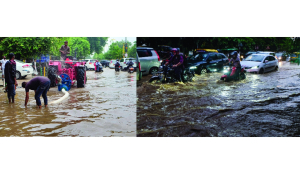
They cited recurring flooding as a threat to human life and property. For many residents, it is the cruellest blow.
“An illegal encroachment in the form a residential cluster having approximately 310 dwellings at Yamuna Bazar within the wall along the banks of Yamuna in the O-Zone comprising floodplain land owned by DDA is in existence,” the DDMA notice said. “The same (Yamuna Bazar) is being inundated during Yamuna floods every year, thereby posing a serious threat to the loss of human life, cattle and property,” it added.
The O-Zone along the Yamuna is designated as a protected, no-construction floodplain which is under the management of the Delhi Development Authority (DDA).
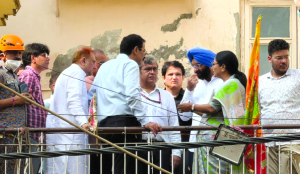
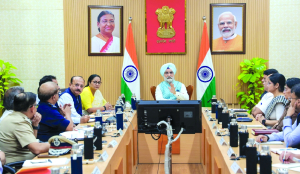
The action comes a week after Delhi Lt Governor Taranjit Singh Sandhu chaired a detailed review with DDA officials on the progress of rejuvenation works in the Yamuna Bazar area, following a visit to the area along with Chief Minister Rekha Gupta last month.
According to Delhi government official, there are 32 ghats in the Yamuna Bazaar ghat area. These ghats have been encroached upon over time. Around 310 residential structures currently exist in the area, housing nearly 1,100 people. The floodplain stretch of the Yamuna Bazaar ghats, located along the Yamuna River within the walled area of Yamuna Bazaar, falls under the O-Zone category. The land belongs to the DDA, and all construction activity in the area is strictly prohibited. The NGT has directed the DDA to take necessary action regarding encroachments on the Yamuna floodplains.
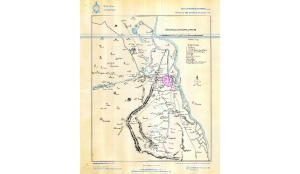
“My family has been living here for nearly 200 years now, and we even have maps and records proving our presence here for over a century. What we heard from our ancestors is that these ghats were once divided caste-wise and families had their traditional roles connected to the Yamuna,” said Sunil Sharma, a priest at Nigambodh Ghat near Yamuna Bazar.
Sharma said his family stayed near the ghats as priests, performing Yamuna ‘aarti’, conducting cremations at Nigambodh Ghat and carrying out rituals connected to the river.
“This is not just a place for us, it is our and the city’s heritage,” he said.
Sharma, who is also associated with the Yamuna Ghat Panda Association, said nearly 60 families with histories stretching back in time remain connected to the area. Generations of priests, workers, boatmen and caretakers gradually settled around the river while serving pilgrims, cremation grounds and temple activities.
“Our fathers and grandfathers taught us the religious and cultural importance of this place. We learned priesthood here, and now we are passing the same traditions to our children.
“This is how most families here earn their livelihoods. The river is not separate from our lives, it is at the centre of our existence,” Sharma said.
Surender, a 47-year-old resident and lifeguard in the area, said his family’s connection to the Yamuna goes back generations.
“Our ancestors used to tell us that our family had been staying here since the time of Akbar, and we have proof showing our presence here for at least 150 years. My father became known across the country because he swam from Delhi to Mathura, something no one else could do at the time,” he said.
“About 200 years ago, our ancestors came as priests and settled in the area, and since then, we have been residing here. Even today, people are doing the same jobs, though some have gone into the corporate world to earn more money,” added another resident.
Residents also said locals often help prevent suicides and drownings near the river.
Surender said his family’s expertise in swimming and rescue work came entirely from growing up alongside the Yamuna.
“Whatever we learned about swimming, survival and rescuing people, we learned from the river itself. My grandfather learned it, then my father, then I learned it and now my children are learning it too.