Budget bets on growth and green transition
Amid global uncertainties and geo-political tensions causing supply chain constraints and trade disruptions, the budget presented by India’s Finance Minister Nirmala Sitharaman has maintained fiscal discipline and boldly increased capital expenditure from 11.2 trillion rupees in 2025-26 to 12.2 trillion rupees for 2026-27. A high-powered committee, “Education to Employment and Enterprise”, is proposed to be set up to focus on the services sector as a core driver of economic development. It will track growth and may move to amend government policies if circumstances demand. A push for AI is also evident, as a tax holiday until 2047 has been announced for foreign companies using data centres in India to provide global cloud services.
In a period of macroeconomic stability, reforms such as customs clean-up, further liberalisation of the trade regime, and non-tariff barriers such as quality control orders should have been addressed in this budget. Nevertheless, it is not compulsory to implement these reforms in the budget; they can be introduced at any time during the year.
Apart from the generous tax holiday on data centres until 2047, a five-year tax holiday for foreign companies supplying capital goods and equipment encourages them to relocate manufacturing supply chains to India. On the issue of adjusting the budget for Trump’s tariff, in the post-budget press conference, the Finance Minister said: “It is something that occupies the minds of the officials when we are preparing the budget, but I will not attribute it to the cause for any one step. Across the board, we kept that in mind.”
India has recently signed a free trade deal with the EU. The Carbon Border Adjustment Mechanism (CBAM) of the EU compels developing nations like India to either meet the standard or pay additional tariffs. Such barriers should be levied on developed countries, as India is one of the lowest per capita emitters of greenhouse gases. Further, the EU’s nominal per capita GDP in 2025 was $46,000, while India’s was $2,800. The European Commission has confirmed that the India-EU FTA does not provide any exemption from CBAM. The Union Budget has considered this and proposed an outlay of INR 20,000 crore for scaling up Carbon Capture, Utilisation and Storage (CCUS). This has been done to stay green while remaining competitive in the export market. The CCUS scheme is applicable across five industrial sectors-power, steel, cement, refineries, and chemicals.
This move to decarbonise under the CCUS programme aligns with the country’s target of achieving net zero by 2070. The storage component of the scheme refers to processes that separate carbon dioxide generated in industries using fossil fuels as an energy source. The separated carbon dioxide is compressed, transported, and injected into depleted oil reservoirs or any geological structure with space.
The technologies are also available to utilise compressed carbon dioxide to produce consumer goods such as carbonated beverages. Carbon dioxide is used as a refrigerant, in fire extinguishers, for blowing coal, in foam rubber and plastics, to inflate life rafts and life jackets, promote plant growth in greenhouses, and immobilise animals before slaughter. Morten Meldal, one of the three Chemistry Nobel laureates of 2022, visited India recently and explained how we are one reaction away from developing carbon dioxide as a fuel. The 2025 Nobel Prize in Chemistry was awarded for the development of metal-organic frameworks, which are porous and crystalline materials designed to trap or store molecules, offering groundbreaking solutions for carbon capture, hydrogen storage, and water harvesting from desert air.
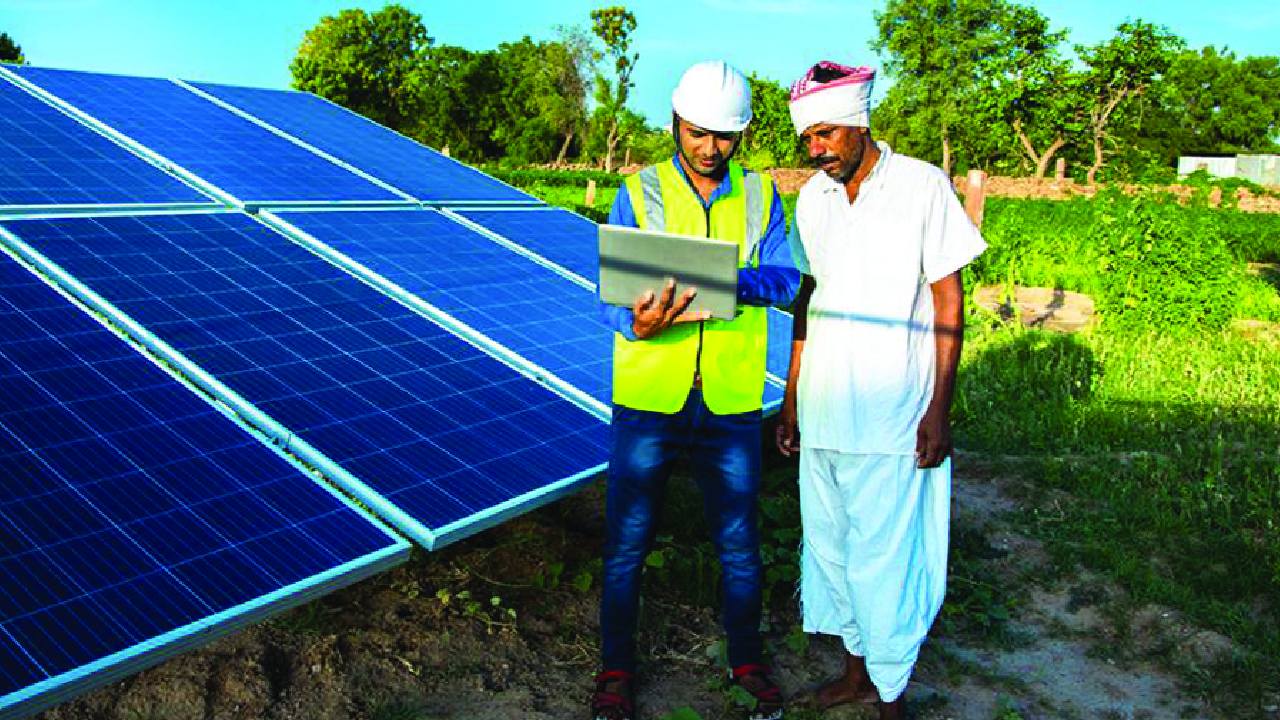
Another solution proposed in the budget to decarbonise the economy is the creation of dedicated rare earth corridors to promote mining, processing, research, and manufacturing in mineral-rich states, namely Odisha, Andhra Pradesh, Tamil Nadu, and Kerala. Rare earths are critical for India’s semiconductor push, a vital component in electronic devices. The alloy of neodymium, iron, and boron forms magnets that can withstand 280°C and have a variety of uses in emerging technologies, such as drones, robots, missiles, aerospace, defence equipment, electric vehicles, semiconductors, computers, mobiles, and wind turbines. Dysprosium can sometimes replace neodymium in magnets. These magnets are 12 times as powerful as ferrite magnets used in household fridges. They are essential for drones, robots, and other equipment to increase torque and speed, enhancing precision and efficiency. Samarium-cobalt magnets are eight times as powerful. Rare earths and semiconductor chips are among the most critical items in global supply chains. The budget has also provided a push to the renewable energy sector. Basic customs duty exemptions on imports needed for nuclear power projects, manufacturing lithium-ion cells for energy storage, sodium antimonite for solar glass, and equipment for processing critical minerals have been extended. In response to the Paris Climate Accord 2015, India has committed to generating 500 GW of electricity from non-fossil fuel sources by 2030. In 2025, the Union government passed the law “Sustainable Harnessing and Advancement of Nuclear Energy for Transforming India”, opening the sector to private participation and aiming for 100 GW of nuclear energy generation by 2047. The budget announcement supports this goal.
The budget has also aimed to increase manufacturing’s share of the economy from 13 per cent to 25 per cent by allocating INR 10,000 crore over five years for manufacturing containers, tunnel-boring equipment, high-capacity lifts, and firefighting equipment. Tunnel-boring machines are crucial for metro construction and high-altitude roads. India has relied on China, and progress slowed last year when China halted exports. Tunnel boring preserves surface vegetation, minimising carbon footprint and enabling development with less environmental damage.
It has been announced that cargo transport via coastal shipping will increase from 6 per cent to 12 per cent by 2047 by enhancing inland waterways. The Finance Minister added that 20 inland waterways, including National Waterway 5 along the Mahanadi River, will connect mineral-rich Talcher and Angul to industrial centres like Kalinga Nagar, Paradeep, and Dhamra Port in Odisha. Transporting minerals by inland waterways reduces fossil fuel consumption, minimises greenhouse gas emissions, and lowers the carbon footprint.
The budget also supports urbanisation. Capital expenditure will develop roads and infrastructure in new urban centres. Delhi NCR and other metropolitan areas face severe winter pollution due to smog from fossil fuel-based energy, vehicles, dust, and stubble burning. Relocating fossil fuel-based industries 400 km or more from cities is a long-term solution. Developing new urban centres is essential.
The Finance Minister should also be commended for strengthening India’s global commitment to big cat conservation and for hosting the first-ever Global Big Cat Summit in India this year. Delegates from 95 range countries, along with leading conservation organisations and partners, will collaborate to strengthen biodiversity. Conserving tigers, lions, leopards, jaguars, snow leopards, cheetahs, and pumas protects habitats, making forests more climate-resilient.
The writer, former Head of Forest Force, Karnataka, and Economics Faculty, Karnataka Forest Academy; views are personal