Budget 2026-27 charts India’s next decade
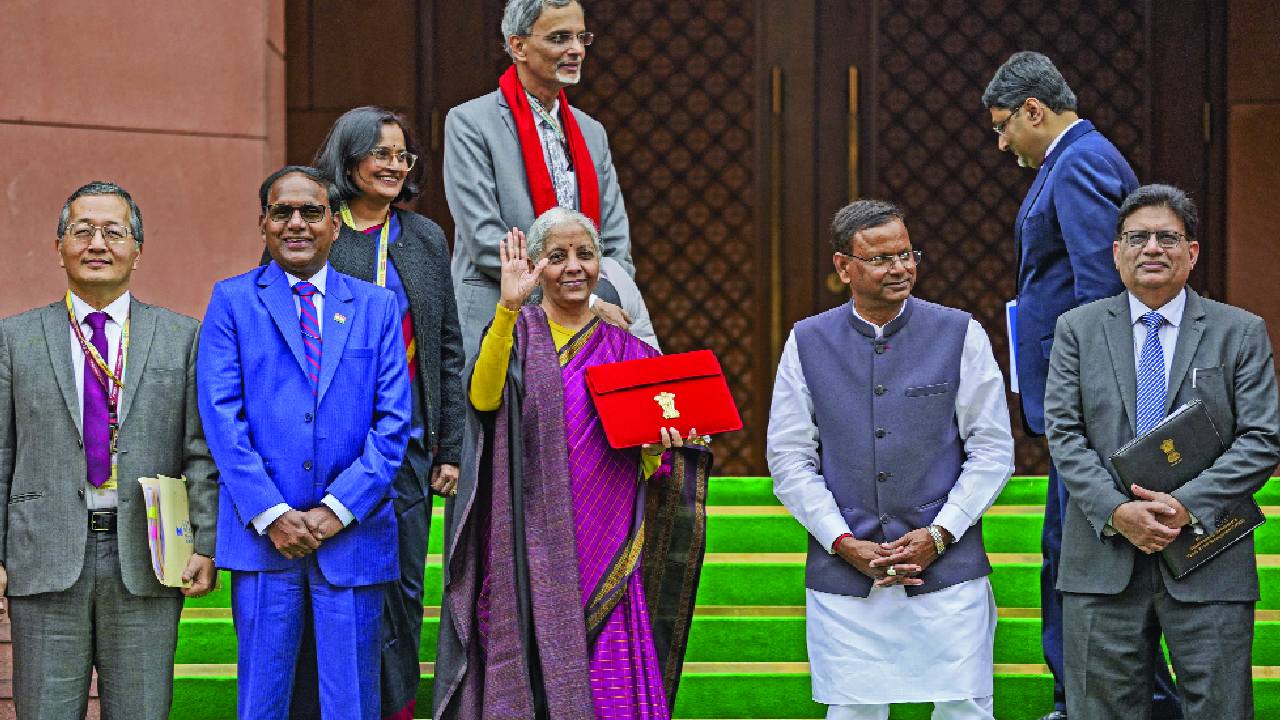
In 2016, at the Civil Accounts Day function, echoing a sense of optimism about the next decade, the then Finance Minister, Shri Arun Jaitley, remarked, “The country’s macroeconomic factors are stable and the government is committed to fiscal consolidation as well as low inflation. Against this background, India stands out as a haven of stability and opportunity.” Shri Arun Jaitley foresaw the decade 2016-2026 as the period when the world’s confidence in India would grow and the nation would emerge not only economically strong but as Vishwaguru. The economic reform journey initiated by Arun Jaitley was strengthened by Shri Piyush Goyal and carried forward with clarity and consistency by Smt. Nirmala Sitharaman over the following decade. As global confidence in India continued to rise, the Union Budget 2026-27 once again reaffirmed a clear direction for the nation-reform, perform and transform-guiding India into its next decade of high growth.
In her Budget speech, the Finance Minister highlighted the government’s kartavya of accelerating growth, building national capacity and fulfilling the aspirations of every citizen. This responsibility finds strong reflection in this year’s Budget. The focus on quality education and affordable healthcare, modern infrastructure reaching Tier-2 and Tier-3 cities, strengthening MSMEs as engines of employment, thrust on supporting domestic manufacturing, elevating India’s growing role as the world’s pharmacy, and strengthening cooperatives by propelling the rural economy and women-led development together form the backbone of this development agenda. All this has been achieved while maintaining fiscal discipline, with the deficit kept within the 4.3 per cent target for 2026-27.
The Budget places equal emphasis on structural reforms, sustained public investment and direct benefits for citizens through job creation, improved agricultural productivity, enhanced household purchasing power and universal access to essential services. Notably, the Finance Minister acknowledged that many proposals emerged from the Viksit Bharat Young Leaders Dialogue 2026, underlining the government’s commitment to not just building a future for the youth, but shaping it with their ideas. In doing so, the government positions itself as a facilitator, empowering young minds to lead India’s growth story.
Since Independence Day 2025, the government has taken a strong reform-driven approach, introducing over 350 reforms to improve ease of doing business and strengthen good governance. The High-Level Committee on Banking for Viksit Bharat and NBFCs is expected to further streamline the financial sector, supporting India’s goal of becoming a $10 trillion economy by 2047.
This year’s Budget also places major emphasis on education and skill development. It proposes the creation of a National Institute of Hospitality by upgrading the National Council for Hotel Management and Catering Technology, along with three new All India Institutes for Ayurveda, a National Institute of Design in the North-East, and a NIMHANS-like mental health institute in North India. These initiatives will expand quality education and government-sector opportunities for young people. In addition, five new college townships will be developed along major industrial and logistics corridors. These will bring together universities, research centres, skill hubs and residential facilities, giving a major boost to higher education while closely linking learning with industry needs.
The healthcare sector is aided by the creation of five medical hubs and support given to AYUSH.
The exemption of customs duty on 17 cancer drugs and seven additional life-saving drugs will be a huge relief to patients and shows the visible commitment of the government towards affordable healthcare.
The Budget has announced a dedicated INR10,000 crore SME Growth Fund to support small and medium enterprises, along with an additional INR2,000 crore for the Self-Reliant India Fund to continue helping micro-businesses. To strengthen India’s production base, the government is expanding manufacturing across seven key and emerging sectors to reduce dependence on imports and build strong domestic capacity. This push is aimed at turning India into a global manufacturing hub.
Alongside this, recent trade agreements, including those with the European Union, are expected to give a major boost to Indian exports. The government has also continued its strong focus on infrastructure and development spending. Public capital expenditure has grown sharply from INR2 lakh crore in 2014-15 to INR11.2 lakh crore in 2025-26 and will now rise further to INR12.2 lakh crore in 2026-27, showing a clear commitment to long-term growth.
India’s journey to development begins in its villages. Recognising this, the Budget has proposed the Mahatma Gandhi Gram Swaraj Initiative to strengthen khadi, handloom and handicrafts by connecting them to global markets, improving branding, upgrading skills and ensuring better quality in production. This initiative aims to ensure that economic growth also uplifts the rural economy. At the same time, renewed focus on Tier-2 and Tier-3 cities and temple towns will bring modern infrastructure and essential services to fast-growing urban centres, unlocking new engines of regional development.
Building on the success of the first India Semiconductor Mission, the government is launching Semiconductor Mission 2.0 while expanding critical mineral mining in resource-rich states such as Odisha, Kerala, Andhra Pradesh and Tamil Nadu. Together, these efforts will strengthen manufacturing, boost research and solidify India’s position in the global technology supply chain. The infrastructure risk fund, dedicated freight corridor, 20 new national waterways, and seven high-speed railway corridors will strengthen infrastructure and help build a supply-chain network that supports manufacturing.
Agriculture remains the highest priority in this year’s Budget. The Budget strongly supports farmers by promoting high-value crops like coconut, cocoa, cashew and sandalwood in coastal regions, plantation crops in the North-East, and almonds, walnuts and pine nuts in hilly areas.
In addition to agriculture, the dairy and fisheries sectors are given great impetus. Women’s empowerment receives a major push through community-owned SHE-Marts and the establishment of a girls’ hostel in every district, ensuring greater access to education and economic opportunities.
The Budget also places strong emphasis on culture and tourism. Fifteen major archaeological sites will be developed into vibrant heritage destinations with curated walkways and immersive storytelling experiences, bringing India’s rich history alive for visitors. In addition, world-class trekking trails across the Himalayas, Western Ghats and the North-East, turtle conservation trails along the coast, and bird-watching routes near key wetlands will promote eco-tourism while encouraging community-led conservation. From farms to flourishing futures, from rural roots to global reach, this year’s Union Budget charts a clear roadmap for India’s next decade of growth and development.
Byreddy Shabari is a Member of Parliament. She is also the Deputy Floor Leader of the Telugu Desam Party in Parliament. Adarsh Kuniyillam is a parliamentary, policy and financial expert; views are personal