BRICS at a crossroads
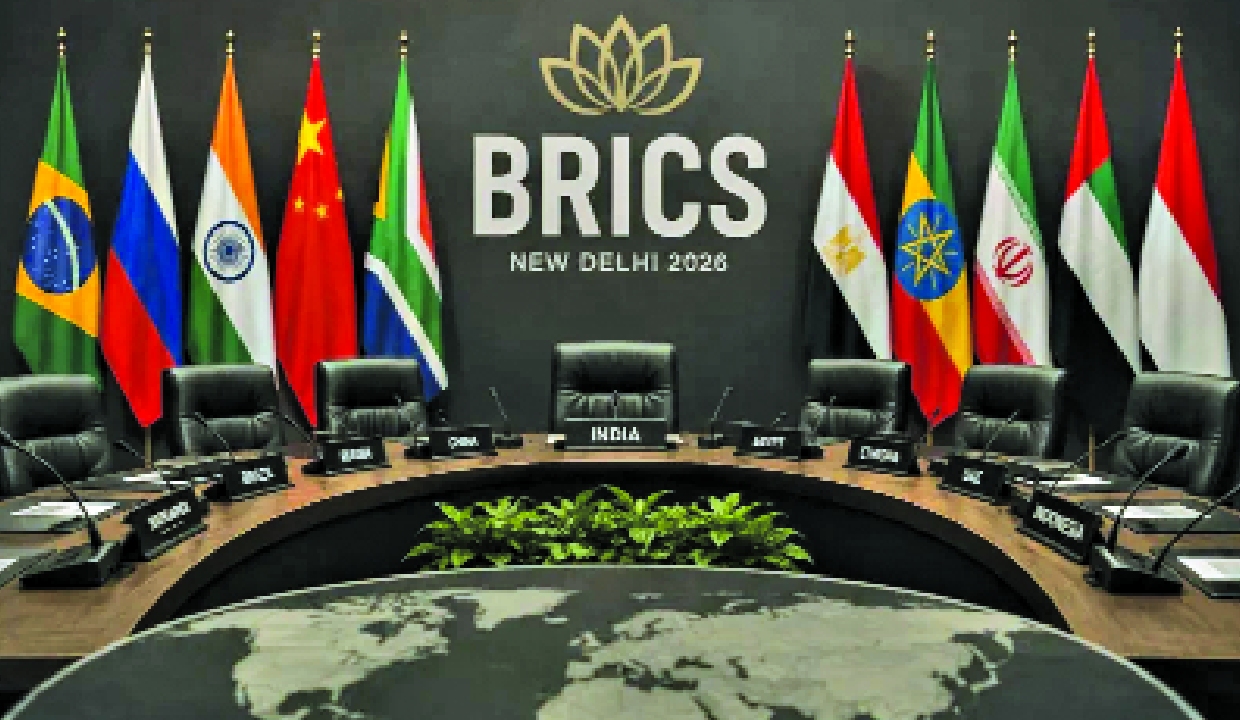
From a four-member economic acronym coined in 2001, BRICS has evolved into a powerful Global South platform spanning 11 members and 10 partners. As India hosts its 18th summit amid geopolitical conflict, trade disruptions and US pressure, the bloc faces a defining test: can it turn growing heft into meaningful outcomes?
When Goldman Sachs economist Jim O’Neill coined the acronym BRIC in 2001 to group the emerging economies of Brazil, Russia, India and China, he could hardly have envisioned its evolution into a large, influential diplomatic bloc over a quarter of a century later.
Now known as BRICS after South Africa joined it in 2010, the grouping has expanded to include 11 member states and 10 partner countries. Over the years, it has become a vital platform for emerging markets and developing economies seeking a more equitable international order and meaningful reform of global governance institutions.
The bloc’s growth underscores its rising heft on the world stage. Several countries, many from the African continent, are now eager to join BRICS, which expanded considerably in 2024 with the inclusion of Egypt, Ethiopia, Iran, Saudi Arabia and the UAE. Indonesia joined a year later alongside ten other nations - Belarus, Bolivia, Kazakhstan, Cuba, Malaysia, Nigeria, Thailand, Uganda, Uzbekistan and Vietnam — which became partner countries. Today, the 11 member states represent nearly half the world’s population, 40 per cent of global GDP and 26 per cent of international trade.
As a founding member of the informal grouping, India, as the current Chair, will host the BRICS Summit on September 12-13 in New Delhi. It is for the fourth time that India will be hosting the Summit. For India, its BRICS membership is in consonance with its commitment to multilateralism and its policy of strategic autonomy. It also allows India to highlight the need for global governance reform.
Importantly, the Summit will also offer New Delhi the opportunity to demonstrate its diplomatic clout by convening a meeting of world leaders and for Prime Minister Narendra Modi to have bilateral meetings with them on the sidelines.
The upcoming Summit, the 18th, is particularly significant as it is taking place against the backdrop of severe geopolitical friction, economic uncertainty, and trade and supply chain disruptions. The long-drawn Russia-Ukraine conflict and the US-Israel war with Iran have contributed in no small measure to the economic headwinds buffeting the world. The West Asia conflict, which has led to the blockade of the Strait of Hormuz and enveloped other countries in the region in hostilities, has seriously disrupted global energy supplies.
At the same time, US President Donald Trump has also upended the world order and economic systems. His protectionist trade policies and the unleashing of punitive tariffs on countries, many of which have been important economic partners, have heightened global economic strain.
President Trump’s perception of BRICS as an anti-Western coalition has brought threats of 100 per cent tariffs should the bloc attempt to replace the US dollar with a BRICS currency. President Trump’s fears may be unfounded, though, as the issue of de-dollarisation has left BRICS divided. India maintains that it is not in favour of a shared currency. Russia, on the other hand, wants de-dollarisation, while China would like broader use of the renminbi.
With the theme, ‘Building for Resilience, Innovation, Cooperation and Sustainability’ and the motto ‘Humanity First’, India, as host, aims to steer discussions towards economic, social and institutional resilience “to navigate global uncertainties” and supply chain disruptions.
It also wants multilateral engagement among members to deepen through development finance, trade facilitation and reforms in global institutional governance.
The plethora of issues BRICS members want to work together on, while commendable, also makes cooperation a daunting task. Though bound by three “core pillars” — political and security, economy and finance, and cultural and people-to-people exchanges — it faces structural hurdles. Its consensus-driven model, paired with stark differences in political and economic systems and foreign policy priorities, makes decision-making slow.
Moreover, the rapid expansion of BRICS risks diluting internal cohesion. India, wary of China using expansion to extend its own influence within the bloc, has advocated consolidating existing membership over unchecked growth. It also remains guarded about China’s hegemonic moves, given that Beijing has been seeking to extend its sphere of influence in the region and beyond. BRICS presents both an opportunity and a challenge. It is an opportunity in that it offers a platform for member states to cooperate and amplify their voices on the global stage on issues of common concern. It is a challenge because of the wide array of issues it seeks to address and the divergence in the views of its members amid a turbulent world order. However, the fact that this bloc has managed to grow in size and address a diversity of issues indicates its relevance.
However, BRICS does need to deliver substantive outcomes and put its money where its mouth is. Indeed, External Affairs Minister S Jaishankar said in May this year about BRICS, “Our relevance will depend on outcomes, not just on intent.”
For instance, the New Development Bank, established in 2015 to mobilise resources for infrastructure projects and sustainable development, has modest capital at its disposal. It needs to mobilise more capital if it is to meet the demands of the new members as well as the Global South. BRICS has been seeking a better deal for the Global South, which is in sync with India’s championing of the cause of the Global South.
Ultimately, BRICS’ long-term credibility will not be measured by additional member intake or lofty summit declarations, but by its capacity to deliver tangible outcomes. To avoid becoming an oversized talk shop, the bloc will need to bridge deep internal divides — most notably over de-dollarisation and regional rivalries — while adequately capitalising institutions like the New Development Bank.
BRICS does need to deliver substantive outcomes and put its money where its mouth is. Indeed, External Affairs Minister Dr S. Jaishankar said in May this year about BRICS, “Our relevance will depend on outcomes, not just on intent
The writer is a policy analyst who writes on foreign affairs and strategic issues; Views presented are personal.