Gaza demands more than a ceasefire
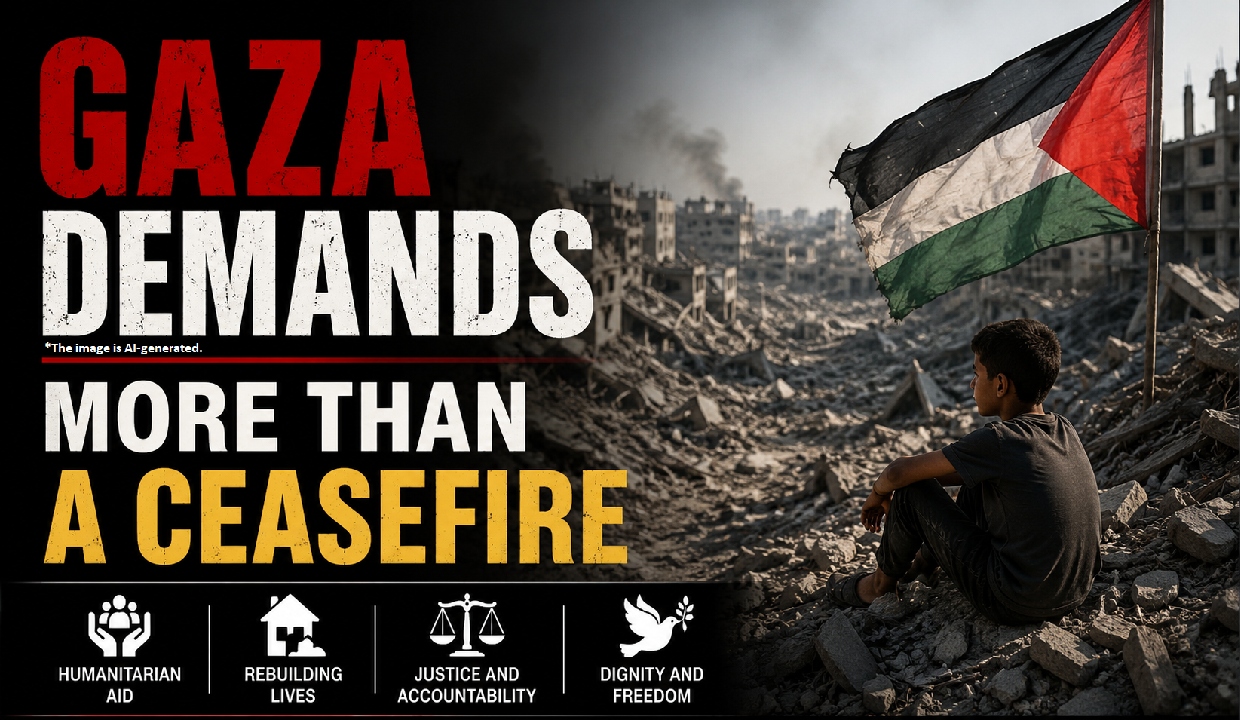
Three years after the October 7 massacre, the last Israeli hostage is home, but Gaza lies devastated, while the region remains scarred and its future uncertain
Three years ago, on October 7, 2023, when Hamas-led gunmen killed about 1,200 Israelis and took 251 hostages, the massacre changed the politics of the region. That massacre was a crime, and no grievance excuses it. For the first time, no Israeli hostage remains in Gaza on this anniversary. But what followed was not justice. It was the near-annihilation of Gaza and its people.
The numbers are hard to hold in the mind. Roughly 74,000 Palestinians have been killed, according to Gaza’s health ministry. About 80 per cent of structures are damaged. Most of the enclave’s two million-plus residents have been displaced and squeezed into less than half the Strip. A UN commission of inquiry has found that acts of genocide were committed.
Fewer than half of Gaza’s health facilities function even partially, and the World Health Organization says none has been restored to full capacity since the ceasefire. That ceasefire, imposed last October under Donald Trump’s 20-point plan, has stopped the big offensives, not the dying.
The ministry counts 1,467 deaths since it began. The International Stabilisation Force has yet to deploy. The Palestinian technocratic committee meant to run Gaza has not taken charge. Israel says its troops hold about 64 per cent of the territory, and humanitarian access remains tightly restricted. The war did not stay in Gaza. It has spread to Lebanon, Syria and a wider confrontation with Iran that still grinds on, rattling energy markets and fuelling global anger at Israel.
Meanwhile, world attention has drifted, and with it the pressure that forced the truce. The real test comes after Israel’s election, when the ceasefire’s next phase will either move or quietly die. Gaza desperately needs help, not just help but a complete plan to reconstruct and rehabilitate the people who have endured a lot in the last three years.
The way forward is not mysterious, only unglamorous. Deploy the stabilisation force. Put Gaza’s administration in Palestinian technocratic hands. Open the crossings fully and fund reconstruction at scale, not at leisure. Sequence Hamas’s disarmament with Israeli withdrawal. Above all, restore a political horizon: without a credible path to Palestinian statehood, every ceasefire is an intermission. And accountability must cut both ways, for the October 7 atrocities and for Gaza’s destruction.
India has real stakes in West Asia: millions of citizens working in the Gulf, its energy supply and the IMEC corridor, which needs a calm region. New Delhi formally backs a two-state solution and welcomed the Trump plan.
But friendship with Israel does not require silence on Gaza. New Delhi has access in Jerusalem that few capitals enjoy. It should use it to press for unhindered aid, an end to strikes and a political track, and offer the reconstruction help it can afford. A civilisational power cannot be seen to grieve for only one side.