India’s blue economy: The next wave of opportunity
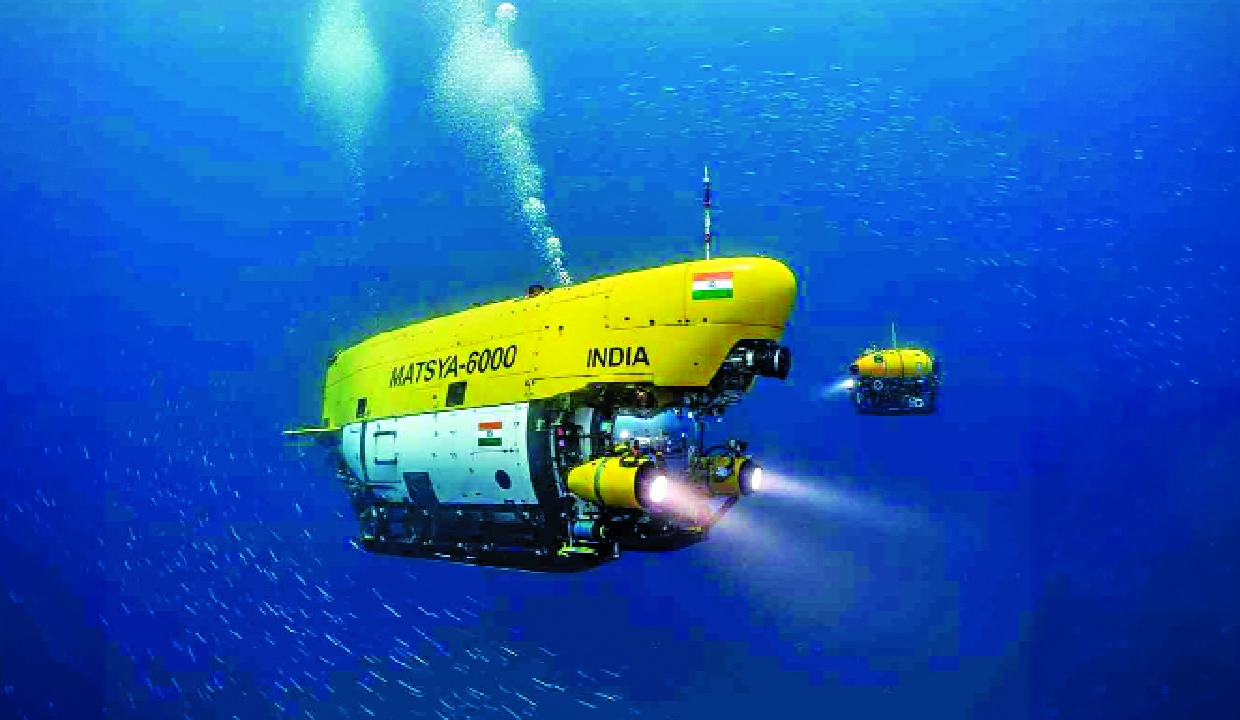
A strong Blue Economy can transform sustainable fisheries and aquaculture to improve incomes and nutritional security. Modern ports, shipping and logistics can enhance trade competitiveness
For centuries, the ocean has carried India’s trade, shaped its coastal cultures and strengthened its strategic influence. Today, with an 11,098-kilometre coastline, vast marine resources and a commanding position in the Indian Ocean, it offers a new frontier for India’s development.
As the nation advances towards Viksit Bharat 2047, the Blue Economy is emerging as a powerful pathway to prosperity, sustainability and national strength. Prime Minister Narendra Modi has placed this opportunity at the heart of India’s growth vision. His 80th Independence Day speech identified the Blue Economy as one of the seven streams, or Sapta-Dhara, that will propel the country forward.
The Blue Economy is not simply an economy of the ocean, but of people, ideas and possibilities. It is about securing better livelihoods for fisherfolk and coastal communities, creating opportunities for entrepreneurs and investors, strengthening food and energy security, and using science to build climate-resilient coasts. Above all, it is about ensuring that economic progress and environmental responsibility move together.
This opportunity is accompanied by urgent challenges. Marine pollution and climate change are putting tremendous pressure on marine resources. These challenges can become catalysts for innovation, sustainable intervention and investment. By accelerating technology development, enterprise creation and capital mobilisation, India can transform emerging sectors such as offshore renewable energy, marine biotechnology, advanced aquaculture, ocean data services, sustainable tourism and deep-sea technologies into powerful engines of Blue Economy growth.
A strong Blue Economy can transform sustainable fisheries and aquaculture to improve incomes and nutritional security. Modern ports, shipping and logistics can enhance trade competitiveness. Offshore renewable energy can support India’s clean-energy transition. Marine tourism can generate local enterprise and employment, while ocean science, forecasting and digital services can protect lives, assets and livelihoods. Together, these sectors can strengthen maritime security, technological self-reliance and India’s leadership across the Indian Ocean Region.
India therefore sees the Blue Economy not as a collection of isolated schemes, but as an integrated national development strategy. Its guiding principle is that science must shape policy, policy must enable enterprise, and institutions must deliver measurable value for people and the planet. The Ministry of Earth Sciences is building the scientific, technological and institutional foundation for this transition.
Through the Deep Ocean Mission, marine spatial planning pilots, ocean-observation networks, digital platforms, forecasting systems and advanced marine services, the Ministry is converting ocean knowledge into public value. Indigenous capabilities in deep-sea exploration, marine biotechnology, ocean energy and desalination are opening pathways for resource security, innovation and self-reliance. Fisheries advisories, early-warning services and shoreline-management interventions are supporting coastal livelihoods and strengthening disaster preparedness.
The next phase must be defined by scale, speed and impact. India requires integrated ocean governance, stronger coordination, credible project pipelines and wider use of digital technologies for evidence-based decisions. With Blue Economy investments projected to rise from approximately Rs 3.9 lakh crore during 2015-2025 to nearly Rs 25.8 lakh crore during 2026-2035, the opportunity is historic. Innovative finance, responsible private capital, startup participation and transparent implementation will be essential to translate this potential into sustainable outcomes. Coastal communities must remain active partners and primary beneficiaries throughout this journey. The most exciting chapter belongs to India’s youth. To every young entrepreneur, investor, scientist, technologist, professional and skilled worker, the ocean economy offers a horizon without limits. Traditional sectors such as ports, shipping, logistics, fisheries and tourism are being reimagined through automation, digital platforms, cleaner fuels, electric mobility and sustainable operations. Emerging fields such as offshore renewable energy, marine biotechnology, deep-sea technologies, aquaculture, marine robotics, artificial intelligence for oceans, island tourism, electric boats and green maritime systems are creating new careers, enterprises and investment possibilities.
This is the moment to build future-ready skills, launch startups, develop indigenous technologies, invest responsibly and transform research into scalable solutions. Our universities, laboratories, industries and coastal communities must become connected spaces of experimentation and enterprise. Young Indians can design smarter fishing systems, cleaner vessels, resilient ports, ocean-data platforms, bio-based products and technologies that explore the deep sea while protecting its fragile ecosystems.
The Blue Economy is not a distant promise. It is a national mission waiting for a generation bold enough to lead it. I call upon India’s youth to bring their imagination, courage and ingenuity to this blue wave of transformation. Let our oceans become laboratories of innovation, engines of livelihoods and pathways to sustainable prosperity. Together, we can build an ocean economy that is productive yet responsible, globally competitive yet locally empowering, and aligned with the spirit of Sapta-Dhara. The journey towards Viksit Bharat 2047 will be shaped not only on land, but across the vast blue expanse that surrounds and connects us.
As the nation advances towards Viksit Bharat 2047, the Blue Economy is emerging as a powerful pathway to prosperity, sustainability and national strength. Prime Minister Shri Narendra Modi has placed this opportunity at the heart of India’s growth vision
Jitendra Singh, Union Minister of State (Independent Charge) for Science & Technology and Earth Sciences; Views presented are personal.