25 years of leadership

Cabinet hails Prime Minister Narendra Modi’s uninterrupted 25 years of leadership, inspired by ‘Nation First, Citizen First’, despite challenges
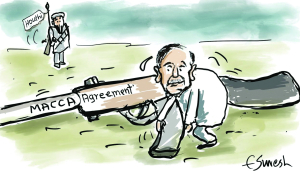
Yesterday, Narendra Modi completed his 25 years as an undisputed leader of the country, first as the Chief Minister of Gujarat, serving three terms, and then as the Prime Minister of the country, also serving a third term. Once hailed as an outsider, he is very much entrenched in the central politics of the country and has remained steadfast in his ideals, serving the country with dedication and passion.
The biggest change is in how the state reaches the citizen. Bank accounts, cooking gas, toilets, piped water and homes arrived in households that had waited generations. Aadhaar, UPI and direct benefit transfers turned welfare from patronage into plumbing, a model now studied abroad. The government says over 25 crore people have been lifted out of poverty. The figure is contested, but the expansion of basic entitlements is visible on the ground.
Decisiveness marks the record too. GST stitched a fragmented market together. Article 370 was abrogated, the Women’s Reservation Act was passed, and Operation Sindoor showed a government willing to answer terror with force. The 2023 G20 presidency confirmed India’s seat at the high table. Modi also restored political stability after decades of coalition politics and has held it even in a third term that leans on allies.
Yet a quarter-century also exposes gaps. Growth has not created enough work. Youth unemployment hit 16.2 per cent in June, the highest since monthly data began in April 2025, and roughly one in four young Indians is outside education, employment or training. The medical entrance (NEET) paper leak turned that anger into a street movement led by the Cockroach Janta Party, and Education Minister Dharmendra Pradhan resigned in July. A demographic dividend left jobless becomes a liability.
The economy needs sober telling as well. India is the fastest-growing major economy and third-largest in purchasing-power terms. But the IMF’s April outlook ranks it sixth in dollar terms, behind the UK and Japan, after a GDP base revision and a weaker rupee, with per capita income near $2,800. Size impresses. Prosperity per head persuades.
Institutional trust is the quieter deficit. The INDIA alliance and Gen Z protesters are demanding the Chief Election Commissioner’s resignation over voter rolls. The DMK wants a seat freeze before it backs delimitation. Dissent is too often met with suspicion rather than dialogue, and a confident government gains more from answering such questions than from outlasting them.
Leader-centred politics carries its own risk. Welfare, diplomacy and campaigns all run through one face, and the question of what comes after is never far away. The test of the next decade is whether institutions, not personality, carry the weight. The Cabinet’s applause is deserved. The tribute that matters more is jobs for the young, trust in the umpires and consensus on federal power. “Nation First” must also mean the next generation first.