Bihar’s mandate signals a larger political shift
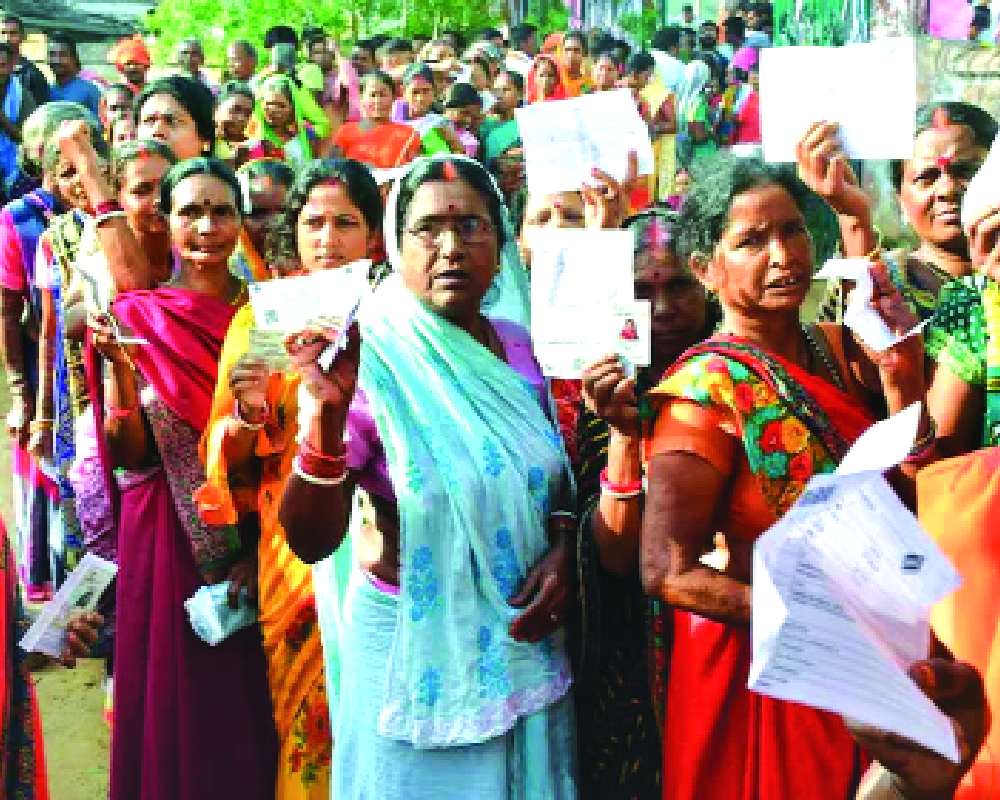
The declaration of the Bihar Assembly election results on November 14, 2025 has formally concluded the electoral cycle, and once again the people of Bihar have delivered a historic and extraordinary mandate in favour of the National Democratic Alliance. This mandate is a strong reaffirmation of decisive governance, clean leadership, and development-oriented politics that have been consistently promoted by Prime Minister Narendra Modi and Chief Minister Nitish Kumar. Bihar has spoken clearly and firmly. The message from the people is now beginning to echo beyond the State’s boundaries, especially in places like Tamil Nadu, where the political atmosphere is undergoing rapid change.
In the recently concluded Bihar election, the Bharatiya Janata Party contested 101 out of the total 243 seats and secured 89 seats, emerging as the single largest party with a strike rate of 88 per cent. This is an unprecedented performance in the political history of the State. The Janata Dal (United), which contested an equal number of seats, won 85 seats and achieved a strike rate of 84 per cent, becoming the second-largest party in Bihar. The other partners of the National Democratic Alliance, such as Lok Janshakti Party (Ram Vilas), Hindustani Awam Morcha (Secular), and Rashtriya Lok Morcha, also registered sweeping victories. These results show that every section of society across Bihar has placed its trust in the National Democratic Alliance. The alliance secured a much higher vote share compared to the previous assembly elections, reflecting deep acceptance of its development-oriented vision.
The people of Bihar have shown complete clarity in their political preference. They know that if there is anyone who can transform the State and guide it towards a fully developed future, it is Prime Minister Narendra Modi and the National Democratic Alliance. This confidence comes from performance and delivery, not from empty promises or political deception. Trust has been earned through consistent, result-oriented governance that has brought visible changes to the lives of millions over the last decade.
During the past eleven years, the Modi government at the Centre has taken multiple steps to strengthen Bihar’s foundations. Infrastructure has been upgraded, connectivity has improved, welfare delivery has become more efficient, and new avenues of opportunity have been created for youth across the State.
This decade-long commitment to Bihar’s development is the basis on which this historic mandate stands. People have clearly endorsed performance over propaganda and development over attempts at division. The verdict in Bihar and the collapse of the INDI-Alliance have sent a loud warning to states across India, including Tamil Nadu. In Tamil Nadu, the government run by the DMK, one of the biggest partners in the INDI-Alliance, is facing rising public frustration over issues of law and order, corruption, and appeasement-based politics. The message from Bihar is straightforward: the era of hollow promises and non-performing governance is reaching its end in Tamil Nadu as well. People now want governments that deliver results, not governments that distribute excuses to cover their failures.
In Bihar, the Congress and the Left parties proved to be the weakest components of the RJD-led alliance. Their poor performance became a major factor in the alliance’s collapse. These parties are losing relevance and have become disconnected from the aspirations of the people. In Maharashtra, the same situation played out when the INDI-Alliance was decisively rejected by the people. Arvind Kejriwal was rejected in Delhi. Rahul Gandhi faced rejection in Maharashtra, Haryana, and Delhi. Bihar has now repeated the same outcome. The Left, too, has lost its political space across the country. A similar situation is visible in Tamil Nadu. MK Stalin’s political partners, with whom he once shared the stage, are now facing collapse one after another. The cracks within the INDI-Alliance are no longer hidden; they have become visible and are widening with every passing day.
The National Democratic Alliance is strategically well-placed to perform strongly in the upcoming Tamil Nadu Assembly elections. Under the leadership of Prime Minister Narendra Modi and the strategic guidance of Union Home and Cooperation Minister Amit Shah, widely regarded as the modern-day Chanakya of Indian politics, the NDA is gearing up for a major breakthrough. The Bharatiya Janata Party’s leadership is known for its sharp planning, booth-level organisational strength, and the ability to unite diverse alliance partners while establishing direct contact with people. This combination of strong leadership, organisational depth, and clear strategy gives the National Democratic Alliance a crucial advantage in Tamil Nadu.
The results of the 2024 Lok Sabha elections indicate the growing presence of the National Democratic Alliance in Tamil Nadu. The NDA partners improved their overall position, and the vote share of the Bharatiya Janata Party increased significantly. The alliance has expanded its influence across several regions of the State. This steady rise in vote share reflects the increasing confidence of Tamil Nadu voters in Prime Minister Narendra Modi and the development-focused approach of the National Democratic Alliance. The momentum is clearly shifting.
The vote share numbers from the 2024 Lok Sabha elections in Tamil Nadu provide a clearer picture. The ruling DMK secured 26.93 per cent, the Congress secured 10.67 per cent, the Left secured 4.67 per cent, and other INDI-Alliance partners secured 4.67 per cent. Together, the INDI-Alliance received 46.97 per cent of the vote share. In contrast, the National Democratic Alliance partners secured 41.33 per cent, a major improvement compared to their performance in the 2021 Assembly elections. The rise in the BJP vote share alone was notable, going up to 11.24 per cent, almost nine per cent higher than the previous Assembly election. As seen in Bihar, even a small shift in vote share towards the National Democratic Alliance can bring a major transformation in Tamil Nadu.
In the 2021 Tamil Nadu Assembly elections, there were 60 seats where the INDI-Alliance and the National Democratic Alliance were in close contests. More than 60 seats were won by the INDI-Alliance with a margin of less than 15,000 votes. Out of these, 39 seats were decided by margins below 10,000 votes, 21 seats with margins below 5,000 votes, and nine seats with margins under 2,000 votes. If the National Democratic Alliance focuses strongly on these 60 seats in the upcoming Assembly election, it becomes possible for the alliance to win them comfortably. Even a small shift of a few percentage points can create a major change in the seat tally, just as it happened in Bihar. It is likely that the DMK, along with Congress and the Left, will lose ground in Tamil Nadu. The electoral arithmetic is moving in favour of the National Democratic Alliance.
There is a clear reason why the National Democratic Alliance is strongly placed to form the government in Tamil Nadu in 2026. The Congress and the Left have become electoral burdens for the INDI-Alliance. Their political relevance is continuously declining, and voters are losing interest in their agenda. For the DMK, carrying these parties acts like extra weight pulling down its chances of crossing the halfway mark. What happened in Bihar is likely to be repeated in Tamil Nadu. Congress and the Left secured around 15 per cent vote share in the 2024 Lok Sabha elections from Tamil Nadu. If they continue performing poorly, the overall vote share of the INDI-Alliance will take a major hit. With the DMK already facing anti-incumbency, the decline is expected to grow stronger. The INDI-Alliance appears to be heading towards a major electoral setback.
Bihar has once again demonstrated the strength of development-based politics. Tamil Nadu is now witnessing a similar shift. Under the leadership of Prime Minister Narendra Modi and Union Home and Cooperation Minister Amit Shah, the National Democratic Alliance possesses the vision, strategy, and organisational structure to unite the people and bring about decisive political change in 2026. Tamil Nadu is prepared for a new phase, one marked by development, stability, and effective governance.
The writer is Prof (Dr) Aseervatham Achary, National Coordinator for Digital Library, Library & Documentation, BJP; views are personal