BCs transform financial inclusion landscape
Financial inclusion began gaining ground in India after it was highlighted in the RBI's Annual Policy Statement in 2005 by Governor Y. V. Reddy. The RBI later defined it in its 2009 Annual Report as access to financial services at an affordable cost for disadvantaged and low-income groups. The 2010 Annual Report added that these services must be fair, transparent, and suited to the needs of vulnerable households. The idea is simple: formal finance should reach people who never had access to bank accounts, loans, or savings tools.
A New Banking Infrastructure
For many years, the RBI relied on the Lead Bank Scheme, which encouraged banks to set up branches and increase credit flow to rural and semi-urban areas. However, as rural populations grew and digital tools expanded, this model could not cover the last mile fast enough. The RBI introduced a major shift in 2006 when it allowed banks to use Business Correspondents (BCs) to deliver services in places where branches were unviable. This change opened the door for a new banking channel that blended technology with local presence.
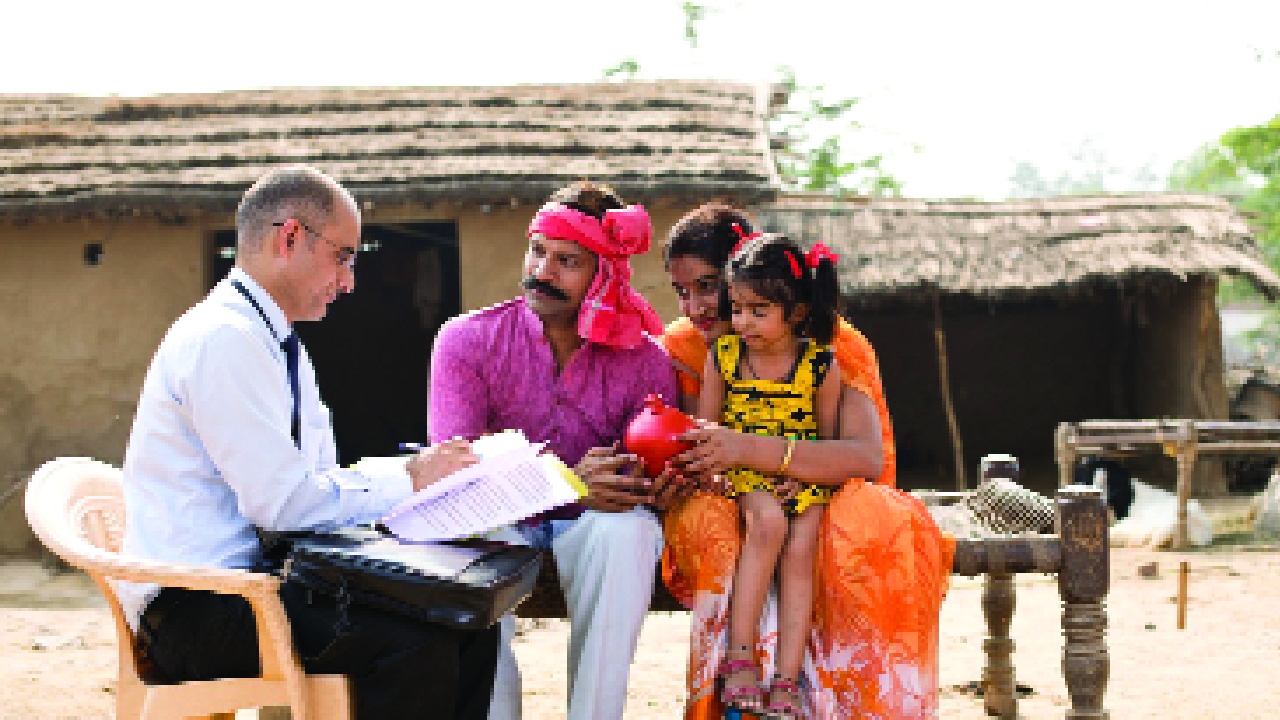
BCs act as agents of banks. They handle deposits, withdrawals, loan repayments, transfers, and account openings. BCs work as the operational arm of banks. They were created to take banking to every village with more than 2,000 people by 2012, and then gradually to smaller habitations. The goal was not only reach but also trust. A local shopkeeper or NGO worker would know the community better than any distant bank branch.
Why BCs Work Better Than Traditional Banking
Several studies have underscored the strength of the BC model. For example, Frost & Sullivan (2009) observed that BCs could deliver services at the doorstep in ways branches could not. Technology has strengthened this model even further. Since internet connectivity and electricity are still patchy in many regions, banks depend on GPRS-based mobile applications. BCs carry handheld devices that sync with bank servers. Smart cards with biometric data help verify users securely. In this way, banking can operate even in places with no stable internet or power.
BCs Reshape India's Financial Map
The results show how strongly the BC model has expanded. Basic savings accounts increased from 60.2 million to 270.4 million. These numbers show that BCs have gone far beyond a stopgap solution. They now serve as India's frontline banking system across rural and semi-urban India.
The BC model has helped cut leakages in government payments. People receive pensions and social security transfers directly into their accounts without middlemen. On the ground, the change is easy to see. A pensioner who once spent half a day travelling now collects money from a nearby BC counter. A labourer moves from uncertain seasonal work to a steadier income after a small SHG-linked loan is arranged through a BC. Even delays in government benefits ease when Aadhaar or account issues are fixed through a BC. These may look like small shifts, but they shape how families plan, earn, and manage their lives.
What Still Holds the BC Model Back
Even with this progress, BC networks face hurdles. Handling cash in remote areas brings risks such as theft or mismanagement. Many no-frills accounts remain inactive, raising questions about the model's viability. There is also a need for steady income for BCs to remain motivated. Without sufficient transaction volume, the model struggles to break even. Technology still needs improvement to support multi-bank interoperability and more secure, low-cost devices.
The Road Ahead
India's banking system is being rebuilt from the village up, and BCs are driving that change. What began as a support channel is now a core part of how money moves in many regions. The way forward is to keep the BC system strong, and financial inclusion will continue to widen.
The writer is a policy analyst and fintech expert; views are personal