Bastar’s transformation and the road to a Naxalism-free Chhattisgarh by March 31, 2026
For decades, the forested region of Bastar in Chhattisgarh stood as one of India’s most challenging conflict zones, where underdevelopment, isolation, and insurgency fed into one another. Today, however, the region is witnessing a decisive and historic transformation.
Guided by a clear national vision articulated by Union Home Minister Amit Shah and implemented on the ground under the leadership of Chief Minister Vishnu Deo Sai, the Government of Chhattisgarh has adopted a comprehensive strategy aimed not merely at containing violence but at eliminating Naxalism entirely by March 31, 2026.
This time-bound commitment marks a defining shift in policy orientation. The objective is no longer limited to security management; it is the permanent dismantling of the conditions that allowed extremism to take root. Through the convergence of security operations, rehabilitation initiatives, and accelerated development, Chhattisgarh is advancing toward a model of peace anchored in governance, opportunity, and public trust. At the foundation of this transformation lies a recognition that lasting peace cannot be achieved through force alone. The state government’s approach balances decisive security action with an equally strong emphasis on reintegration and development. Sustained operations by security forces have significantly weakened extremist networks, resulting in large recoveries of arms, the neutralization of key leadership figures, and the expansion of administrative reach into previously inaccessible areas. However, what distinguishes the present phase is the scale of voluntary surrenders, which outnumber operational neutralisations-an indicator that the appeal of violence is diminishing in the face of credible alternatives.
Rehabilitation has emerged as the cornerstone of this policy framework. Dedicated rehabilitation centers across the region provide former militants with vocational training, educational opportunities, healthcare support, and pathways to dignified livelihoods. Training programs in driving, tailoring, electrical work, agriculture, and small enterprise development equip individuals with sustainable economic skills. Identity documentation, social welfare inclusion, and livelihood assistance ensure that reintegrated individuals are not left on the margins of society.
Equally important is the government’s focus on restoring human dignity. Psychological counseling, community engagement initiatives, and exposure visits help individuals transition from conflict-driven environments into stable social structures. Collective social initiatives, including community events and support for family integration, reinforce the principle that reintegration is not merely administrative-it is social and emotional. By offering opportunity instead of exclusion, the state is systematically dismantling the recruitment base of extremism.
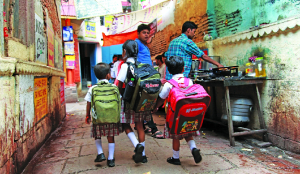
Parallel to rehabilitation, infrastructure expansion is reshaping everyday life across the region. Hundreds of villages are now connected to electricity, drinking water, healthcare facilities, and educational institutions. Schools that once remained closed due to insurgent threats are reopening, restoring the promise of opportunity for a new generation. Road networks are extending into interior areas, improving mobility, market access, and administrative outreach.
Digital connectivity has emerged as another transformative force. The installation of mobile towers and expansion of internet services are bringing telemedicine, online education, and digital financial systems to remote communities. Connectivity is bridging the gap between governance and citizens, ensuring that welfare programs, health services, and information access reach even the most distant settlements.
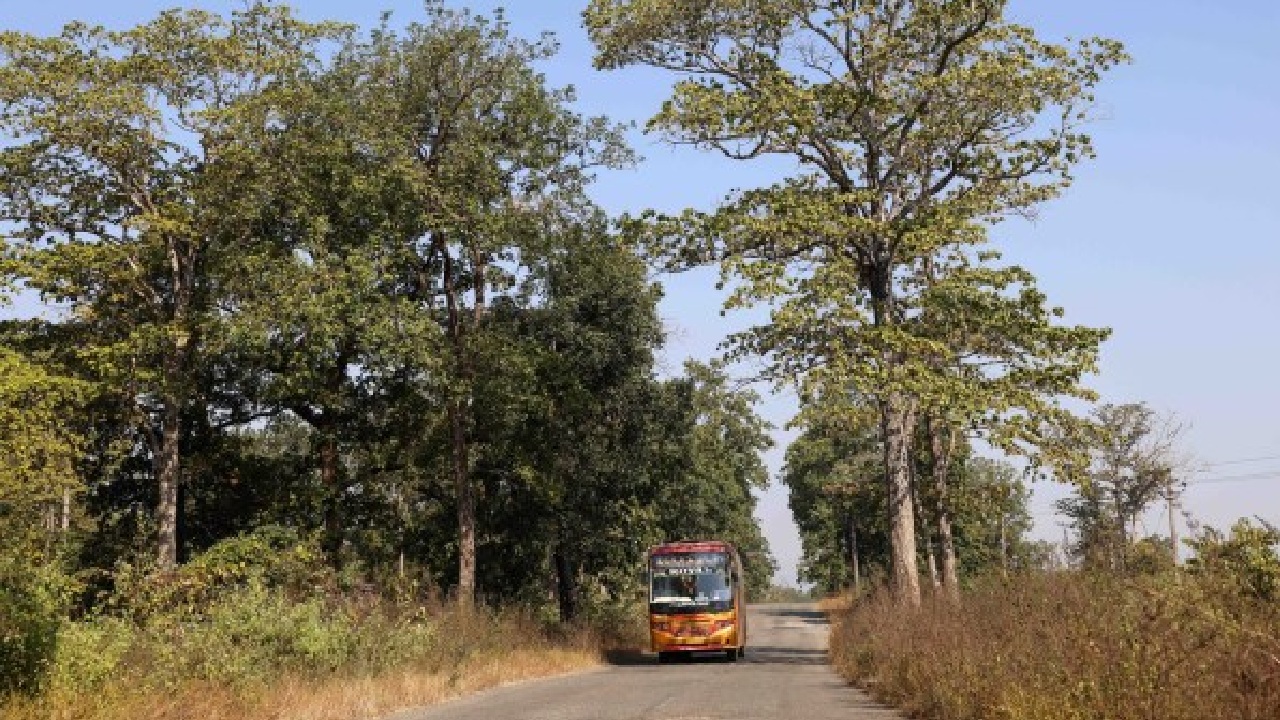
Transport connectivity has further accelerated integration. Rural bus services linking previously isolated villages with administrative and commercial centers are enhancing mobility and economic participation. These initiatives reflect a governance philosophy that development must reach the last mile if peace is to endure.
The restoration of democratic participation stands among the most powerful symbols of change. Villages that once could not observe national events due to insurgent influence are now publicly celebrating national days. Such developments represent more than ceremonial milestones-they signify the re-establishment of constitutional authority and civic confidence. When citizens participate openly in democratic life, extremism loses both legitimacy and space.
Agricultural and livelihood programs are ensuring that stability is economically sustainable. Training in modern farming techniques, natural agriculture, fisheries, and allied activities is enabling communities to build self-reliant local economies. By aligning rehabilitation with regional economic potential, the government is embedding peace within everyday livelihoods.
Cultural preservation efforts further reinforce social cohesion. By promoting tribal heritage, local festivals, and community identity, governance is acknowledging that development must coexist with cultural continuity. This inclusive approach strengthens community ownership of the transformation process.
The significance of the March 31, 2026 deadline lies in the convergence of these multiple policy streams. Security dominance restricts the operational capacity of extremist groups. Rehabilitation weakens their recruitment base. Development removes structural grievances. Governance presence restores institutional legitimacy. Together, these elements create conditions in which the persistence of Naxalism becomes increasingly untenable.
The government’s strategy reflects a mature understanding that conflict resolution is not achieved through episodic campaigns but through sustained structural change. Each rehabilitated individual, each newly connected village, and each restored public institution contributes to a cumulative shift toward stability. The elimination of Naxalism, therefore, is not framed as a singular event but as the logical culmination of systematic governance.
Importantly, the transformation underway in Bastar demonstrates that peace is most durable when communities become stakeholders in progress. As citizens gain access to education, healthcare, employment, and connectivity, the appeal of violent alternatives diminishes naturally. Trust in institutions grows not through rhetoric but through visible improvements in daily life. Chhattisgarh’s experience offers a broader governance lesson: security and development are not competing priorities but mutually reinforcing processes. Operational control creates space for governance; governance creates conditions for lasting peace. This integrated model provides a credible pathway toward achieving the 2026 objective.
As the deadline approaches, Bastar’s evolving landscape reflects a transition from uncertainty to confidence. Infrastructure is expanding, civic life is normalising, and opportunities are multiplying. The region is steadily moving from the margins of conflict toward the mainstream of development. The complete elimination of Naxalism in Chhattisgarh by March 31, 2026, thus represents more than a policy target-it symbolises the restoration of trust between the state and its citizens. It marks the closing of a prolonged chapter of conflict and the beginning of a new era defined by inclusion, stability, and progress.
Bastar’s transformation stands as a testament to what coordinated governance, determined leadership, and inclusive development can achieve. If the current trajectory continues, the vision of a peaceful, prosperous, and fully integrated Chhattisgarh will not remain an aspiration-it will become an enduring reality.
The writer is Editor, The Pioneer, Raipur; views are personal