Bangladesh’s political reset and the regional ripple effect
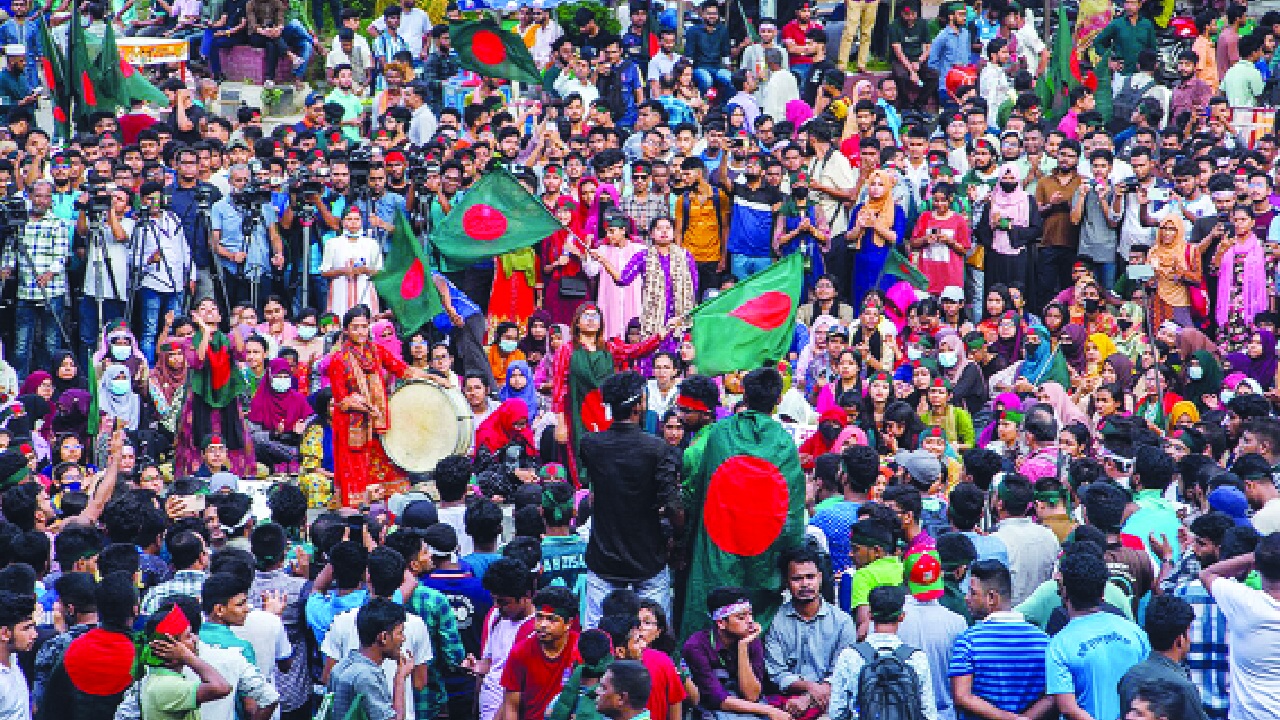
Gen Z uprising in Bangladesh in July 2024 led to the collapse of Sheikh Hasina’s government. The Mohd Yunus-led government took interim charge of the administration. It banned Sheikh Hasina’s Awami League party and held national elections on 12th February. The young students and activists, who spearheaded the protest against Hasina, led a political party named National Citizens Party (NCP) and contested the election along with Jamaat-e-Islami and Bangladesh Nationalist Party (BNP). Jamaat, the main force behind the uprising, had an electoral alliance with NCP. Tarique Rahman, son of ex-PM Khaleda Zia, who last ruled Bangladesh between 2001 and 2006, returned to the country after 17 years of self-exile. He was appointed as leader of BNP only a month and a half prior to voting, and went on to win the election with a two-thirds majority and has taken over as PM of the country.
Jamaat won 68 seats and its electoral partner NCP six out of the 30 it contested. It will be the main opposition party in the Parliament. While NCP could not turn street momentum into votes, Jamaat has put up the best electoral performance in the history of Bangladesh. Jamaat is a radical outfit which believes in hardline ideology and has never been acceptable to democratic parties like the Awami League. During the one-and-a-half-year tenure of the interim administration of Mohd Yunus, Jamaat has spread its organisational set-up in several areas of Bangladesh. Earlier, the best performance of Jamaat was when it won 17 seats in the 2001 general election. Though the recent election has given a stable government to Bangladesh, Jamaat’s rising footprint in the west of the country is worrying for India. Massive presence of Jamaat in western areas of Bangladesh bordering Indian states of West Bengal, Assam and Meghalaya is a security challenge for India.
In the 2021 West Bengal Assembly election, India’s BJP had won more than 16 seats in constituencies bordering Bangladesh. Now Jamaat has made inroads on the other side of the border. It clearly shows that there has been strong radicalisation on both sides of the border. South 24 Parganas, North 24 Parganas, Nadia, and Murshidabad are among the districts in West Bengal that border Bangladesh. India may have to step up its security in these districts and both central and state governments may have to work in tandem for this. Similarly, the districts in Assam and Meghalaya bordering Bangladesh will also have to remain alert to deal with security challenges.
NCP failed to establish its support base along the length and breadth of the country for votes and had to contest the election in coalition with Jamaat. After the 2024 uprising, people had hopes and dreams from the NCP cadre, but soon these faded once the coalition was announced.
The youth vote was divided, which strengthened the support for BNP, giving them a landslide victory. It now plans to rebuild itself and contest local elections coming up in the next one year. After facing a series of attacks, the minority communities tilted towards BNP, as the Awami League was banned.
The task before PM Tarique Rahman is daunting. He has to bring the already shattered economy on track in a country with 170 million people. He has committed to providing financial aid to poor families, and promoting industries to manufacture toys and leather goods to cut down excessive reliance on garment exports. He has pledged to recalibrate the country’s international partnerships to attract investments. Hasina was too closely aligned to India. In contrast to this, Rahman would not have close ties with any single power. As seen in his election manifesto, he is set to focus on issues relating to border killings, water sharing from transboundary rivers like Brahmaputra, Teesta etc., and even Hasina’s extradition from India.
India, too, will deal with Rahman’s government by focusing on the security of Indian territories in West Bengal and northeastern states. Other areas in focus would be to manage and curb the increasing radicalisation and also deal with the threat to minority communities within the geography of Bangladesh. The democratic reforms that have been passed along with the general election with 60% votes, like the introduction of an upper house in the Bangladeshi Parliament, a limit of two terms for PM, and emphasis on Bangladeshi and not Bengali, will also be closely watched by India.
A few days prior to the voting, the interim administration of Bangladesh signed a free trade deal with the US. Let me explain how this deal is not going to protect the interests of Bangladesh and its farming communities. Last year, Bangladesh became the eighth-largest market for the US. Under a reciprocal trade agreement signed on February 9, American dairy, meat and poultry producers will get sweeping access to the Bangladesh market. Dhaka has opened its market for US agricultural and industrial goods, chemicals, medical devices, machinery, motor parts, dairy products, poultry, fruits and tree nuts. As a part of the deal, Bangladesh will purchase annually around $3.5 billion worth of agricultural products namely wheat, soy, cotton and corn. The deal also calls for Bangladesh to import aircraft, cars and motorcycles and their spare parts.
The United States has committed to reducing the reciprocal tariff rates to 19% on goods originating from Bangladesh. The agreement further indicates that select Bangladeshi textiles and apparel goods made with US-produced cotton and man-made fibres can enter the US market at 0 reciprocal tariff. India’s Commerce Minister Piyush Goyal has added recently that a similar concession is available to India too. If we buy cotton or yarn from the US and process and use it for making garments for export to the US, the tariff is zero. In other words, India and Bangladesh both can export textiles, aprons and garments on zero tariff if manufactured using US cotton/yarn.
In my opinion, it is counterproductive to import raw materials like cotton from the US and then manufacture in India or Bangladesh to qualify for zero tariff. It is going to increase the cost of production substantially, making it difficult for exporters to survive in the market. It is better to use indigenously grown cotton to manufacture and export with 18% tariff from India and 19% from Bangladesh. The local farmers will also be benefited.
One of the biggest challenges Bangladeshi PM Rahman would face is that US dairy and agricultural products are going to flood the market, leaving the farmers in distress. The sectors which have not been opened by India have been opened by Bangladesh for US exports. The interim administration has signed a deal with the US detrimental to the interests of the farming communities in Bangladesh. It is going to be a big headache for Rahman.
Besides double-digit inflation and a weakening banking sector, Bangladesh is one of the most climate-vulnerable nations. It faces severe risks from cyclones, floods and sea surges and also severe air and water pollution. If the average rise in global temperature exceeds 2 degrees Celsius above the pre-industrial era, half the land mass of the country would go under water. Salinisation and spells of drought intensify the risk of food insecurity. Nearly 15% of the population is below the poverty line, which is projected to rise to 20% by 2030.
The new government has to walk a tight rope to cope with the challenges. Jamaat will not miss an opportunity to gain an upper hand in any catastrophe the country faces, which will not be in the interests of the people of Bangladesh.
The writer is Retired Head of Karnataka Forest Force and presently teaches Economics in Karnataka Forest Academy; views are personal