Artificial Intelligence is transforming the legal profession
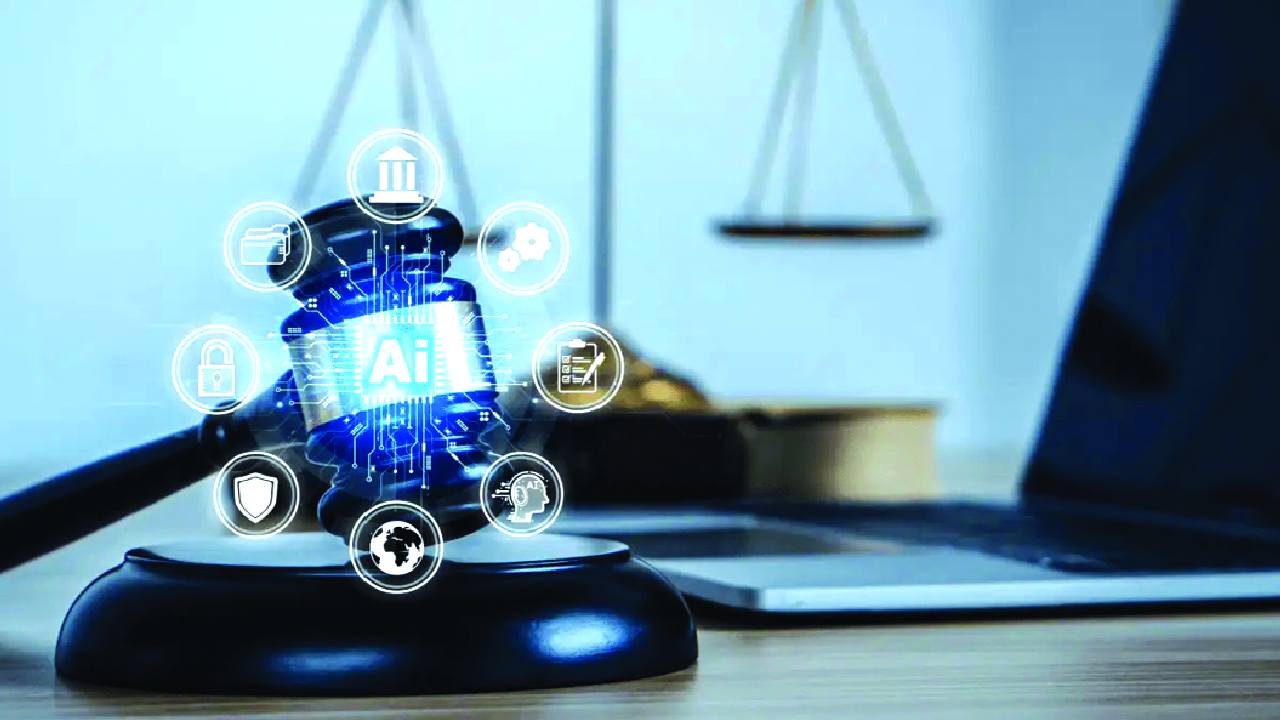
Artificial Intelligence (AI) has wormed its way into every conceivable sphere of human existence, and the law is no exception. The legal profession, historically tradition-bound and labour-intensive, is on the cusp of an unimaginable metamorphosis in which AI has the potential to affect the manner in which the legal world would function in the foreseeable future. Very much like email changed the way we do business, AI would become omnipresent — an indispensable tool for lawyers.
The charismatic American President John Fitzgerald “Jack” Kennedy once observed, “Change is the law of life. And those who look only to the past or present are certain to miss the future.” The legal sector was one of the first to adopt AI, with some leading law firms using AI platforms in some form or another since 2005. But the recent alarming headlines and predictions of AI replacing lawyers have no doubt created a feeling of discomfort in the minds of many lawyers, invariably anxious about the future of their profession.
As with many new technologies, there is a cycle of hype at the outset that creates magnified expectations, even though the long-term implications of that technology may be profound and all-embracing. Right now, AI in the legal profession is more of an unfolding opportunity and not a real threat, with pioneering adopters providing more efficient and cost-effective legal services to an expanding portfolio of existing and potential clients.
The use of AI in law is thus in the nature of an evolution rather than a revolution. But make no mistake — AI is already transforming virtually every business and activity that lawyers deal with, some more quickly and dramatically than others, and the legal profession will not be spared from this disruptive change.
The incorporation of AI into a law firm’s systems and operations is a gradual learning process, so early adopters would have a distinct advantage over firms that lag behind in adopting the technology.
As a cover story published in the ABA Journal Magazine, the flagship publication of the American Bar Association, explained, “Artificial intelligence is changing the way lawyers think, the way they do business and the way they interact with clients. Artificial intelligence is more than legal technology. It is the next great hope that will revolutionise the legal profession.”
At this time and for the steadily emerging future, the current AI capabilities only permit computers to approach, achieve, or exceed certain but not all human cognitive functions. While some researchers are feverishly working on developing computers that can match or even overtake the human mind, sometimes referred to as “general intelligence” or “superintelligence”, such an attainment is virtually decades away.
That is why important legal skills based on human judgement, inference, common sense, interpersonal skills and experience would remain beneficial for the lifetime of any lawyer like myself practising today.
While AI has several features for its many different applications, two are presently most meaningful for legal applications.
Firstly, machine learning constitutes the capability of computers to teach themselves and learn from experience. This means that AI can do more than blindly adhere to what it has been programmed to do but can learn from experience and data to constantly improve its enormous positive capabilities.
Dave Waters, one of the foremost international authorities on AI, observed, “A baby learns to crawl, walk and then run. We are in the crawling stage when it comes to applying machine learning.”
Secondly, AI is increasingly being applied to all major sectors of the economy and society. Many of these applications would create new legal issues for lawyers, such as the legality of lethal autonomous weapons, the liability issues of autonomous cars, financial bots that may run counter to antitrust laws, and the vulnerability of medical robots. But in addition to changing the subject matters that lawyers work on, it would also transform the way lawyers practise their profession. Instead of wading through piles of papers, lawyers can now deal with terabytes of data and hundreds of thousands of documents.
E-discovery, legal research and document review are getting more sophisticated due to the abundance of data. Many technology companies and law firms are partnering to create programmes that can assist with specific practice areas, including due diligence, bankruptcy, litigation research and preparation, real estate, and other areas. Many law firms are developing legal bots to assist current or prospective clients in dealing with a whole host of legal issues based on their own circumstances and facts. Other groups are developing pro bono legal bots to assist people who may not otherwise have access to the legal system.
Legal decision-making AI is enabling judicial decision-making in a number of ways. A number of online dispute resolution tools are being developed to completely circumnavigate the judicial process.
Microsoft and the US Legal Services Corporation have joined hands to provide machine learning legal portals to provide free legal advice on civil law matters to people who cannot afford to hire lawyers.
These initial applications of AI to the legal profession mark the early beginnings of what would ultimately turn out to be a radical technology-based disruption to the practice of law.
According to the celebrated American journalist and author Joanna Goodman in her well-known treatise on “Robots in Law: How Artificial Intelligence Is Transforming Legal Services” — “AI represents both the biggest opportunity and potentially the greatest threat to the legal profession since its formation.”
Today, AI represents an opportunity for a law firm or a lawyer to be a leader in efficiency, cost-effectiveness, and productivity, but soon the incorporation of AI into practice would be a matter of keeping up rather than being a leader.
Unfortunately, AI can also negatively impact the legal profession. For instance, AI’s ability to create deepfake technology can spread harmful misinformation and disinformation. Additionally, because generative AI relies heavily on massive data sets, there are also incalculable risks of critical private data ending up in the wrong hands. This is indeed an unhealthy drift of events that must be faced and countered with all the strength at the command of the legal profession! In conclusion, one thing is certain —there would be winners and losers among lawyers who do or do not absorb AI, respectively.
As one senior lawyer, David Halliwell, attached to the London-based law firm Pinsent Masons LLP, remarked, “Unless private practice lawyers start to engage with new technology, they are not going to be relevant even to their clients.”
The AI train is leaving the station — it is high time to jump aboard.But here I am emboldened to sound a note of caution by turning to the foreboding words of the renowned American AI researcher, blogger, and exponent of human rationality, Eliezer Shlomo Yudkowsky, “By far the greatest danger of Artificial Intelligence is that people conclude too early that they understand it.”
The writer is an internationally reputed senior lawyer practising in the Supreme Court of India and various High Courts and Tribunals in India; views are personal