Anger covers more ground than its title suggests and delves deep
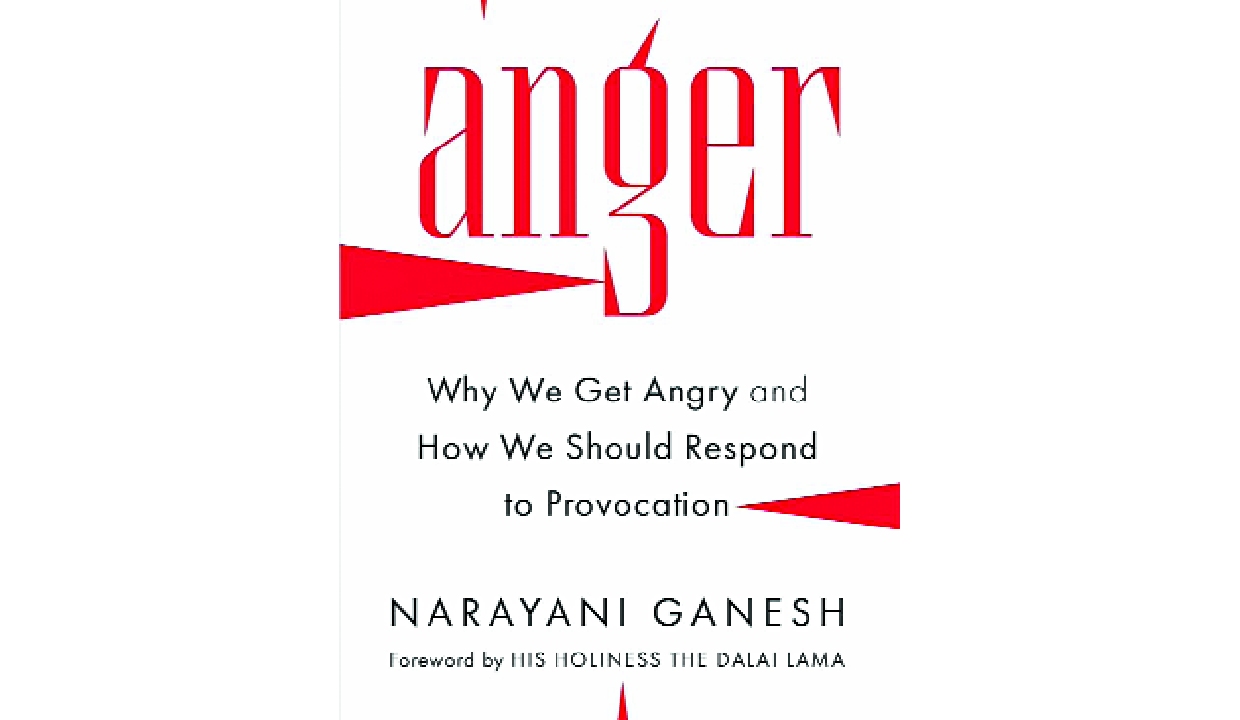
Anger: Why We Get Angry and How We Should Respond to Provocation isn’t the kind of self-help title that promises five easy steps to a calmer you, and that turns out to be the book’s real strength. Journalist Narayani Ganesh — her name is often misspelled “Ganeshan” online, worth flagging if you’re hunting for the book — spent years editing The Times of India’s Speaking Tree column, and it shows: she treats anger less as a problem to be fixed than a subject to be understood from every angle she can find.
That range is the book’s defining feature. Buddha, Krishna, and Mohammed sit alongside the Dalai Lama, Thich Nhat Hanh, and Sri Sri Ravi Shankar, with philosophers and psychiatrists brought in to round things out.
But Ganesh doesn’t stop at scripture and sutra. She follows anger into distinctly present-day territory — incel culture and the kind of online radicalisation that shows like Adolescence dramatised, the mechanics of political trolling, and the everyday menace of road rage on Indian streets.
It’s an unusual and effective pairing: ancient counsel on wrath sitting next to an account of how algorithms and comment sections manufacture it fresh every day.
The most memorable stretches, though, are the quietest. A conversation with the Dalai Lama and another with Shantum Seth — whose own journey from angry young man to Dharmacharya carries more weight than any of the book’s broader surveys — do more work than the wider sweep around them. Elsewhere, Ganesh gets pleasingly domestic, tracing how cooking or eating while furious can leave its residue on a meal, grounding a very old question in something as ordinary as dinner.
What the book resists is tidiness — it doesn’t rank traditions or hand out a winner, just lays out a spread and lets the reader pick what fits. The trade-off is that a book trying to hold scripture, psychology, and internet culture in one hand can read more like a well-curated anthology than a single sustained argument, and readers hoping for a deeper dive into anger’s constructive side — the fury that drives people to fight injustice — may come away wanting more on that front specifically.
Still, as an entry point for anyone confused about where to even start thinking about their own temper, it’s a generous, well-sourced, and surprisingly current one.