Accept equality of all religions to achieve global peace
Indians are inheritors of a great civilisation that excelled in the pursuit of knowledge of the highest order, encompassing the entire spectrum of the body, mind, and spirit. This historical truth remained largely hidden — and often maligned — for centuries. Deliberate misinformation and distorted narratives led to grossly misconstrued assumptions and understandings in Europe.
The ignorance was so deep that it even gave rise to the belief that Indians needed to be ‘rescued’ in order to salvage the souls of the savages — a euphemism, in reality, for religious conversion. Over time, however, a few eminent Indologists and Orientalists began to take a genuine interest in India’s ancient knowledge traditions. Their engagement with Indian scriptures and literature gradually awakened the West to India and ‘the wonder that it was.’ Among these scholars were Sir William Jones, Max Müller, Charles Wilkins, and others. On the opposite end of the spectrum stood figures like Thomas Babington Macaulay, for whom there was nothing of worth in Indian languages, literature, culture, or heritage.
In his worldview, the English were destined to ‘rescue’ India only to reduce it to a subjugated annexure of the British Empire. One of the most profound and well-known moments in this historical journey was the address delivered by the young Swami Vivekananda in Chicago on 11 September 1893. He began with the immortal words, ‘Sisters and Brothers of America.’ The audience was mesmerised and applauded repeatedly, gradually absorbing the unique essence of Indian culture - its recognition of the universality and fraternity of the human race. He then articulated the core of this universality: “I am proud to belong to a religion which has taught the world both tolerance and universal acceptance.
We believe not only in universal tolerance, but we accept all religions as true. I am proud to belong to a nation which has sheltered the persecuted and the refugees of all religions and all nations of the earth.” He went on to explain the foundational philosophy through a powerful metaphor: “As the different streams having their sources in different places all mingle their water in the sea, so, O Lord, the different paths which men take through different tendencies, various though they appear, crooked or straight, all lead to Thee.”
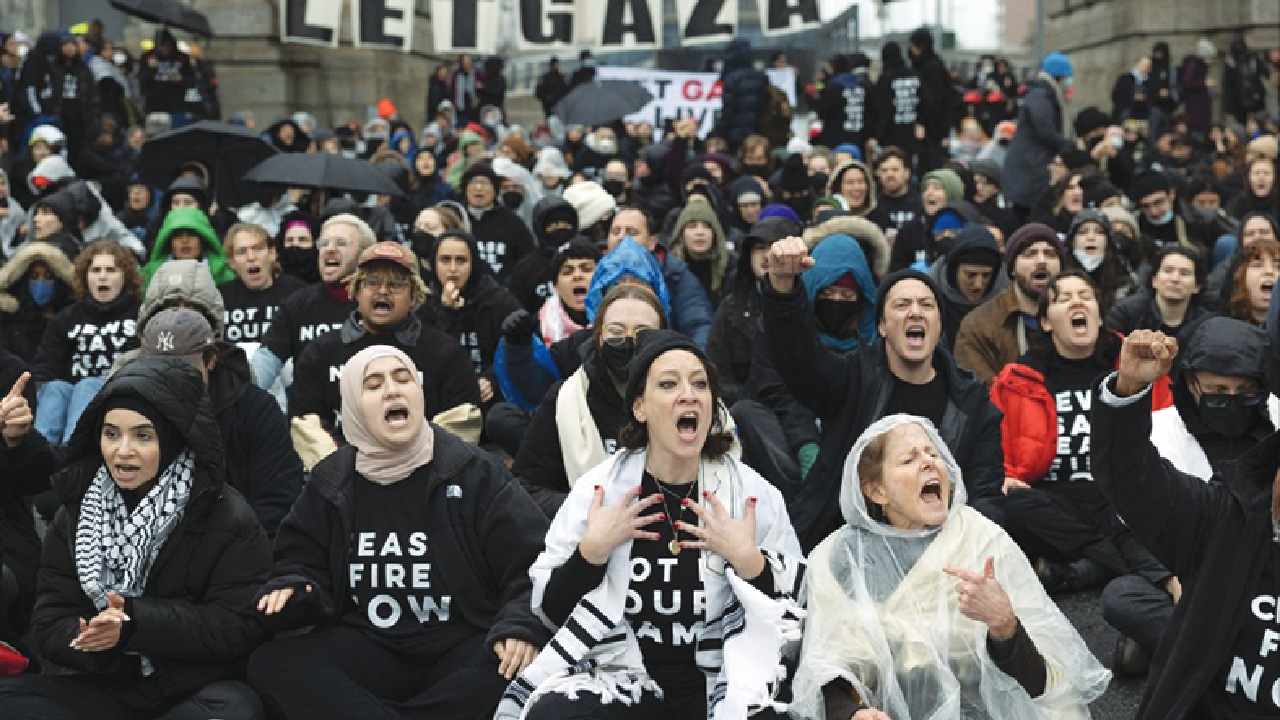
Contrast this vision with the present global scenario, rife with sectarianism, bigotry, and its horrific descendant - fanaticism. Remarkably, Swami Vivekananda used these very terms in his Chicago address 133 years ago. Are these forces not today leading to violence drenched in human blood on a scale far greater than in his time? Despite visible growth in knowledge, wisdom, and material progress, global civilisation has failed to move decisively toward a world of peace, harmony, and unity among all people, religions, and faiths. What, then, is missing?
There is no doubt that humanity harbours an eternal longing for peace and harmony. Yet it demands serious scrutiny as to why this aspiration has met with only limited success. The League of Nations, established after the First World War on January 10, 1920, and later the United Nations, founded on October 24, 1945, were sincere attempts to safeguard humanity and ensure its survival without war and violence. The Constitution of UNESCO begins with the powerful statement: “Since wars begin in the minds of men, it is in the minds of men that the defences of peace must be constructed.” Among the various organs of the UN, UNESCO has worked consistently to foster dialogue and interaction among nations, cultures, institutions, and peoples, based on shared values, mutual respect, and an appreciation of diversity - both natural and human-made.
This approach has found broad global acceptance. Unfortunately, the United Nations Security Council (UNSC), which was meant to play a decisive role in crisis intervention and peace-building, has largely failed. Its undemocratic structure, dominated by five veto-wielding powers, has rendered it outdated and increasingly irrelevant. Mechanical meetings and routine consultations have rarely translated into effective deterrence against fundamentalism, terrorism, arms proliferation, and violence.
Is this the world envisioned by Swami Vivekananda, Mahatma Gandhi, Martin Luther King Jr, Nelson Mandela, and others like them? If not, what is the way out? Human beings create problems, but they also possess the ingenuity to discover solutions.
Dialogue remains the only viable path forward. However, dialogue requires sincerity of purpose, integrity, honesty, and deep personal conviction. The historic debate between Acharya Shankaracharya and Pandit Mandan Mishra stands as a shining example of dialogue rooted in intellectual honesty and purity of intent — and it succeeded.
In more recent times, consider the Lahore bus journey undertaken by Prime Minister Atal Bihari Vajpayee. Even as peace talks were conducted in a congenial atmosphere, preparations were quietly underway in Kargil to seize Indian territory. This is just one of many examples, globally, where dialogue failed due to duplicity. Dialogue cannot succeed, even with the best intentions on one side, if the other is prejudiced, biased, or deceitful. The Mahabharata exemplifies such a tragic failure, while simultaneously serving as an eternal guide on how dialogue ought to be conducted when conflicts threaten large sections of humanity.
Religion is a reality. Even today, some adherents believe that only their religion is true. Worse still, certain doctrines encourage followers to forcibly convert “infidels,” and refusal is deemed grounds for elimination. It is devastating to claim that fundamentalism and terrorism have no connection to religion, as such denial only delays meaningful dialogue.
Biases and prejudices are often cultivated by leaders and communities. A telling example explains why India and Pakistan have failed to resolve differences through dialogue. During the 54th All India Muslim Conference held in Agra on December 29-30, 1945, Nawabzada Liaquat Ali Khan criticised the Wardha Scheme of Basic Education proposed by Mahatma Gandhi and refined by Dr Zakir Husain. He stated: “The basic ideas of the Wardha Scheme cut at the root of the fundamentals of our faith and our national ideology… The insistence on ahimsa is meant to root out from Muslim youth their martial spirit and traditions. Similarly, territorial nationalism is opposed to the Muslim view of nationalism, which is based on a philosophy of society and outlook on life rather than allegiance to a piece of territory.”
This illustrates why education, rooted in compassion, empathy, and a global outlook, is indispensable. Such education alone can foster respect for religious diversity — an aspect of Indian culture that Swami Vivekananda so eloquently articulated in Chicago.
The solution before a war — and violence-torn world is clear: accept the existence of diverse religions, acknowledge their equality, desist from indoctrination against others, and abandon the notion that any one religion alone is true. Learn to appreciate the beauty of diversity — of religions, cultures, languages, and celebrations. There is no other way forward.
The author is an educationist, a Padma Shri awardee, and works in religious amity and social cohesion; views are personal