A voice that brought Bhima alive falls silent, her legend lives forever
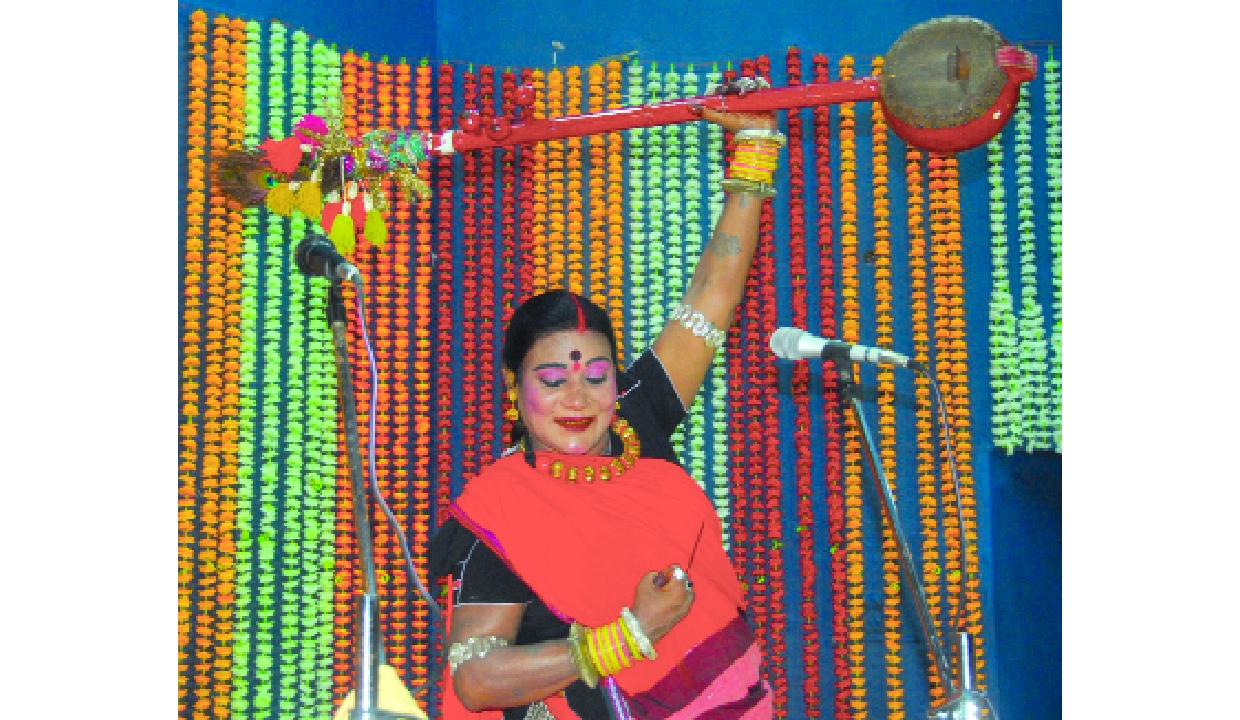
When a 13-year-old Teejan Bai stood on a makeshift stage in a Durg village to narrate stories from the Mahabharata, few imagined the tribal girl, once ostracised for singing in public, would become the global face of Chhattisgarh’s folk tradition.
Standing on stage, wielding her tambura (a stringed musical instrument) like Bhima’s mace, she transformed storytelling into theatre. Her commanding voice, expressions and presence breathed life into every character of the Mahabharata.
Teejan Bai, the legendary Pandavani exponent who died at 70 on Sunday after a prolonged illness, leaves behind a legacy that turned an ancient oral tradition into an internationally celebrated art.
Her journey from a poor tribal family in Ganiyari village of Durg district to the world’s biggest cultural stages reflects extraordinary perseverance, defiance and artistic brilliance.
Pandavani, meaning the voice of the Pandavas, is a folk-art form based on Mahabharata stories.
Born in 1956 into the Pardhi Scheduled Tribe, Teejan Bai grew up listening to her maternal grandfather Brijlal narrate episodes from the epic. Fascinated, she memorised entire sections while watching him perform.
At a time when women were discouraged from performing Pandavani, and those who did sang seated in the subdued Vedamati style, Teejan Bai chose the dramatic Kapalik style, traditionally reserved for men, writer Dharmendra Nirmal said.
Nirmal authored her biography, Teejan Gatha in Chhattisgarhi, released last year.
She faced stiff opposition from her family and community during childhood, the 51-year-old author said.
Married in childhood, she defied her in-laws’ demand to stop singing when they came for her gauna (send-off to husband’s home) ceremony at age 12, a stand that led to the collapse of her marriage. She was eventually ostracised and forced to leave home, he said.
Living alone in a hut, surviving with neighbours’ help and borrowing utensils to cook, she never gave up Pandavani.
Initially, her grandfather gave her a small stage in Ganiyari village. Later, the Deshmukh family from nearby Chandrakhuri invited her to perform at the village square. Her shows became so popular the engagement stretched to three weeks as crowds flocked from surrounding villages.
She was born on April 24 or in August, but the exact date is unknown. Local lore says she was born on Teej festival day in 1956, hence named “Teejan,” Nirmal said.
She belonged to the Pardhi tribe, known for hunting and making brooms and bamboo baskets.
Despite no formal training, she memorised all 18 parvas of the Sanskrit Mahabharata in just 21 days, Nirmal said.
At 17 or 18, she married again, to a married man, with whom she had three sons. The marriage was troubled as he allegedly abused her after drinking. On one occasion, he assaulted her while she was performing, after which she separated, Nirmal said.
She later married harmonium player Tukaram Verma, who managed her professional engagements and accompanied her throughout her career, he said.
She raised her three sons on her own. Two have since passed away, he added.
Noted theatre personality Habib Tanvir discovered her talent and recommended she perform before then Prime Minister Indira Gandhi.
That performance changed her life. She joined Bhilai Steel Plant in 1986, where her talent was nurtured. She travelled worldwide as India’s cultural ambassador, performing in the US, the UK, France, Germany, Switzerland, Italy, Japan, Russia, Australia, Turkey, Tunisia and other countries.
Wherever she performed, audiences unfamiliar with Chhattisgarhi were captivated by her storytelling, acting and music.
Whenever she returned from overseas tours, she spoke to journalists about one thing she missed most - basi, Chhattisgarh’s dish made by soaking leftover rice in water overnight.
She once asked staff at a luxury hotel to serve plain rice, which she soaked overnight and ate the next morning.
She also appeared in Shyam Benegal’s acclaimed TV series ‘Bharat Ek Khoj’, introducing Pandavani to millions.
Despite international fame, she remained rooted in village traditions. Friends recalled that success never changed her lifestyle. She continued chewing paan, spoke in her native dialect and mentored younger artists to keep Pandavani alive.
One of her favourite performances was Draupadi Cheerharan, through which she urged audiences to reflect on violence and injustice against women, Nirmal said.
Many universities later conferred honorary doctorates on her for her contribution to Indian culture.
She received the Padma Shri (1987), Padma Bhushan (2003) and Padma Vibhushan (2019), India’s second-highest civilian award, the Sangeet Natak Akademi Award and numerous other honours.
Her death marks the end of an era for Indian folk arts.
State-owned Steel Authority of India Limited’s Bhilai Steel Plant (BSP) expressed grief, calling it an irreparable loss to Chhattisgarh’s cultural heritage and India’s folk arts.
She joined the Bhilai Steel Plant in 1986, where her extraordinary talent was nurtured and encouraged. Following her Padma Bhushan award in 2003, BSP honoured her with a promotion and other recognitions, it said.
She remained one of SAIL-BSP’s most distinguished employees, bringing global recognition to the organisation, Chhattisgarh and India through her artistic achievements.
Her life of dedication, perseverance and commitment to preserving India’s cultural heritage would continue to inspire generations, it added.