‘Confidence comes from action, not slogans’
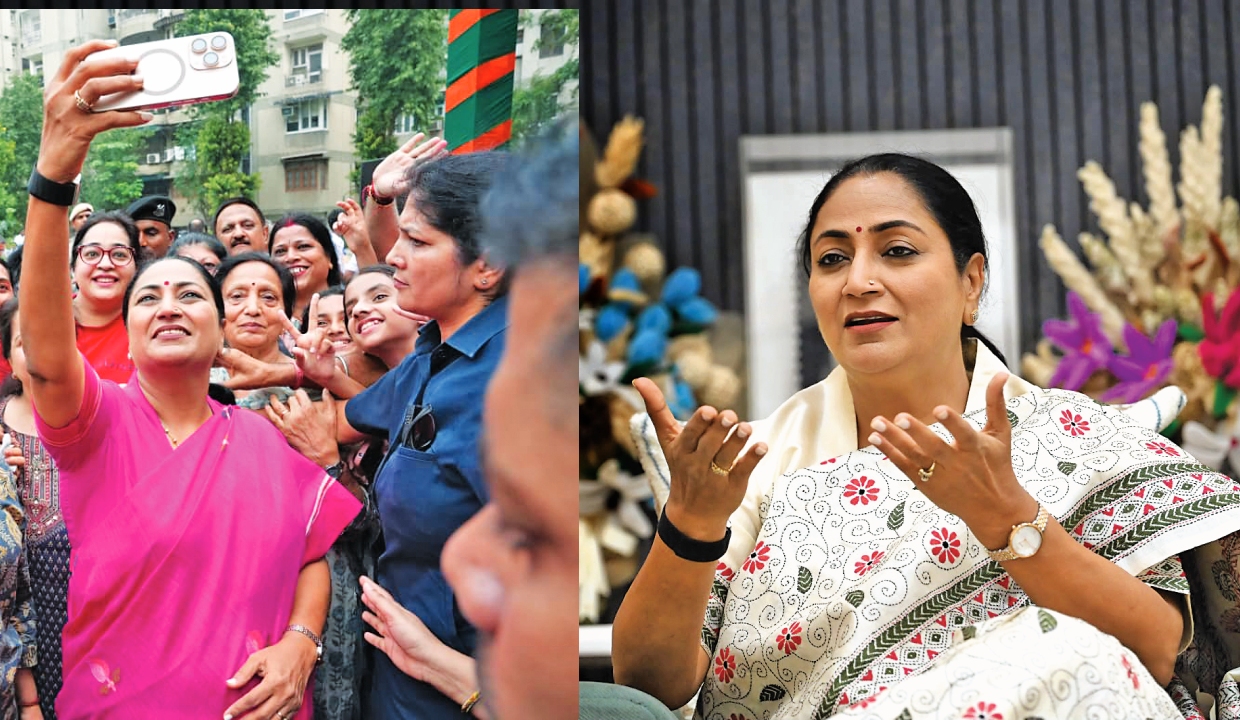
Good governance today is impossible without technology. For too long, citizens have associated government schemes with paperwork, delays and repeated visits to different offices. We are changing that mindset. The EV Policy adopts a digital-first approach. Incentives will be processed through transparent online platforms using Direct Benefit Transfer, ensuring benefits reach eligible citizens directly without unnecessary intermediaries. The Single Window Clearance system will simplify approvals for charging operators, reducing delays and improving accountability, says Delhi CM Rekha Gupta, treading on the Viksit Bharat path laid by Prime Minister Narendra Modi. She talks further on governance of NCT Delhi in an interview to Executive Editor Deepak Kumar Jha and Associate Editor Rajesh Kumar of The Pioneer.
Your government has been in office for over a year. How do you rate your performance?
Rekha Gupta: The final report card of any government is written by the people, not by the government itself. Having said that, I can say with satisfaction that in our first year we have focused on changing the culture of governance in Delhi. For too long, governance became synonymous with announcements. Our effort has been to restore the culture of implementation. Every department has been given measurable targets, timelines and accountability. We review progress regularly because public trust is built through delivery, not declarations.
Whether it is cleaning the Yamuna, strengthening flood preparedness, improving public infrastructure, expanding welfare delivery, introducing the new EV Policy, accelerating regularisation of colonies or improving coordination among departments, our approach has been consistent - identify the problem, fix responsibility and monitor execution. Of course, one year is only the beginning.
Delhi has accumulated challenges over many years, and no responsible government should claim that every problem has already been solved. But I believe people can clearly see the difference in intent, work culture and administrative seriousness. We did not come to occupy the office. We came to change outcomes. Our benchmark is not yesterday's politics. Our benchmark is tomorrow's Delhi.
What gives you the confidence that Delhi can emerge as India's EV capital?
Confidence comes from preparation, not slogans. Delhi already has one of the largest EV markets in the country. Our citizens adopt new technology quickly when they see value and convenience. We also have an extensive public transport network, a strong power distribution system and an entrepreneurial ecosystem that is ready to embrace innovation.
But our confidence is based on something even stronger. This policy does not focus on only one aspect of EV adoption. It builds the complete ecosystem.
We are targeting nearly 32,000 public charging points, backed by an investment of `1,000 crore for charging infrastructure. Delhi Transco Limited has been made the nodal agency to ensure planning, deployment and maintenance. A High-Powered Committee chaired by the Chief Secretary will continuously monitor implementation. New public infrastructure will be EV-ready from the design stage itself.
At the same time, we are supporting consumers through purchase incentives, scrapping incentives, road tax and registration fee exemptions. Commercial drivers, delivery fleets, manufacturers, mechanics and charging operators have all been included in the policy.
Cities become leaders when policy, infrastructure and public participation move together. Delhi has all three. I do not doubt that just as Delhi once became the country's leader in Metro connectivity and CNG-based public transport, it can now become India's Electric Vehicle Capital.
What is your vision behind the Electric Vehicle Policy, and how do you see it transforming Delhi over the next five years?
This policy is much bigger than electric vehicles. It is about the kind of Delhi we want to build for the next generation.
For too long, development and environment were presented as competing priorities. We reject that thinking. I believe that a modern city must also be a healthy city. Economic growth and clean air must move together.
Delhi has always led India - whether in education, entrepreneurship, technology or public transport. Now it is time for Delhi to lead India's green mobility revolution. Our EV Policy is therefore not merely a transport policy; it is an economic policy, an environmental policy and a public health policy rolled into one.
Over the next five years, Delhi will witness a complete transformation in the way people move. Charging infrastructure will expand rapidly, public transport will become cleaner, commercial mobility will increasingly shift to electric vehicles, and thousands of green jobs will be created for our youth. Every charging station that comes up, every electric auto that replaces a polluting vehicle and every family that chooses an EV will contribute to a cleaner Delhi.
Most importantly, this policy has been designed around the common citizen. It reduces the cost of ownership, creates reliable charging infrastructure, supports businesses and strengthens implementation. We are not asking citizens to adjust to the policy; we are designing the policy around the lives of citizens.
Governments should not merely respond to the future; they should prepare the future. This policy is our preparation for the Delhi of 2030 and beyond.
How will this policy help improve Delhi's air quality and contribute to a healthier environment for residents?
The biggest beneficiary of this policy is not the automobile industry. It is the health of Delhi's people.
According to the Commission for Air Quality Management, vehicular emissions contribute around 23% of Delhi's winter air pollution. Three-wheelers alone account for nearly 19% of vehicular pollution, while two-wheelers constitute almost 67% of Delhi's vehicle population. That is why our policy prioritises exactly these high-impact categories first.
Beginning in January 2027, new registrations of eligible three-wheelers and light commercial goods vehicles will progressively move towards electric mobility. From April 2028, new registrations of two-wheelers will also transition in phases. These are the vehicle segments that travel the longest distances every day and therefore contribute significantly to emissions.
The impact goes beyond pollution figures. Cleaner air means fewer respiratory illnesses, healthier children, lower healthcare costs and a better quality of life for every family. This is perhaps one of the biggest investments we can make in preventive healthcare.
Every electric vehicle replacing a polluting vehicle is not merely a transport decision; it is a public health intervention. Our objective is not only to improve Delhi's Air Quality Index. Our objective is to improve the quality of life of every Delhiite. Because clean air is not a privilege. It is every citizen's right.
What are your plans to ensure charging stations are easily accessible to every Delhiite?
No EV policy can succeed unless people are confident that charging is available wherever they go. That is why, for us, charging infrastructure is not an afterthought, it is the foundation of this policy.
Today, Delhi has around 9,000 public charging points. Our target is to take this number to nearly 32,000 during the policy period. That means adding roughly 23,000 new charging points across residential colonies, markets, office complexes, Metro stations, parking facilities, highways and public spaces.
But we have learnt an important lesson from the past. Success is not measured by how many charging stations are inaugurated; it is measured by how many are actually working. Therefore, Delhi Transco Limited has been made the nodal agency not only for deployment but also for ensuring uptime, maintenance and service quality. A High-Powered Committee headed by the Chief Secretary will continuously monitor implementation. A Single Window Clearance mechanism will remove unnecessary approvals so infrastructure comes up faster.
For citizens living in apartments and group housing societies, DISCOMs have been directed to facilitate separate EV charging meters, while RWAs are being encouraged to develop common charging facilities.
Our vision is that no Delhiite should have to plan their journey around a charging station. Charging stations should become as common and dependable as petrol pumps are today. That is how confidence is built.
How will the incentives under the new EV Policy make electric vehicles more affordable for middle-class families and first-time buyers?
Every middle-class family calculates every major purchase carefully. Buying a vehicle is not just an emotional decision; it is a financial decision.
Our responsibility as a government is to ensure that choosing a cleaner vehicle does not become an expensive choice. That is precisely why this policy combines purchase incentives, scrapping incentives, complete exemption from road tax and registration fees, and direct benefit transfers.
For two-wheelers, which are the preferred mode of transport for lakhs of Delhi families, purchase incentives have been designed to bridge the price gap between petrol vehicles and EVs. For four-wheelers, owners scrapping older BS-IV and earlier vehicles can receive a ?1 lakh scrapping incentive, in addition to the existing tax benefits.
Commercial vehicles also receive substantial financial support because they operate every single day and generate higher savings over time. But affordability is not only about the purchase price. An electric vehicle costs significantly less to run and maintain than a conventional vehicle. Lower fuel costs, fewer moving parts and reduced maintenance expenses translate into long-term savings for families. The best subsidy is the one that reduces a family's monthly expenses for years, not just on the day of purchase.
Our objective is to make electric mobility the sensible financial choice for the middle class, not merely an environmentally conscious one.
How do you expect it to benefit auto-rickshaw drivers, delivery partners, taxi operators, and small businesses?
Whenever we design a policy, we ask ourselves one question: how will this improve the life of someone who earns every day to support their family? For an auto-rickshaw driver, a delivery partner or a taxi operator, a vehicle is not just transport; it is the family's primary source of income. Every rupee saved on fuel directly increases household income. That is why commercial mobility is one of the biggest focus areas of this policy.
Eligible e-autos will receive purchase incentives of `50,000, along with scrapping incentives for replacing older vehicles. Commercial goods vehicles receive incentives of up to `1 lakh, besides support available under the Government of India's PM E-DRIVE programme. Battery swapping and charging infrastructure will also expand rapidly, reducing downtime and increasing productivity.
This transition will also benefit thousands of neighbourhood businesses, from charging station operators and battery service providers to local workshops, fleet managers and technology companies.
A good policy should improve both the environment and the economy. This policy does both. Cleaner vehicles, lower operating costs and higher income, which is a win for drivers, businesses and Delhi.
Technology is a key component of the new policy. How will digital platforms and smart monitoring improve transparency and the overall user experience?
Good governance today is impossible without technology. For too long, citizens have associated government schemes with paperwork, delays and repeated visits to different offices. We are changing that mindset.
The EV Policy adopts a digital-first approach. Incentives will be processed through transparent online platforms using Direct Benefit Transfer, ensuring benefits reach eligible citizens directly without unnecessary intermediaries. The Single Window Clearance system will simplify approvals for charging operators, reducing delays and improving accountability.
Technology will also help monitor charging infrastructure, service quality and system performance in real time. Instead of reacting after complaints are received, we want government agencies to identify problems early and resolve them quickly.
For citizens, this means a smoother experience, from applying for incentives to locate charging stations to accessing government services. Technology should not make government bigger; it should make government simpler. That is our approach to governance: not more files, but faster decisions; not more procedures, but better services.
Some experts say EVs are not safe. What is your take or experience?
Every new technology faces questions in its early years. That is true for electric vehicles as well. But we must separate isolated incidents from scientific evidence.
Today, EV technology has evolved significantly. Battery chemistry, thermal management systems and manufacturing standards have improved tremendously over the last few years. Across the world, millions of electric vehicles operate safely every day. Our government's responsibility is not to dismiss concerns but to address them through strong standards and proper regulation.
That is why our policy gives importance to certified charging infrastructure, authorised battery management, scientific recycling and strict compliance with safety norms. Delhi Pollution Control Committee will issue detailed guidelines for battery management, while manufacturers will continue to remain responsible for battery quality and safe end-of-life disposal.
I would also encourage citizens to buy vehicles only from authorised manufacturers and avoid unsafe modifications or uncertified charging equipment. Technology itself is neither safe nor unsafe. Safety comes from standards, regulations, and responsible use. My own experience has been that once people understand the technology and begin using EVs, hesitation gradually gives way to confidence. That is exactly how every major technological transition has happened in history.
What is your plan to reduce traffic jams across the city?
Traffic congestion affects productivity, public health, business activity and the quality of life of every Delhiite. Every minute lost in traffic is time taken away from families, work and economic growth. There is no single solution to congestion. It requires better planning, smarter technology and stronger coordination among agencies. Our government is working on multiple fronts simultaneously. We are expanding electric public transport, encouraging greater use of shared mobility, improving last-mile connectivity, strengthening traffic management systems and accelerating infrastructure projects that remove major bottlenecks. We are also working closely with Delhi Traffic Police and other agencies to use technology for better traffic regulation and real-time monitoring.
The EV Policy itself contributes to this effort. Cleaner public transport, electric buses, electric autos and organised charging infrastructure will make public mobility more efficient and encourage people to gradually shift away from excessive dependence on private vehicles. Encroachment removal is another important priority because roads are meant for movement, not obstruction.
We have already initiated sustained drives to reclaim footpaths and public spaces, and this effort will continue with strict monitoring. A world-class capital cannot spend its future waiting at traffic signals. Our objective is to build a Delhi where mobility is faster, safer, cleaner and more predictable. Ultimately, good governance is measured not by how many roads are built, but by how smoothly people can travel on them.
Parking is another issue here. Is the government planning to bring any parking policy?
Yes. Parking is one of the biggest urban governance challenges that Delhi face today. For many years, parking was treated as an afterthought. As vehicle ownership increased, our cities did not expand at the same pace. The result is visible on almost every road today.
Our approach is that parking has to become scientific, technology-driven and well-regulated. We are working towards better utilisation of existing parking spaces, improved digital management, stronger enforcement against illegal parking and greater integration between parking facilities and public transport. Future planning must also anticipate future mobility. That is why our EV Policy requires new public infrastructure to be EV-charging-ready from the design stage itself.
Similarly, future parking infrastructure must also be planned with electric mobility in mind. At the same time, we cannot allow public roads to become permanent parking lots. Roads are public assets and must primarily serve mobility. Every square metre of public space in Delhi is valuable. It should be managed, not misused. Our objective is to create a parking ecosystem that is transparent, technology-enabled and convenient for citizens while ensuring smoother traffic movement across the city.
Monsoon has arrived in Delhi. Every year, we see roads getting flooded and severe waterlogging. What preparations has your government made this time?
Delhi has suffered for years because preparations often began after the rains had already arrived. We decided to reverse that approach. This year, planning started well before the monsoon season. A comprehensive Flood Control Order 2026 has been issued after a detailed review at the highest level.
Every identified waterlogging point in Delhi has been assigned a dedicated nodal officer, with clear accountability. If waterlogging occurs, responsibility is fixed, not diffused. A 24×7 Central Flood Control Room has been operational since 15 June, using digital monitoring of rainfall and water levels.
Major and minor drains have undergone time-bound desilting, mobile pumping units have been deployed for emergency response, and sector-level coordination committees are functioning across departments. We have also identified vulnerable low-lying areas based on the lessons of the 2023 floods, with evacuation plans and emergency response systems already in place. Can any government promise that there will never be heavy rainfall? No. But what a government can promise is preparedness instead of panic, coordination instead of confusion and accountability instead of excuses. That is exactly what we have tried to institutionalise this year.
Cleaning of Yamuna is still an issue?
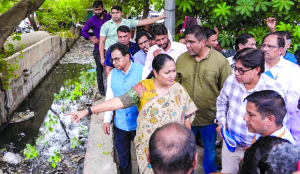
The Yamuna is not merely a river. It is Delhi's identity, our civilisational heritage and a lifeline for millions of people. For decades, governments spoke about cleaning the Yamuna. Unfortunately, the gap between announcements and outcomes kept widening. We have adopted a different approach. Instead of treating Yamuna cleaning as a symbolic exercise, we are treating it as a mission with continuous monitoring.
Work is progressing simultaneously on desilting, drain management, sewage treatment, interception of untreated wastewater and inter-agency coordination. This is a challenge that has accumulated over several decades. It cannot disappear in a few months. Anyone making such a promise would not be speaking honestly. However, citizens have every right to expect visible progress, and that is exactly what we intend to deliver.
Every drain that is intercepted, every sewage treatment plant that becomes functional and every stretch of the river that is restored brings us one step closer to that goal. The Yamuna does not need another slogan. It needs sustained work, scientific planning and political commitment. I assure the people of Delhi that our commitment is absolute because the future of Delhi and the future of the Yamuna are inseparable.