A world-class Delhi is the goal, says Rekha Gupta after a year in office
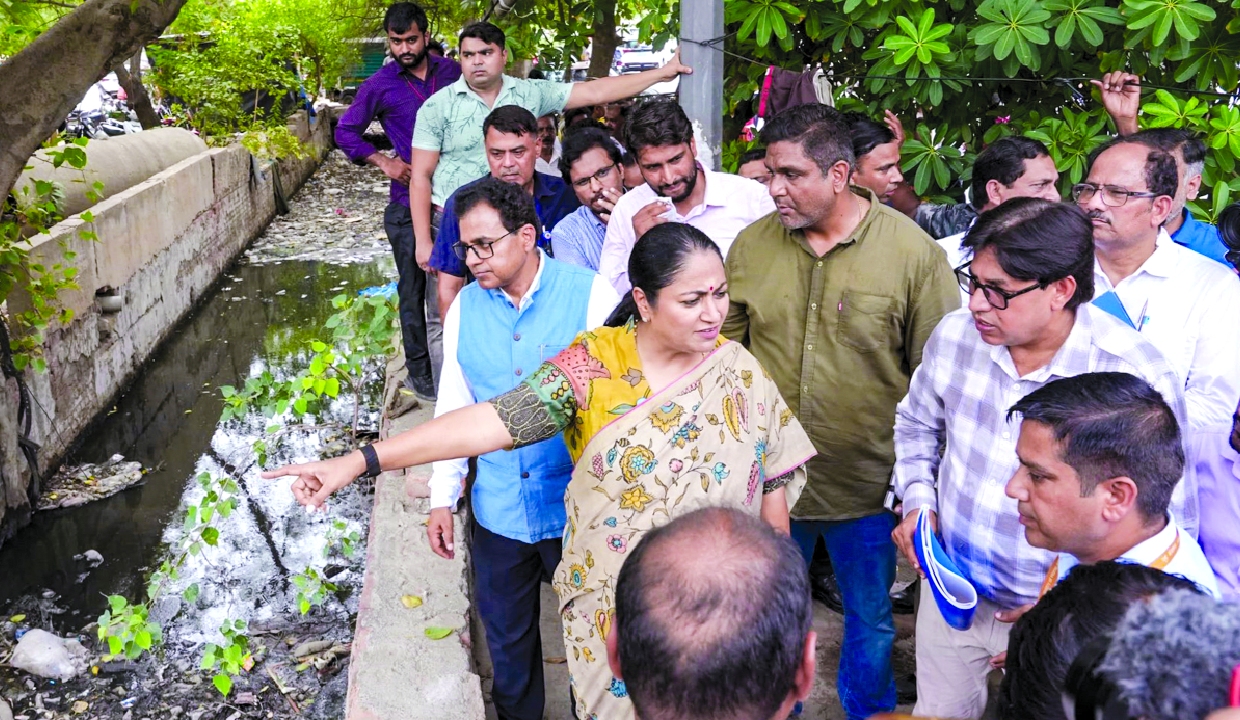
The BJP Government in Delhi is determined to develop it into a world-class city, and the key priority of governance is tangible action regarding various schemes rather than announcements, says Chief Minister Rekha Gupta after the first year in office.
Admitting that the final report card of any Government is written by the people, not by the Government itself, she also says, “I can say with satisfaction that in our first year, we have focused on changing the culture of governance in Delhi.”
In an exclusive interview to The Pioneer, the CM says that for too long, governance has become synonymous with announcements. “Our effort has been to restore the culture of implementation. Every department has been given measurable targets, timelines, and accountability. We review progress regularly because public trust is built through delivery, not declarations,” claims the CM.
Elaborating upon her refrain, Gupta listed several crucial projects on her must-do list in fast-track mode and says, “We did not come to occupy office. We came to change outcomes. Our benchmark is not yesterday’s politics. Our benchmark is tomorrow’s Delhi.
“Whether it is cleaning the Yamuna, strengthening flood preparedness, improving public infrastructure, expanding welfare delivery, introducing the new EV policy, accelerating regularisation of colonies or improving coordination among departments, our approach has been consistent — identify the problem, fix responsibility and monitor execution.” Stating that one year is only the beginning, the CM claims, “Delhi has accumulated challenges over many years, and no responsible Government should claim that every problem has already been solved. But I believe people can clearly see the difference in intent, work culture and administrative seriousness.”
Regarding her EV policy, she says it has been designed with the common citizen at its centre. It provides incentives, builds charging infrastructure, supports manufacturers, encourages investment, and creates new employment opportunities. “It is a complete ecosystem, not just a subsidy scheme. Over the next five years, we want Delhi to become India’s leading electric mobility cityOur aim is to build a Delhi that is cleaner, healthier and economically stronger,” she says.
Regarding traffic congestion, the CM says it affects productivity, public health, business activity, and the quality of life of every Delhiite. “Every minute lost in traffic is time taken away from families, work and economic growth. There is no single solution to congestion. It requires better planning, smarter technology, and stronger coordination among agencies. Our Government is working on multiple fronts simultaneously. We are expanding electric public transport, encouraging greater use of shared mobility, improving last-mile connectivity, strengthening traffic management systems and accelerating infrastructure projects that remove major bottlenecks,” said the CM.
“We are also working closely with Delhi Traffic Police and other agencies to use technology for better traffic regulation and real-time monitoring. The EV Policy itself contributes to this effort. Cleaner public transport, electric buses, electric autos, and organised charging infrastructure will make public mobility more efficient and encourage people to gradually shift away from excessive dependence on private vehicles.
Encroachment removal is another important priority because roads are meant for movement, not obstruction. We have already initiated sustained drives to reclaim footpaths and public spaces, and this effort will continue with strict monitoring. A world-class capital cannot spend its future waiting at traffic signals. Our objective is to build a Delhi where mobility is faster, safer, cleaner, and more predictable. Ultimately, good governance is measured not by how many roads are built, but by how smoothly people can travel on them,” she said.