A verdict on failure, not a new ideology
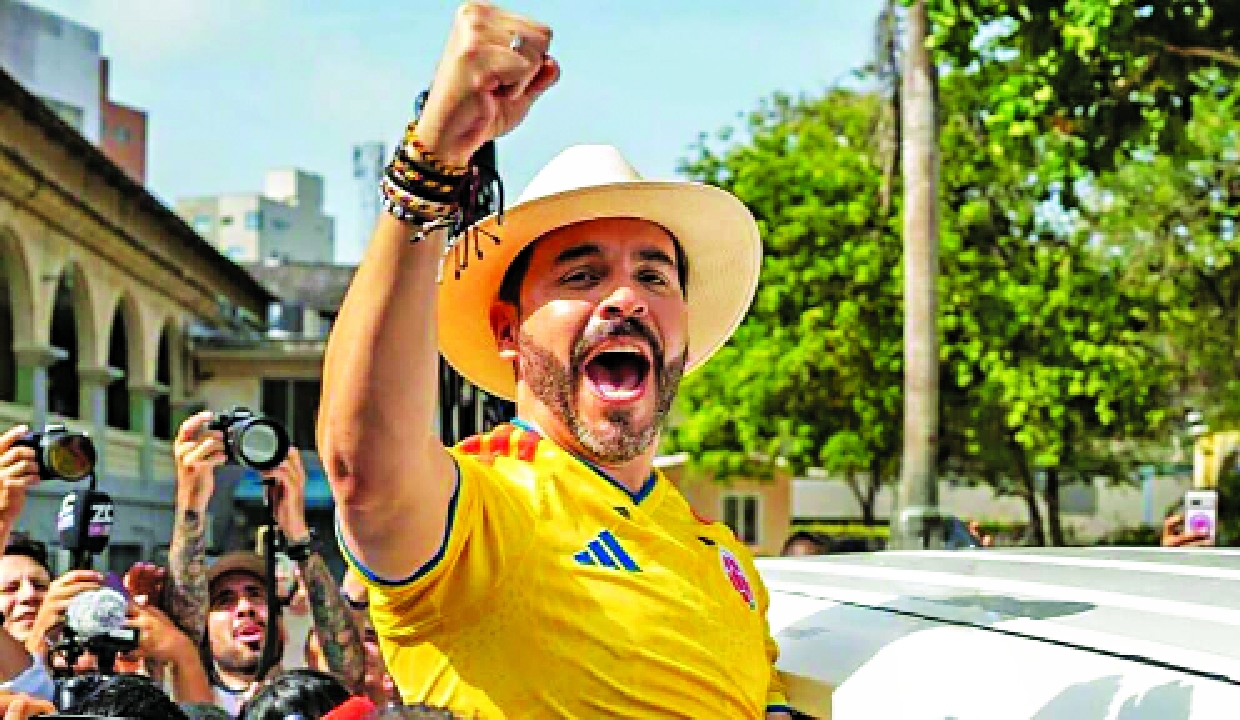
Colombia’s presidential election marks more than a change of government; it reflects a profound crisis of public confidence. The victory of political outsider Abelardo de la Espriella, following years of unfulfilled promises from both the left and the traditional right, underscores a growing impatience with insecurity, economic stagnation and weak state authority
Twelve hours before Colombians cast their ballots in the 21 June presidential run-off, President Gustavo Petro announced that security forces had killed Iván Idrobo, the FARC dissident commander known as “Marlon” — second-in-command to Néstor Vera, alias Iván Mordisco, and one of the most wanted men in the country's southwest. Petro called it the heaviest blow yet against armed criminal structures in western Colombia. The timing was almost too apt: a state still fighting, region by region, to hold ground that has never fully been its own, even as the political project that promised to win that ground through negotiation was about to lose power at the ballot box.
By the next morning, Colombia had chosen its next president: Abelardo de la Espriella, a 47-year-old millionaire lawyer with no prior political experience, who narrowly defeated left-wing senator Iván Cepeda — 49.66% to 48.7%, a margin of roughly 250,000 votes out of more than 26 million cast, making him the most-voted candidate in Colombian history.
Supporters call him “El Tigre.” Donald Trump, who endorsed him, called him a fighter “just like me.” Commentators reached for the comparison Colombians were already making themselves: Javier Milei in Argentina, Nayib Bukele in El Salvador — outsiders who won less by proposing policy than by promising to demolish a political class rather than reform it. It would be a mistake, though, to read the result as evidence that Colombia has adopted a new ideology. What the vote mainly expressed was fatigue with two projects that had each failed on their own terms. Petro’s administration, the country’s first left-wing government, had promised social transformation and a negotiated peace with Colombia’s remaining armed groups; it struggled to turn that promise into functioning state authority.
The traditional right, for its part, spent two decades promising order without dismantling the land inequality, criminal economies and institutional weakness that keep conflict alive in Colombia’s periphery. In the space between those disappointments, a candidate who promised to tear the whole system down — rather than repair it — found room to grow. This pattern is not unique to Colombia. Chile, Argentina, Bolivia, Ecuador and Costa Rica have all swung toward right-wing outsiders in recent election cycles, each time punishing incumbents for insecurity and stagnation without solving either. The cast keeps changing; the stage, and the problems on it, largely does not. Colombia has lived a version of this cycle before. Álvaro Uribe won the presidency in 2002 on a hardline security platform that weakened the FARC insurgency and, for a time, restored confidence that the state could impose order. Uribismo outlasted his presidency through allies Juan Manuel Santos and Iván Duque, but it also carried the “false positives” scandal — soldiers killing civilians and dressing them as guerrilla casualties to inflate body counts — along with persistent allegations linking parts of the security establishment to paramilitary networks. This year’s election exposed the limits of that inheritance.
Paloma Valencia, the Uribe-backed Democratic Centre candidate and his most direct political heir, was eliminated in the first round with just under 7% of the vote before endorsing De la Espriella to consolidate the right. Voters who once trusted Uribismo wanted something angrier and further removed from Colombia’s political establishment — and De la Espriella did not try to revive that brand. He replaced it. His campaign succeeded partly because it was built for a different kind of politics: large rallies, evangelical church networks and a relentless social media operation organised around the tiger persona and short, emotionally charged content — the currency of a platform economy that rewards spectacle over argument. Cepeda, 63, a longtime human rights advocate who had led the polls from January until election day, ran on speeches and policy arguments, the traditional currency of Colombian politics. Where algorithms favour anger and simplicity, that older currency bought him less than it once would have.
That gap points to something the Colombian left underestimated: politics is rarely won by explanation alone. Voters living with extortion, stagnant wages and a daily sense that the state had ceded ground to armed groups wanted proof that someone could seize back control, not just a diagnosis of why control had slipped.
Much of that frustration traces back to Petro’s signature policy, “Total Peace,” which rested on a genuine insight — that Colombia’s violence has always been entangled with poverty, land inequality and the absence of the state, not ideology alone. But several armed groups treated negotiations as room to expand rather than disarm, deepening their grip on drug trafficking, illegal mining and extortion while talks dragged on. Communities promised peace often experienced the opposite: a state seemingly negotiating while criminal structures grew up around them. This is the trap both of Colombia’s political traditions keep falling into.
The left correctly diagnoses the social roots of violence but struggles to assert authority; the right promises authority but avoids the inequality and institutional decay that let armed groups regenerate. What results, from both sides, is the management of crisis rather than its resolution.De la Espriella now inherits that trap, backed by an informal network of like-minded leaders across the region who built power on similar frustration. The danger is that anger, however satisfying as a campaign message, is not itself a governing strategy.
Punishing the guilty plays well as a promise; it does not build the institutions, fiscal credibility or administrative competence that outlast a single term. His mandate, meanwhile, is a narrow one. Congress remains divided, and Petro, even after formally recognising the outcome, continued to allege fraud and foreign interference in the vote count.
De la Espriella takes office on 7 August with more votes behind him than any Colombian president before him — and less unity than that number suggests. Winning, it turns out, was the easy part. Whether he becomes the leader who finally builds a state capable of holding its own ground, or simply the next performer in a theatre that keeps replacing its cast while leaving the script unchanged, is the question Colombia will spend the next four years answering.
The left correctly diagnoses the social roots of violence but struggles to assert authority; the right promises authority but avoids the inequality and institutional decay that let armed groups regenerate. What results, from both sides, is the management of crisis rather than its resolution
The writer is a columnist based in Colombo; Views presented are personal.