A rupee gained, two rupees lost
Cash-driven welfare for electoral gains equals economic failure
Critics and observers have commented on the growing practices among the ruling regimes to dole out cash to woo voters, and take attention away from policy and governance failures. Now, a renowned global brokerage house, Bernstein, has written an open and stinging letter to Prime Minister Narendra Modi about the same issues. Cash transfers, states the letter, side-steps genuine concerns among the masses that are related to the lack of jobs, and social security. They signal either the “ills of democracy,” or “economic failure of the nation.”
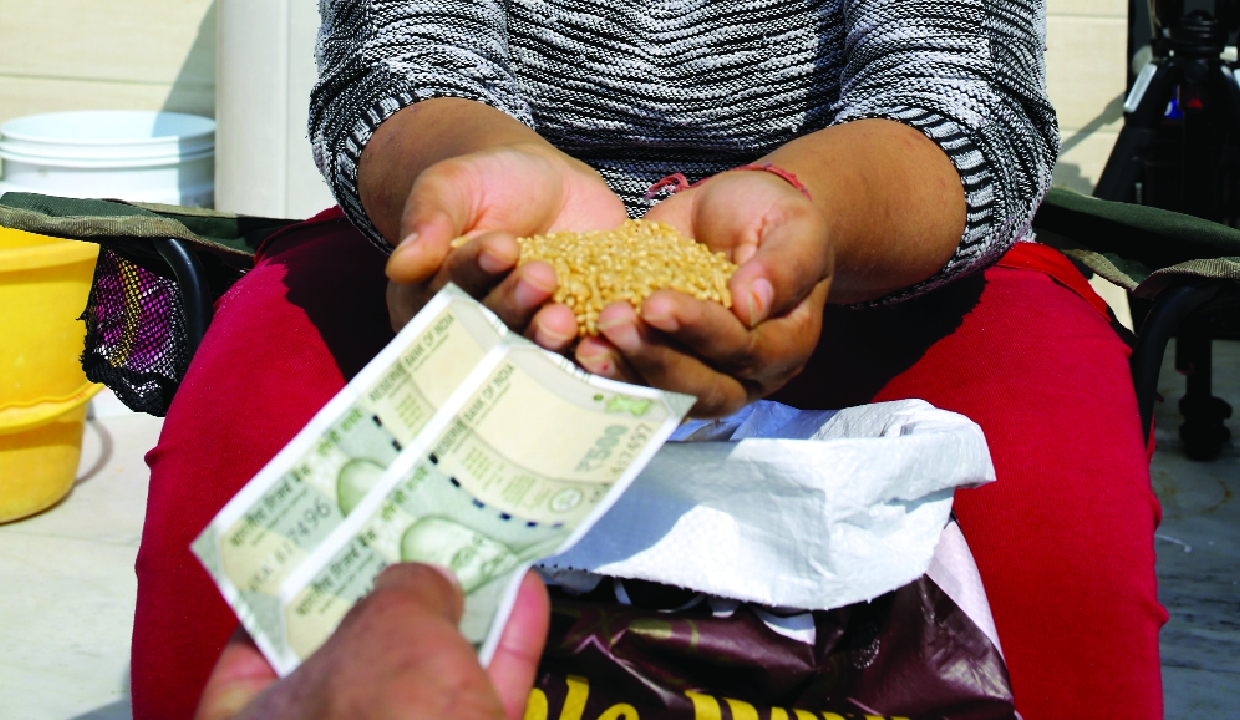
But this does not imply that regimes need to ban, or do away, with cash-led welfare schemes. The letter adds that there is evidence from experiences, and studies that “well-designed cash transfers” can reduce fears and insecurity among the poor and underprivileged, ensure sustainable consumption, and boost demand, especially in rural areas, on a regular basis. They help in assuaging the elevated emotions during crises. During the LPG shortages, low-income sections were happy to receive unexpected cash transfers. As a Delhi-based house-help said, “The sarkar (ruling regime) remembers us in times of troubles.”
However, there are two long-term issues with regular cash transfers. The first signifies that government revenues that need to be spent on roads, healthcare, education, low-cost housing, and re-skilling are diverted as doles and incentives for political ends. The economic benefits are temporary, and hard to define. More importantly, the multiplier effects of these are higher, productive gains are durable, and a rupee spent on infrastructure is worth two rupees as doles. Second, money is snatched away from taxpayers to pay subsidies. There are sections that are burdened with higher-than-expected taxes.
Indeed, among the middle-class sections, as was earlier restricted to the richer classes, there are voices that question some of the subsidies, especially those that pertain to free food, almost-free homes, and random and non-productive cash transfers. “Most of our incomes are spent on rents or home EMIs, education, and healthcare. The poor get them for free. They get the subsidies, and my incentives are systematically reduced. Why should I finance them?” questions a Noida-based professional. “Let the regimes help the poor. I have no problem. But do it by curbing corruption, and not by putting the squeeze on my family,” laments another middle-class bread-earner.
According to the letter, cash transfers have almost emerged as a governance habit. A system that was aimed to benefit the direct beneficiaries, plug distribution loopholes, and eliminate corruption, has become a systemic way to woo voters before the elections. In West Bengal, before the ongoing assembly elections, the debate among the low-class voters was that while the BJP has promised cash, Trinamool Congress already gives cash, and other assets through several schemes. “It is better to support something that is genuine than depend on future promises,” was a retort by a Trinamool supporter.
Data reveals that in more than half the states, cash transfers to women before the elections amount to an outgo of Rs 1,75,000 crore a year, or 0.5 per cent of GDP. Both central and state regimes pursue these practices. In Madhya Pradesh, the Ladli Behna scheme promises Rs 1,500 a month to nearly 13 million women. In Maharashtra, the Ladki Behin scheme pays a similar amount to 25 million. Ahead of the assembly elections last year, Bihar announced Rs 10,000 to women. The collective outgoes are massive, Rs 70,000 crore in Madhya Pradesh, and Rs 1,25,000 crore in Bihar (combined pre-election transfers).
“Put together, just these (above-mentioned) cash schemes across States are now in the same fiscal ballpark as some of India’s largest social-sector programmes. That is money which could otherwise be compounding in hard infrastructure, urban capacity, human capital, or research and development,” warns the letter. The cash-transfer initiatives have scaled up to the levels where they are likely to squeeze the fiscal spaces, reshape priorities, and harm states’ finances. Studies still have not been able to link doles with either growth, more jobs and skills, and general upliftment of the poorer sections.
“The concern is about making large, unconditional, election-synchronised transfers a permanent feature of state budgets. If that happens, we risk locking into a low-productivity equilibrium where a rising share of tax funds is consumed today rather than capabilities for tomorrow,” explains the letter. The main fallout, as is visible over the past three decades, is that while GDP growth zooms and even booms, the per capita incomes stutter and remain stunted. The wealth of the nation grows, as it emerges as an economic superpower. The people, or large sections, remain unsatisfied, unhappy, and unfulfilled.
What is equally significant is that the cash transfer scheme came into existence to ensure that the money that is promised to certain sections, say, for education scholarships, low-cost housing, pensions, insurance claims, and subsidies (fertilisers and energy) are legitimately transferred to the certified bank accounts of the genuine beneficiaries. Over a decade or two, several regimes combined biometric identity, bank accounts, and other documents to streamline and perfect the process. But once the governments realised that they possessed the details of the bank accounts of the various beneficiaries, it was easy to merely transfer cash for no rhyme or reason to woo specific sections.
In effect, the system became a perfectly legal mechanism to provide cash incentives to voters before the elections. In the past, the voters were bribed by cash, liquor, and other means. But as legal pressure mounted, these practices reduced, or visibly so. Now, cash is officially transferred without questions about motives, morality, means, and legality. Everything is fair in this brave, new world of cash transfers. The governments are happy, so are the masses. The thugs, hoodlums, and middlemen required earlier were gracefully eliminated. No one can question the transfers, which are genuine, clean, and transparent.
Global experts are still unsure about the pros and cons of cash transfers. Some contend that the process is effective and efficient, and allows the beneficiaries to decide “how to allocate funds.” Others think that the devil lies in this freedom because in the mostly patriarchal societies, the cash is misused and diverted for unproductive purposes. This explains why the Indian practice is to transfer the money in the bank accounts of the women, who are more likely to spend it judiciously, rather than the men who may waste it. Unlike the oft-spoken thought that cash transfers are corruption-free, the opposite may be truer. They are as, or more, susceptible to official corruption.