A regulator in turbulence: How the DGCA lost its way
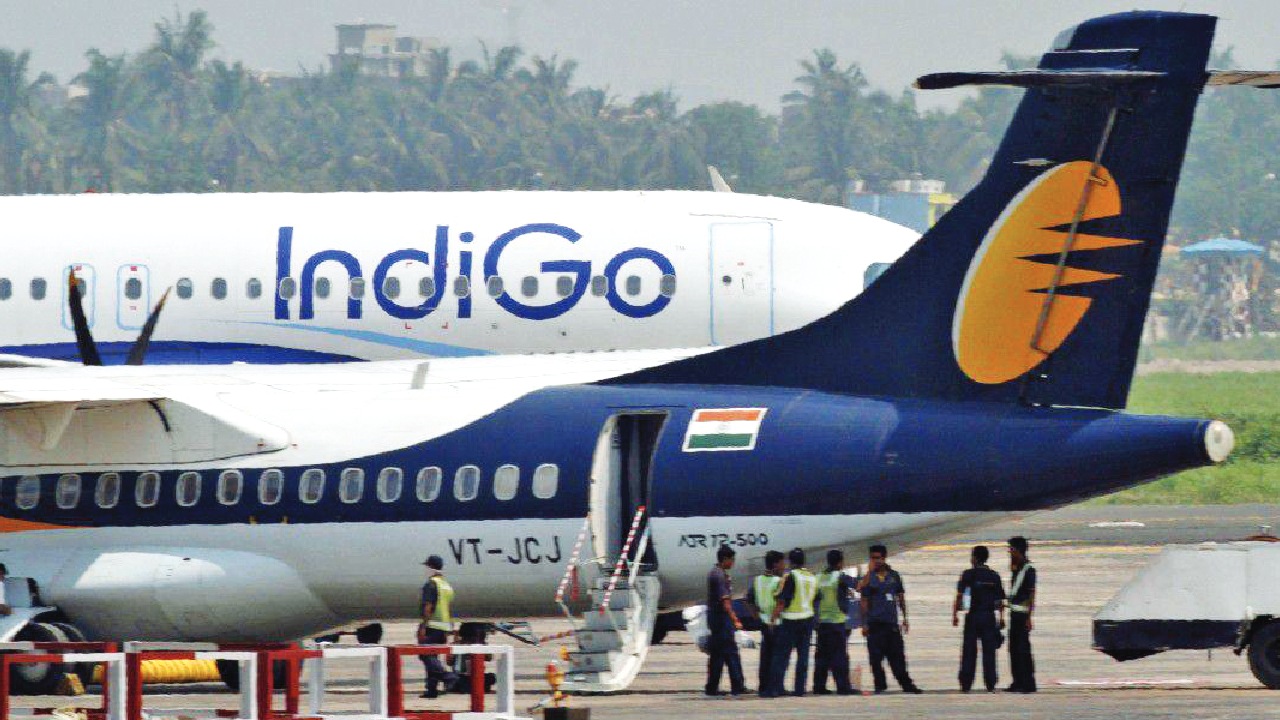
As we herald another new year, almost a century after Lt Col (later Sir) Francis Claude Shelmerdine established India’s Department of Civil Aviation in 1927 and went on to become the country’s first Director General of Civil Aviation, he must surely be turning in his grave. The sordid IndiGo saga has exposed the tender underbelly of Indian aviation and the DGCA alike.
The year 2025 is one that Indian aviation would rather forget. Looked at more charitably, however, 2026 could yet prove to be a harbinger of much-needed change.That golden generation of airmen and aviation traditions—beginning with the great J.R.D. Tata, Aspi Engineer, Purshottam Kabali, Shelmerdine and Sir Victor Sassoon, and carried forward by Indian Air Force pilots and technical heads of the DGCA—has long since passed.
The glory years of the 1970s and 1980s, when Air Marshals such as Jafar Zaheer and Air Vice Marshal C.K. Shantaram Raje—both decorated and eminently distinguished Director Generals of Civil Aviation—led the regulator, effectively ended with the tenure of the last technical head, Mr Kanu Gohain, who demitted office in 2007.
A course correction under the UPA resulted in airmen and technocrats being permanently supplanted by IAS officers. Over the past 17 years, the post has effectively become a bureaucratic preserve and a plum posting. This is not to say that non-IAF officers did not serve with distinction in the interregnum. Some did so with great honour—among them Mr H.S. Khola, Mr M.R. Sivaraman, and Dr S.S. Sidhu, who later went on to become ICAO Secretary General.
In recent times, the DGCA has come under fire for numerous sins of commission and omission, despite—or perhaps because of—the fact that it is currently headed by an eminently distinguished bureaucrat.The AI-171 tragedy, incidents of GPS spoofing, Airbus software issues, the mess at IndiGo, and the alleged scams within the system have exposed long-festering cracks in the Directorate’s armour. It took the bloodletting of both the Indian populace and the political class to realise that the DGCA had perhaps become a large cesspool of red tape, shielded for years from public scrutiny under the guise of public safety. In 2025, that final veil was torn apart by a cascading series of failures that made Indian aviation appear farcical.
In an earlier article, we traced the IndiGo crisis and how blinkered—or creatively selective—vision at the regulator triggered a domino effect across the aviation market. The DGCA has grown too large, too unwieldy, and at times, dangerously dysfunctional.
Today, the DGCA comprises 19 divisions, headed by officials of the rank of Economic Adviser (EA), Joint Director General (JDG), or Deputy Director General (DDG), all reporting upwards to the EA or DG. Each division is vested with defined oversight responsibilities, yet when the system collapses, accountability is conspicuously absent.
The IndiGo crisis is a textbook example: its roots lie across multiple DGCA divisions, yet no one is ever found culpable.Schedules were approved by the DDG (AED) and his superior without verification, but no action followed — on the contrary, the approvals were quietly defended using antiquated rules.
The JDG (DAT) and the Chief Flight Operations Inspector were responsible for flight standards and pilot oversight at IndiGo, yet appeared unaware that 120 pilots had been let go or that recruitment had been paused as early as May.
The regulator conveniently forgot the airline’s requests for deferment of Phase II of the CAR in September 2025, as well as the seven dispensations sought. Either the left hand did not know what the right was doing—or plausible deniability was the chosen refuge.A recent transfer of a DGCA official appeared ominous amid the IndiGo crisis but turned out to be a routine, long-pending change.
The real questions remain unanswered: why do officers facing vigilance inquiries continue to occupy sensitive positions years beyond permissible norms? Why did previous DGs freeze serious investigations?
A genuine purge—post an independent external inquiry—would inevitably have to include senior JDGs, DDGs and the CFOI, if the government has the will to clean its Augean stables. Political expediency, however, often weighs heavier.
At the heart of the problem lies the continued exploitation of archaic rules—most notably those governing pilot strength per aircraft. CAR Section S-III-C, Part II, Clause 8.4 mandates a minimum of three sets per aircraft (six pilots), despite the DGCA approving the national carrier’s policy as far back as 2019 for a minimum of 6.5 sets (13 pilots) for narrow-body aircraft and 12.5 sets (50 pilots) for long-haul operations, excluding reserves.
The three-set concept is obsolete, incompatible with modern fatigue management and safety norms. Yet the DGCA persists with it, providing errant airlines a convenient fig leaf to cut costs and overwork pilots. Ironically, many DGCA systems in use today trace their origins to Shelmerdine himself nearly a century ago—from pilot and aircraft licensing to accident reporting and the drafting of the Aircraft Act, 1934.
Following ICAO and FAA audits in 2006, serious deficiencies were flagged and Parliament constituted the Kaw Committee to recommend reforms.The Kaw Committee proposed the creation of an Indian Civil Aviation Service, financial and administrative autonomy, and professional management of the regulator. Parliament subsequently recommended replacing the DGCA with an autonomous Civil Aviation Authority (CAA). The CAA Bill, 2013, passed committee scrutiny but lapsed after the 2014 elections.
Those reforms vanished without trace. Today, as India stands on the brink of becoming the world’s third-largest aviation market, with nearly 2,000 aircraft and 250 airports, it continues to rely on regulatory mechanisms inherited from colonial times—long abandoned even by Britain and dozens of other nations.
Calls for radical reform may sound extreme, but the need to restructure and professionalise the DGCA is undeniable. Unfortunately, the Bharatiya Vayuyan Vidheyak, 2024, moves in the opposite direction, entrenching dysfunction rather than curing it.
India urgently needs a clear separation of administrative and technical functions, with seasoned aviators and professionals leading the regulator, as is the global norm.
The Prime Minister and the Aviation Minister owe it to the nation to purge, modernise and liberate aviation oversight through an independent CAA-style body—so that Indian aviation can truly fly high, without fear or favour.
Sanjay Lazar is CEO, Avialaz Consultants, and an aviation expert; views are personal