A lamp, a verdict, and an impeachment threat
Pseudo-secularism is often spoken of as a vague political tendency, a rhetorical label tossed about in partisan clashes. But what unfolded at Thiruparankundram this Karthigai Deepam season forces the country to confront it not as theory but as lived reality, a reality which is sharp, deliberate, and institutional. A lamp atop a sacred hill could not be lit without two clear judicial orders, resistance from an ideologically allergic bureaucracy, and finally, an extraordinary threat of impeachment against the very judge who upheld a centuries-old Hindu ritual. If this is secularism, it is time we stopped dignifying it with the prefix. The DMK-Congress axis has perfected a model that deserves its rightful name: pseudo-secularism.
The episode in Madurai is revealing not because it is surprising, but because it is so consistent with the deeper instincts of the parties involved. A tradition older than every political formation in the state, older even than the Dargah that now sits on the hill, suddenly became an object of administrative hostility. The DMK-run HR&CE did not merely express discomfort; it actively blocked the lighting of the Deepam at the traditional Deepathoon, forcing devotees to approach the High Court, not once, but twice. Both times, the court affirmed the legitimacy of the ritual. Both times, the state responded with a studied refusal to comply. Police blockades, bureaucratic stalling, and invented anxieties about ‘communal disturbance’ were deployed to shut down a lamp whose light had never threatened anyone. Only in Tamil Nadu does a court have to supply Central security forces to ensure that devotees can perform an ancient ritual without the state’s interference.
This is not neutrality. It is an instinctive suspicion of Hindu practice that masquerades as administrative caution. And the pattern is too consistent to dismiss as coincidence. The same government that facilitates political rallies, ideological conventions, and mass gatherings suddenly rediscovers its concern for public order when the matter involves a Hindu ritual. The same political class that invokes the Constitution selectively for its beneficiaries instantly abandons constitutional morality the moment a court affirms the rights of Hindu devotees.
When the High Court delivered a clear and reasoned order twice, the administration did not introspect. It retaliated. It rushed to appeal, not as a matter of legal principle, but to avoid compliance. It fought a contempt petition with the zeal of someone trying to evade accountability rather than fulfil a judicial mandate. The bureaucracy behaved not as an arm of the state, but as a political extension of party ideology.
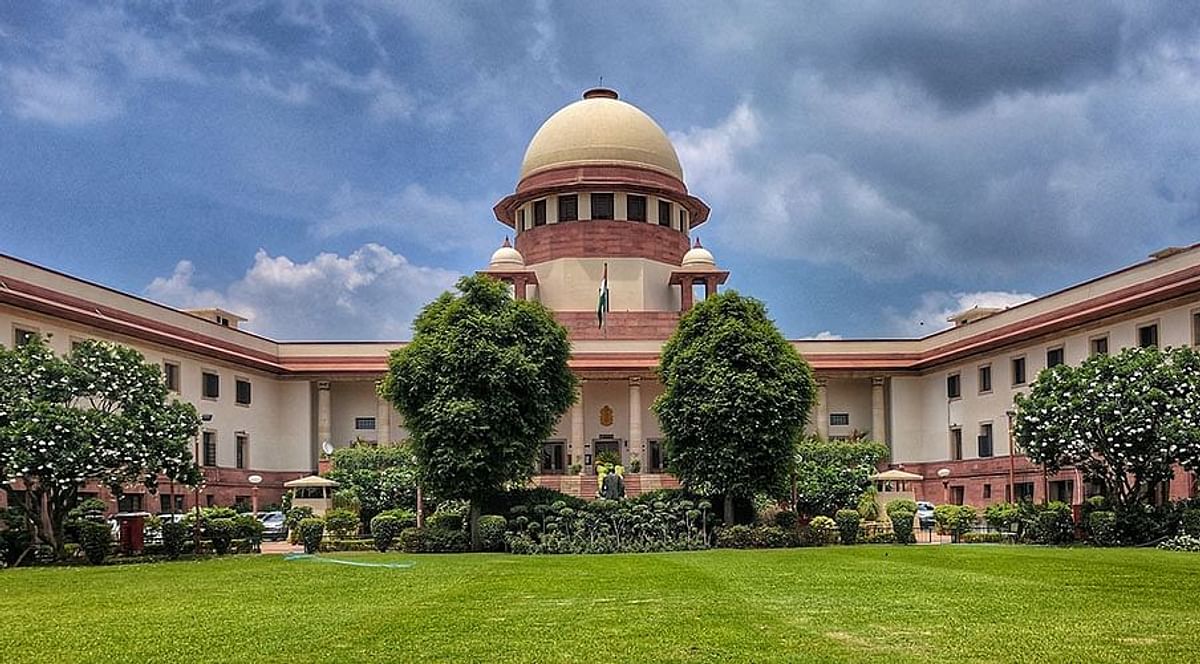
And then came the most telling moment of all. INDI alliance MPs, including those from Congress, SP, DMK and even self-declared custodians of Hindutva, the Shiv Sena (UBT), submitting a proposal to move an impeachment motion against Justice GR Swaminathan. This single act tears apart whatever thin veil remained over their political motivations. Impeachment is not a tool for policy disagreement. It is not a pressure valve for ideological discomfort. It is an extraordinary mechanism reserved for grave misconduct. Yet here it was being dangled as punishment for the ‘crime’ of upholding a Hindu ritual and insisting that the state obey its constitutional obligations.
No political alliance rooted in genuine secularism would ever contemplate such an assault on judicial independence. But the DMK-Congress partnership and the larger INDI alliance is not burdened by such constraints. It inherits, and proudly extends, a legacy of disciplining judges who refuse to play along. This is the same tradition that superseded judges after Kesavananda Bharati, punished Justice HR Khanna for defending civil liberties during the Emergency, transferred judges without consent, and attempted to impeach CJI Dipak Misra when he delivered an inconvenient verdict. The doctrine of a ‘committed judiciary,’ articulated unabashedly by Mohan Kumaramangalam in the 1970s, never truly died. It merely reappeared under new management.
What binds these episodes is a single underlying impulse: judiciary should restrain itself when Hindu traditions are under assault, but judiciary must restrain the public when those traditions assert themselves. This is the essence of pseudo-secular politics, which is a selective, opportunistic commitment to constitutionalism shaped by ideological hostility to one community’s practices.
The larger cultural climate in Tamil Nadu only reinforces this. From Udhayanidhi Stalin comparing Sanatan Dharma to diseases, to A. Raja’s degrading metaphors, to routine mockery of Hindu symbols, mantras, and practices by DMK ministers, to the UPA affidavit proclaiming Ram didn’t exist, the rhetoric is not the fringe. It is the centre.
When the state attempted to block livestreams of the Ram Mandir consecration, when devotees were booked for watching the ceremony inside a temple, when the Supreme Court itself had to label this conduct ‘atrocious,’ the ideological hostility was laid bare. The resistance to Karthigai Deepam is not an aberration; it is the natural extension of a worldview that sees Hindu devotion as a political irritant rather than a cultural inheritance.
To call this secularism is an insult to the idea itself. A secular state does not choose which traditions deserve respect. It does not free-ride on Hindu temples through HR&CE control and then treat Hindu rituals as threats. It does not weaponise procedural tools to intimidate independent judges. And it certainly does not punish constitutional fidelity with impeachment threats.
What Thiruparankundram exposes is a political ecosystem that has grown accustomed to a judiciary that bends. When a judge refuses to bend, the response is not constitutional argument but political intimidation. The message is unmistakable: any judicial assertion that protects Hindu faith will invite political retaliation. That is not a warning to one judge; it is a warning to the entire judicial institution. And that makes this episode bigger than one festival, one hill, or one order. It goes to the heart of the republic’s constitutional integrity.
The Deepam controversy is, in the end, a civilisational moment. It forces us Indians to choose whether secularism will continue to function as a euphemism for systematic hostility towards Hindu identity, or whether the judiciary will remain strong enough to uphold equality before law without fear of this kind of political reprisal. A society secure in its civilisational confidence does not apologise for its traditions. A government secure in its democratic legitimacy does not threaten the judiciary or the larger society for defending them. The DMK-Congress axis has made its choice. The society now stands at a moment where it must make its own.
The writer is commentator on socio-political issues; views are personal