2.4 lakh CAPF personnel secure peaceful, record West Bengal turnout
West Bengal has long been synonymous with intense political rivalry, often marred by reports of booth-level intimidation, political violence and a pervasive sense of fear that kept many voters, especially women, minorities and Opposition supporters, away from polling stations. The 2021 Assembly elections, spread over eight phases, saw over 50–300 incidents of violence and a voter turnout of just 81 per cent.
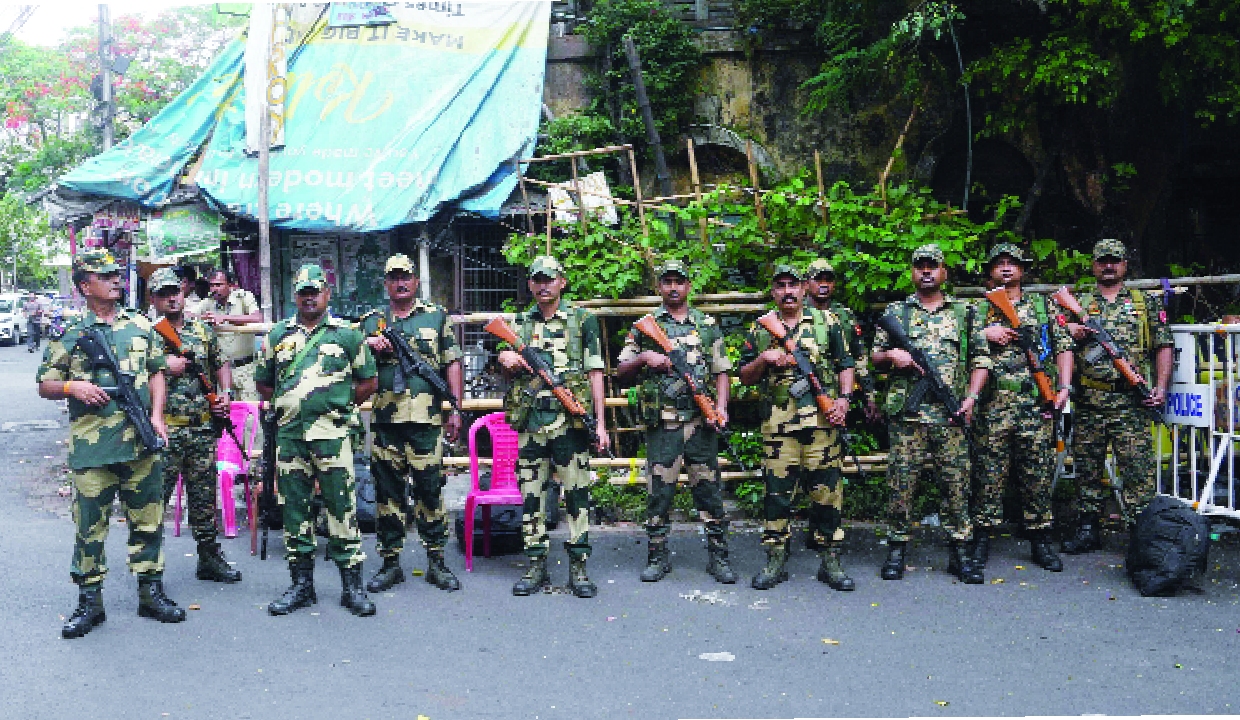
Fast-forward to the 2026 polls, held in a condensed two-phase format on April 23 and April 29, the Election Commission of India (ECI) orchestrated an unprecedented security overhaul. Over 2.4 lakh personnel from the Central Armed Police Forces (CAPF), including CRPF, BSF, CISF, ITBP, SSB and others, were deployed, nearly three times the strength of 2021.
A historic voter turnout of 92.49 per cent with zero poll-related deaths due to violence, an outcome that underscores how neutral, visible central security can transform a climate of intimidation into one of empowerment. “Higher turnout reflects not just numbers but qualitative inclusion”, said a top CRPF official.
West Bengal’s electoral history is punctuated by cycles of dominance by local political cadres, crude bombs, and post-poll reprisals. In past elections, State police were often perceived as partisan or ineffective against powerful local muscle, leading to low turnout in rural and semi-urban pockets. Voters hesitated, fearing threats, booth capturing, or retaliation.
The ECI’s decision for 2026 to deploy a record 2,400+ companies, establishing integrated control rooms, Quick Response Teams (QRTs), drone surveillance and even armoured vehicles from conflict zones like Chhattisgarh and Jammu & Kashmir, marked a deliberate shift. Polling was compressed into fewer phases to allow concentrated security, signalling that free and fair voting required overriding local power structures.
CAPF units launched coordinated drives under names like “All Out, Night Dominance, Kavach (Shield), Trust.” Flag marches, round-the-clock area domination, and over 100 armoured and anti-riot vehicles patrolled sensitive constituencies. Forces were stationed within 100 metres of polling stations, with chiefs of all CAPF units reviewing measures in Kolkata. Drones and real- time monitoring added layers of deterrence. Crucially, personnel engaged directly with communities, ensuring villagers, particularly in rural Bengal, “No one will stop you from voting or threaten you. We are here. Vote freely.” CRPF officials explicitly described the presence as fostering “trust and an atmosphere of peace.”
This visible, neutral force, unaffiliated with State politics, served as a psychological shield. Where local goons once dictated terms, central personnel created a “safe, conducive environment,” as one senior CRPF officer noted. Mobility curbs (e.g., on motorcycles) and pre-emptive actions against troublemakers further neutralised traditional intimidation tactics. The proof lies in the numbers. Voter turnout jumped sharply to 92.49 per cent, a clear 11+ percentage increase from 2021. Phase- 2 alone touched 90–92 per cent in several areas, with reports of enthusiastic participation even in historically volatile districts like Birbhum, Murshidabad and Diamond Harbour.
Violence was virtually eliminated: unlike 2021’s dozens of clashes, 2026 recorded no poll-related deaths attributable to political violence (one isolated death occurred, but not linked to polling violence). Officials directly attributed this to the deployment: “Turnout was high because people were not scared to vote.” Central forces, unlike state police, were seen as impartial arbiters. Their sheer presence deterred cadre-led intimidation, breaking the cycle where fear suppressed turnout.
Women, first-time voters and those in minority or Opposition-leaning pockets often the most vulnerable responded to direct reassurances. Reports of forces engaging villagers and assuring safety translated abstract security into personal confidence, encouraging hesitant groups to step out. The 2026 West Bengal experience illustrates how strategic CAPF deployment can be a force multiplier for democracy. By replacing fear with assurance, it enabled citizens to exercise their franchise freely, delivering higher turnout and peaceful polls. As counting proceeds and results unfold, the retained forces will continue safeguarding peace, ensuring the mandate reflects the people’s will, not the might of local intimidation.
In an era where electoral violence remains a challenge in parts of India, Bengal 2026 offers a replicable blueprint: robust, visible, neutral security not only protects the process but restores faith in it. The ballot, once a source of anxiety, became an act of empowered participation thanks to the men and women in uniform who stood guard so citizens could vote.