Year of results: CM lists welfare, reform push in first 365 days
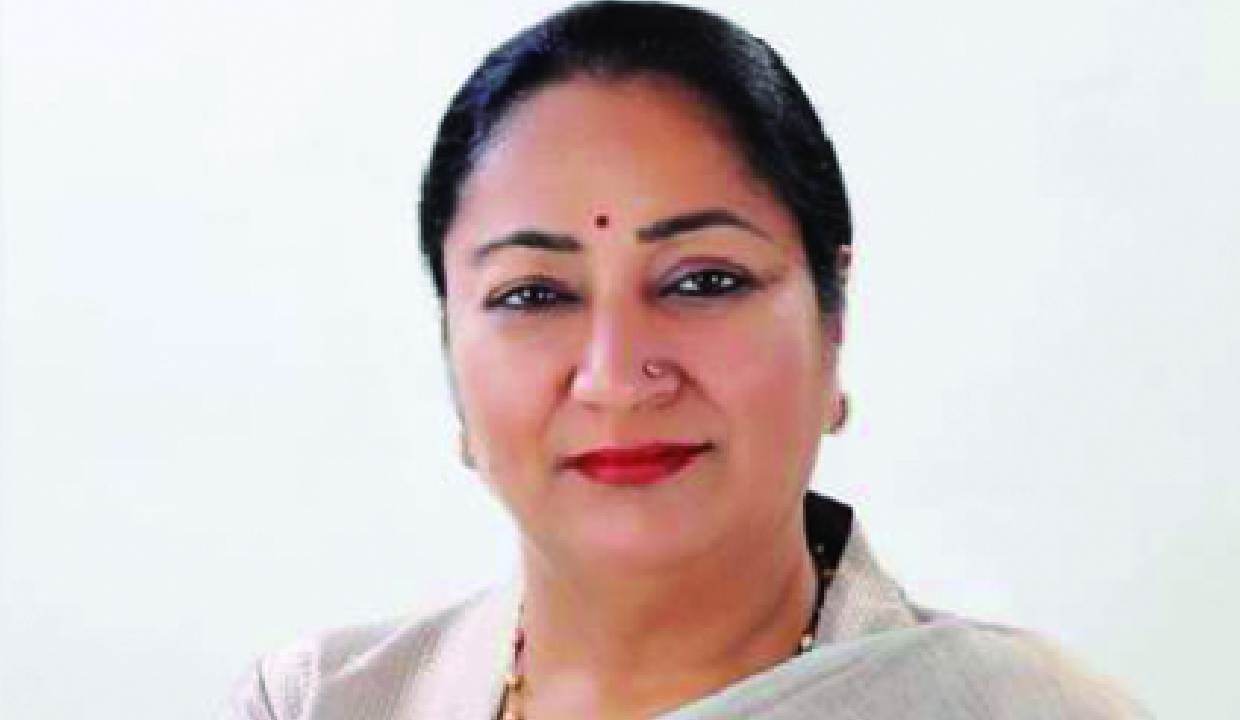
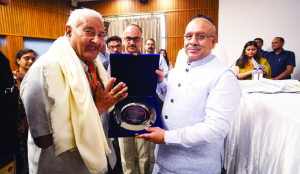
Delhi Chief Minister Rekha Gupta on Friday presented a detailed account of her government’s first year in office. Releasing a booklet titled ‘Pehla Kadam Badlav Ka, Ek Saal Vikas Ka’ at the Delhi Secretariat, the Chief Minister said the year reflected “service, reform and visible results on the ground.” She also inaugurated the reconstructed Media Centre at the Secretariat.
Invoking Prime Minister Narendra Modi’s mantra of “Sabka Saath, Sabka Vikas, Sabka Prayas,” the Chief Minister said the Government focused on health, education, infrastructure, pollution control, Yamuna rejuvenation and governance reforms.
In the social welfare sector, the Government operationalised 71 Atal Canteens serving nearly 71,000 people daily at a subsidised cost of Rs 5 per meal. The Chief Minister said the initiative was aimed at ensuring that no one sleeps hungry in the national Capital.
She said Delhi now offers the highest minimum wage in the country at Rs 22,411 per month. For working women, 500 ‘Palna’ centres have been opened to provide childcare support. Additionally, 146 development projects worth `85 crore have been approved for SC/ST localities.
On water infrastructure, the Chief Minister said 13 kilometres of transmission pipelines were replaced and 172 kilometres of new or upgraded water pipelines were laid in one year. Projects covering 37 more kilometres have been allocated, while work on 833 kilometres of secondary and distribution lines is underway.
In sewerage, 180 kilometres of new lines were laid and 110 kilometres replaced. Another 144 kilometres have been approved and tendered. The Chandrawal Water Treatment Plant project is being expedited to address supply issues in several Assembly constituencies. Plans for three new treatment plants in Chhatarpur, Iradat Nagar and Najafgarh have also been initiated.
Under the Delhi Jal Board’s Water Amnesty Scheme, 3.52 lakh consumers settled pending bills, generating Rs 484 crore in revenue. Around Rs 1,400 crore in penalties and interest was waived. The scheme has now been extended to industrial and commercial users.
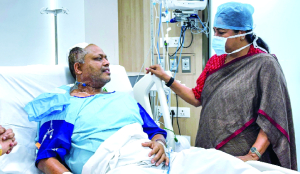
In healthcare, 370 Ayushman Arogya Mandirs have been established to provide primary care services. The target is to scale this up to 1,100 by the end of the year. Several hospital expansion projects have been completed, including new blocks at Guru Gobind Singh Hospital, Sanjay Gandhi Memorial Hospital, Acharya Shree Bhikshu Hospital, Bhagwan Mahavir Hospital and Dada Dev Maternal and Child Hospital.
Modern equipment such as advanced CT scanners, Neuro ICU facilities and integrated operation theatres have been installed at GB Pant Hospital. The Government has added 150 dialysis machines, 53 round-the-clock ambulances and six mobile dental vans.
A medical genetics ward and an NAT lab have also been introduced at LNJP Hospital. Around 4,000 new healthcare posts have been sanctioned.
In education, over 7,000 smart classrooms are under development, and 75 CM Shri Schools are being upgraded. New curricula, including ‘Neev’, ‘Science of Living’ and ‘Rashtraneeti’, have been introduced. On infrastructure, 550 kilometres of PWD roads have been approved for wall-to-wall carpeting, with 150 kilometres completed. Work on 400 kilometres is targeted before the monsoon. A Rs 56,000 crore Drainage Master Plan has been launched.
For Yamuna rejuvenation, sewage treatment capacity has increased from 700 MGD to 814 MGD, with a target of 1,500 MGD. Biomining capacity for solid waste has been raised to 30,000-35,000 tonnes per day. A 3,000 TPD waste-to-energy plant is under construction at Narela-Bawana.
Delhi now offers the highest minimum wage in the country at Rs 22,411 per month. For working women, 500 Palna centres have been opened to provide childcare support