Writing a life through classical form
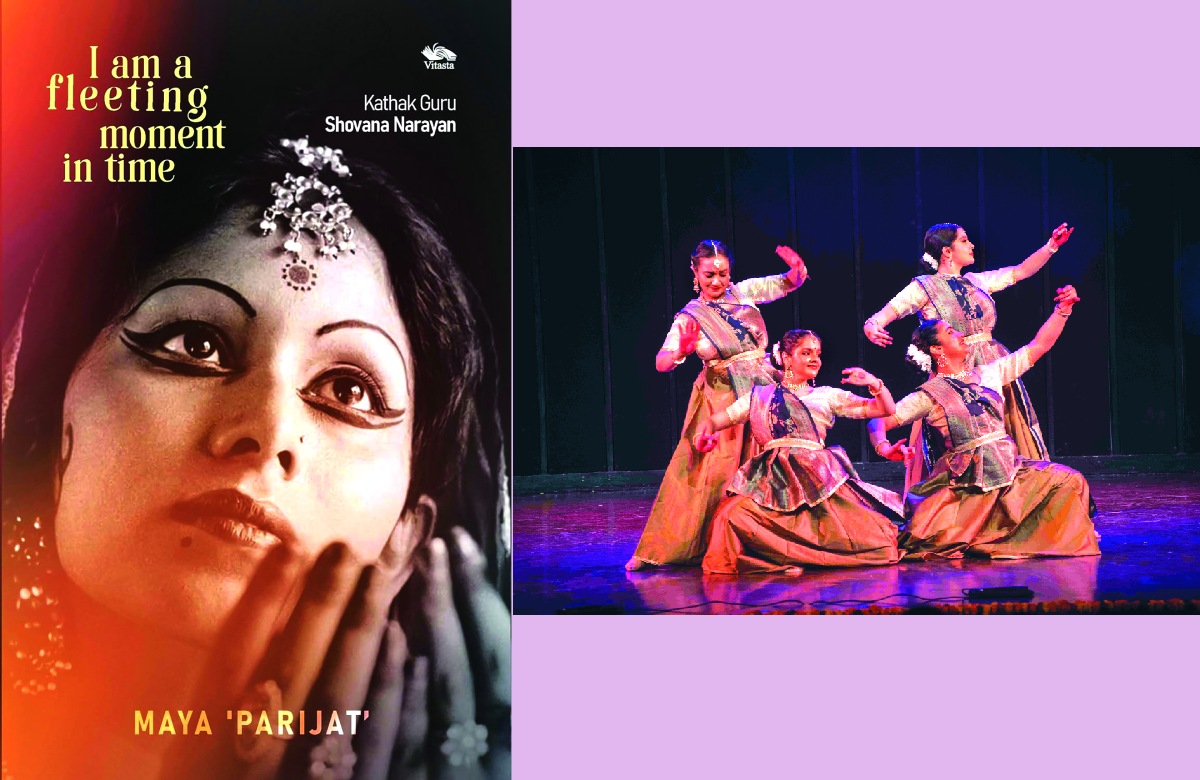
Tradition in Indian classical arts is sustained through rigorous transmission, ethical continuity, and a conscious engagement with inherited knowledge. This premise shaped ASAVARI’s Continuing Tradition 2025, where the release of a biography functioned as an extension of artistic thought, placing lived experience in direct dialogue with performance, pedagogy, and memory.
I Am a Fleeting Moment in Time by Maya Parijat examines the life and work of Padmashri Guru Shovana Narayan through the lens of practice rather than praise. The biography traces how Kathak entered her life at an early age and remained central through decades shaped by training, responsibility, and personal resolve. Early instruction under Sadhana Bose is described as exacting and formative, establishing a foundation where repetition, correction, and self-control shaped artistic maturity. Dance appears as an acquired discipline, built through persistence and method.
A significant strand of the book examines Shovana Narayan’s parallel life as a senior bureaucrat. The narrative captures the scepticism she encountered with understated humour. Questions such as “Files and footwork?” or “Meetings in a lehenga?” reflected a society uneasy with complexity. Her response lay in rigorous time management and strict separation of roles. The biography frames this dual career as a deliberate redefinition of possibility, supported by her engagement with physics and mathematics, disciplines that sharpened her sense of structure.
Personal decisions receive careful attention. Her marriage to Austrian ambassador Dr Herbert Traxl is portrayed as a partnership built on autonomy and respect, negotiating cultural distance and professional demands without compromise. The account of her performing mukhagni for her father in the 1970s is rendered with restraint, locating the act within ethical conviction rather than defiance. Such moments reinforce the book’s emphasis on values guiding artistic life.
Kathak remains the biography’s axis. Mentorships with Kundan Lal Gangani and Birju Maharaj are examined through technique, rhythmic articulation, and interpretive discipline. Choreographic works inspired by Buddhist philosophy, Sufi poetry, and classical literature are discussed through structure, musical alignment, and spatial logic. Innovation is presented as a result of sustained engagement with tradition, grounded in proportion and responsibility.
The book’s release at the event was followed by a panel discussion moderated by Vinita Dawra Nangia, which expanded upon the themes of authorship, pedagogy, and continuity. The conversation complemented the biography’s reflective approach, emphasising the ethical demands of classical practice.
The second half of the evening featured senior disciples presenting compositions by Pandit Jwala Prasad and Pandit Madho Prasad. Their performances were marked by restraint, rhythmic precision, and deep internalisation, demonstrating a pedagogy rooted in patience and transmission.
As a biography, I Am a Fleeting Moment in Time resists narrow definitions of artistic life. It presents discipline as a source of expansion, commitment as a means of intellectual and creative breadth, and art as a sustained way of engaging with the world. The book leaves the reader with a quiet but persistent understanding: when practice is pursued with seriousness, it shapes perception, judgement, and the manner in which a life is lived.