An epic story that reimagines history through deeply human lives
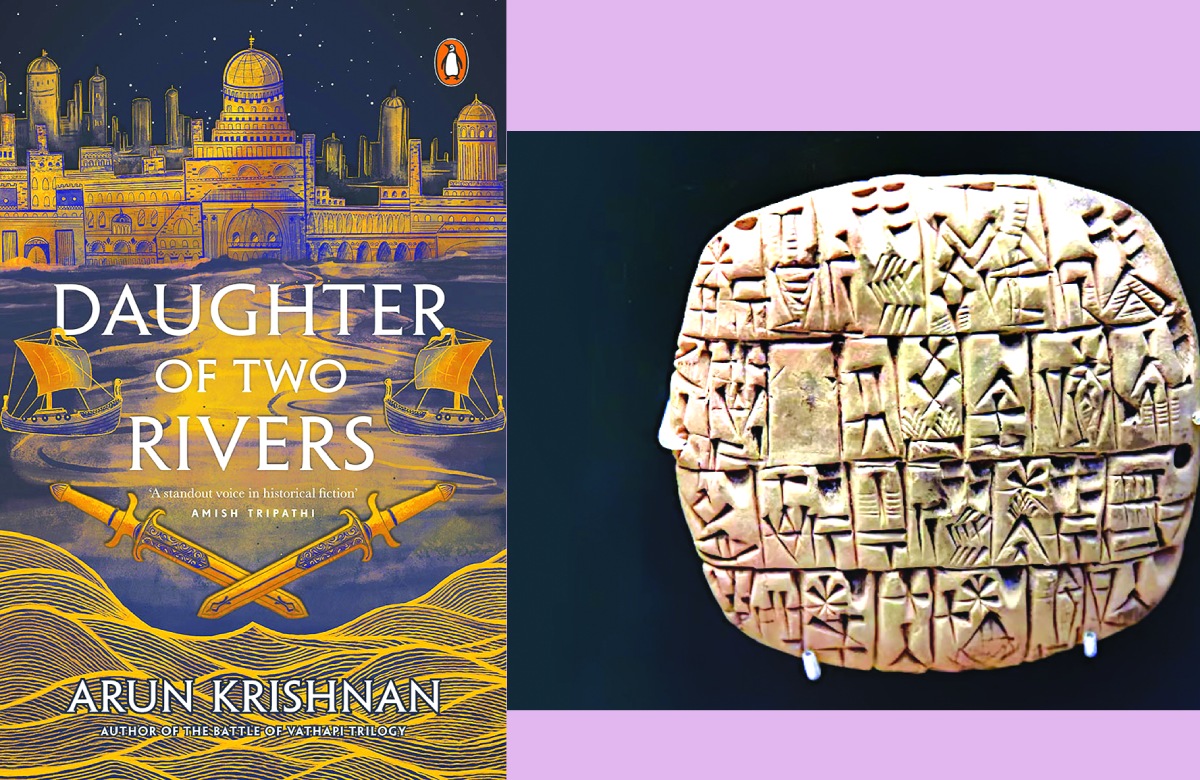
Some books entertain you for a few days. Some impress you for a few weeks. And then there are the rare ones that quietly enter your inner world and stay there, reshaping how you think, how you feel, and sometimes even how you remember history. Daughter of Two Rivers has done exactly that to me.
From the very first page, the book does not warm you up gently. It moves with purpose. There is momentum in the storytelling that immediately tells you that this is confident, fast, and emotionally alert. What I have always admired about Arun Krishnan’s writing, and what shines so clearly once again in this book, is his deep characterisation. His characters are not surface sketches. They arrive with weight. With inner conflict. With emotional lives that unfold slowly and honestly. You do not just read about what they do. You understand why they do it. And once that happens, they begin to live in your head. Even long after the book ends, they remain with you. Their emotions linger, echo, and their silences stay loud.
One of the things I value most in his storytelling is how human everyone is, even those who oppose the protagonist. The antagonist is never reduced to evil for convenience. There is always a human past, a vulnerability, a fracture that explains how they became what they are. That kind of writing takes courage, because it resists easy judgement. It asks the reader to pause, to understand, and sometimes to feel uncomfortable. And that is exactly what makes it powerful.
The historical canvas of Daughter of Two Rivers is rich, layered, and beautifully alive. The coming together of ancient India and Mesopotamia does not feel like two distant civilisations stitched together artificially. It feels organic. As a reader, you feel the movement between lands, the exchange of culture, trade, belief, power, and fear. You are not a reader of history here. You are inside it. What moved me deeply was how the book quietly makes you realise that civilisations separated by geography and language were still driven by the same human impulses. Survival. Pride. Love. Curiosity. Control. Faith. Fear. You begin to see that while timelines change, the human core remains constant. That realisation stays with you long after the story ends.
The war strategies deserve special appreciation. So often, military writing becomes heavy, technical, and distant. Here, it is the opposite. The strategies are explained with such clarity and simplicity that even a young reader could follow them without feeling burdened. There is intelligence and precision without intimidation or confusion, and that allows the reader to stay emotionally invested even during moments of conflict. We have all come across that haunting archaeological discovery of two intertwined skeletons. It appears in articles and on social media as a strange, touching fact from the past. For most of us, it remains exactly that. A fact. A headline. Something distant. But after this book, that discovery has changed permanently for me.
Now, when I think of those intertwined skeletons, I no longer see just remains. I see a possibility, a memory. I see history softened by love. I see the idea that two lives once walked together across danger, distance, time, and fate itself. This book did that. It gave emotional meaning to something that once felt purely factual. And that is one of the most beautiful powers a story can have.
The women in this book deserve their own quiet standing ovation. They are not decorative, nor reduced to symbols. They are layered, complex, intelligent, vulnerable, strong in different ways, and deeply human. At different moments in the story, I found myself wanting to be each of them. To carry their courage, doubt, and resilience. And when that happens, you know the writing has touched something true.
What I also appreciated deeply is the emotional intelligence of the book. Nothing is rushed. No relationship is forced. Trust builds slowly. Fear unfolds naturally. Connection grows in silence as much as in dialogue. This restraint gives the emotions authenticity. You are not pushed into feeling something. You arrive there on your own.
There is also a beautiful balance between the grandeur of civilisation and the intimacy of individual lives. The political complexity, trade, power, conflict, and large historical shifts form the backdrop. But at the heart of it all are people. Their inner lives. Their losses. Their longings. Their choices. And it is that balance that makes the book feel both epic and personal at the same time.
Another quiet gift this book gave me was curiosity. After I finished reading, I found myself going back to read more about Mesopotamia, the Sindhu-Sarasvati civilisation, ancient trade routes, and early cultural exchanges. That urge to learn more did not come from obligation. It came from an emotional connection. That, to me, is the mark of truly meaningful historical fiction. More than anything else, Daughter of Two Rivers left me with a feeling that is difficult to describe but impossible to forget. A reminder that stories do not die with centuries. They wait. And sometimes they find their way back to us through books like this. This book is not loud. It does not compete for attention. It simply stays in the quiet spaces, in emotional memory, and in the way you see history differently after reading it. This book will stay with me for a long time.
(The writer is a founder and creative thinker who believes stories shape not just imagination, but also the way we remember history); views are personal