Elite Police Forces of India
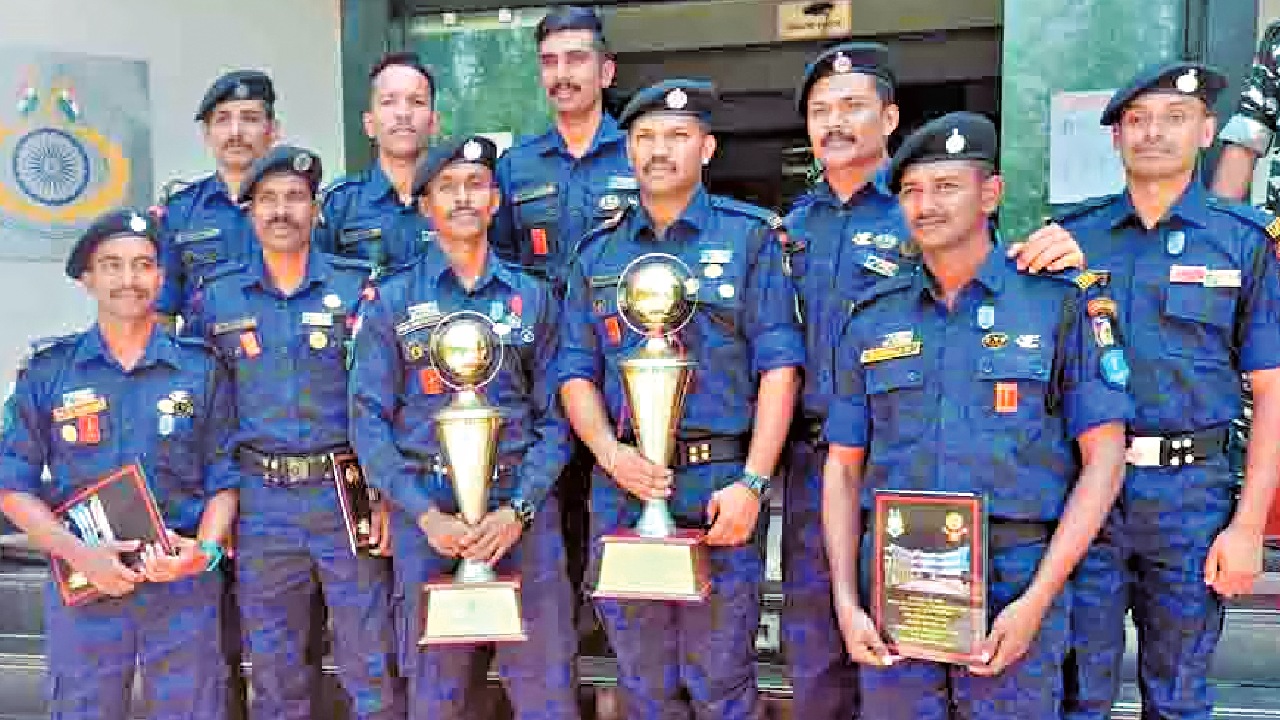
With the Maoist movement almost crushed and the country heaving a sigh of relief, the nation needs to know about the police forces, including the elite ones, that have strived hard and even sacrificed their lives to restore law and order in the Left Wing Extremist (LWE)-affected states. Over a thousand police and Central Armed Police Forces (CAPF) personnel sacrificed their lives in combating Maoists in 126 districts along the Red Corridor extending from West Bengal to Kerala, passing through Odisha, Andhra Pradesh, Telangana, Maharashtra, Madhya Pradesh and Karnataka, and bringing down the “most affected” districts to just three.
Not much is known about the elite police forces of the country which have played, and continue to play, a stellar role in battling LWE, insurgency, terrorism and other anti-national elements in order to provide security to the general population. At grave risk to their lives, personnel of these elite forces strive hard to maintain the unity and integrity of the nation. These commandos undergo arduous, energy-sapping and rigorous training at various training institutions before being inducted into the special forces. Their role as commandos turns more rigorous once they walk out of the training institutions. Their patriotic fervour, coupled with a fascination for adventure, drives these men to expose themselves to dangerously high-risk operations in hot pursuit of terrorists, to apprehend them or kill them in encounters. In the bargain, many of them have lost their lives at the altar of service to the nation.
Apart from these elite police forces, the other state police forces affected by the Maoist menace and the CAPF, comprising the Central Reserve Police Force, the Border Security Force, the Indo-Tibetan Border Police, the Sashastra Seema Bal and the Bastariya Battalions, have in no small measure contributed their mite in restoring near-normalcy in these states.
Cobra (CRPF)
Raised in 2008 as the Commando Battalion for Resolute Action, hence the acronym COBRA, primarily to combat Left Wing Extremism, it spread its tentacles to other states such as Assam and was deployed in the Union Territory of Jammu and Kashmir during the Amarnath Yatra 2023. Raised under the leadership of the then Inspector General K. Durga Prasad, the COBRA sector, with ten battalions, is much relied upon by the Government for carrying out special operations.
Personnel for this elite commando force are selected from Central Reserve Police
Force battalions and put through rigorous 12-week intensive pre-induction commando training at the COBRA School of Jungle Warfare and Tactics at Belagavi. While those who qualify for induction are retained for three years, the rest are sent back.
The 207th Battalion of COBRA carried out an operation in the jungles near Burisole village of Jhargram district of West Bengal and killed the much-wanted Maoist Kishenji, carrying a reward of `20 lakh on his head, after a fierce encounter on 24 November 2011. Two officers, Nagendra Singh and Vinoj P Joseph, were awarded the Shaurya Chakra for their gallantry in the operation. Earlier, on July 26, 2010, six Maoists were killed in an operation launched by the 202 COBRA unit in Medinipur district of West Bengal. Constable Ashish Kumar was awarded the Shaurya Chakra for his bravery in the operation. From its inception, COBRA battalions have carried out over 32,500 operations, in which nearly 400 Maoists were killed and 3,024 apprehended, and were instrumental in the surrender of 962 militants. Among the recoveries made in these operations were an assortment of 1,480 weapons, 54,871 rounds of assorted ammunition, 7,760 IEDs and grenades, and nearly 66,400 detonators. For the derring-do displayed by these brave commandos in various operations, they have been awarded five Kirti Chakras, 17 Shaurya Chakras, four President’s Police Medals for Gallantry, 340 Police Medals for Gallantry, 2,423 Parakram Padaks, six Jeevan Raksha Padaks and 4,052 Director General’s Commendations. As many as 71 personnel sacrificed their lives in these operations.
Jharkhand Jaguars (Jharkhand Police)
Raised initially as a Special Task Force in February 2008 with 20 assault groups, it was subsequently renamed the Jharkhand Jaguars (JJ). Personnel for this elite force are drawn from the India Reserve Battalion, Jharkhand Armed Police and the Jharkhand Police. With a sanctioned strength of 4,022 personnel in 40 assault groups, the Jharkhand Jaguars have played a vital role in containing the Maoist menace in the state. For some years after its raising, it was accompanied by COBRA battalions in almost all operations. With years of experience and a tough training schedule, they are on their own now and carry out operations independently too.
Armed with such sophisticated weapons as SG553 assault rifles, mortars, LMGs, under-barrel grenade launchers and rocket launchers, personnel are put through rigorous selection trials before being inducted into JJ. Led by an officer of the rank of Deputy Superintendent of Police, each assault group has well-trained canines that accompany the group on operations.
In its war against Maoists, JJ has lost 21 of its gallant commandos in operations during the last 14 years, the latest martyrs being Sub-Inspector Amit Tiwari and Constable Gautam Kumar, who lost their lives in an ambush on August 14, this year while returning after conducting operations in the forests between Tumbahaka and Sarjombru in West Singhbhum district. Several of them have been awarded police gallantry medals for their conspicuous brave actions against the Maoists.
Greyhounds (AP & Telengana)
Having gained an enviable reputation as the best elite police force in the country, the Greyhounds are credited with almost completely crushing the Maoists in both Andhra Pradesh and Telangana. Raised in 1989 by IPS officer K. S. Vyas, this force is known to move in small groups through jungles and harbour there for a few days in pursuit of Maoists. With effective intelligence back-up, the Greyhounds give a hot chase to the Maoists until contact is established and the Maoists are eliminated. Small wonder that the Maoists dread the Greyhounds and avoid any encounter until they are directly confronted. That the Greyhounds have been successful in crushing the backbone of the Maoists is largely due to the arduous and energy-sapping training they undergo, which was designed by former Deputy Inspector General Narayan Singh Bhati of the erstwhile Special Security Bureau, now known as the Sashastra Seema Bal. A native of Rajasthan, his expertise in jungle warfare was fully utilised to the hilt by the then united Andhra Pradesh Police, which paid rich dividends. He was engaged as a consultant by the Andhra Pradesh Police for over three decades after his retirement from the SSB, until about a year
ago, when he resigned due to health reasons. He passed away in Hyderabad on 12 June 2023 at the age of 92. Between 1995 and 2016, the Andhra Pradesh Police killed 1,780 Maoists and lost 163 of its personnel. While 80 per cent of the Maoists killed were by the Greyhound commandos, among its losses was 20 per cent of the total number of martyrs. Prominent among the martyrs is Assault Commander Karnam Leela Venkat Srihari Naga Varaprasad Babu, who, in a rare act of derring-do, sacrificed his life while attempting to save the lives of four of his comrades when they were attacked by Maoists on the Chhattisgarh-Andhra Pradesh border on 16 April 2013. For his exceptional act of bravery of the highest order, he was awarded the highest peacetime gallantry award, the Ashok Chakra. Several others have been awarded police medals for gallantry.
In one of the worst attacks by the Maoists, the Greyhounds lost 32 of their personnel while returning in a motorboat on the Sileru river after conducting an operation in Janbai (Odisha) on June 29, 2008. They were attacked by the Maoists from the surrounding hills. Grenades that exploded in the boat capsized it, and many of them drowned.
Thunderbolts (Kerala)
Raised on August 24, 2014 for anti-Maoist operations, the Thunderbolts commandos of the Kerala Police are dreaded by the Maoists, who have been attempting to set up their bases in parts of Kerala. Selected youngsters have to undergo two years of strenuous and rigorous training in all specialised institutions of the defence services, including the Army’s Jungle Warfare and Counter-Insurgency School. Though initially tasked with combating Maoists, Thunderbolts commandos have branched off into providing security to the Chief Minister and are in readiness to tackle terrorist-related situations in Kochi, Kozhikode and Thiruvananthapuram, where they are known as Avengers - the Urban Commandos. In a major operation in the Nilambur forests in Malappuram, the Thunderbolts commandos killed Kuppu Devraj, a Central Committee member of the Maoist outfit, after a prolonged encounter on November 24, 2016. He carried a bounty of `10 lakh on his head and was killed along with an associate, Ajitha alias Kaveri. Incessant combing operations in the forests in and around Wayanad have kept the Maoists at bay, thereby preventing them from creating any major incident in the state.
C-60 (Maharashtra)
A brainchild of a former IPS officer, KP Raghuvanshi, C-60 was raised in December 1990 to deal with the Maoist menace in Gadchiroli district of Maharashtra. Sixty commandos comprised this elite police force initially, as the very name suggests, with a reserve of forty personnel for administrative duties and to make up the strength of personnel on leave. It has since increased to 600 due to dire requirements. Trained by the Greyhounds and a few other prominent specialised training institutions, these commandos are well versed in the terrain and also the language of the locals in Gadchiroli, which makes it easier for them to mingle with the locals and gather intelligence. These commandos have been successful in persuading many Maoists, through their families, to surrender, which has considerably depleted Maoist strength in the area. Over 650 Maoists surrendered between 2005 and 2021.
Though the commandos have suffered setbacks, they have hit back with a vengeance. In November 2021, the C-60 commandos killed as many as 26 Maoists in an encounter that went on for over ten hours in the forests of Gadchiroli. Among those killed was Milind Teltumbde, a top Maoist leader who carried a reward of ?50 lakh on his head. His wife was among the six slain women Maoists. Many others who carried bounties ranging from ?2 lakh to ?16 lakh were also killed in the encounter, thereby breaking the backbone of the Maoists in Maharashtra.
For their bravery, C-60 commandos have been awarded police gallantry medals from time to time. In January this year, 29 of them were awarded police medals for gallantry.
SOG ( Jammu and Kashmir Police)
The Special Operations Group of the Jammu and Kashmir Police has been fighting a continuous battle against terrorists since its raising in 1994. When terrorism gripped the Valley in 1989, the state police were not trained or well equipped with weapons to handle the situation. The morale of the police went downhill. That was when the CRPF and BSF were inducted in strength and some semblance of order was restored. It was well realised by the top echelons of the state that locals needed to be trained and equipped to take on the terrorists.
Under the leadership of the then Superintendent of Police, Farooq Khan, the Special Task Force was raised in 1994 with the “idea of involving the passive Jammu and Kashmir Police in anti-terrorist activities and giving a local face to the operations”. Subsequently renamed the Special Operations Group (SOG), a team of the SOG is placed in every district to combat militancy. Out-of-turn promotions, handsome rewards for the arrest or killing of terrorists in encounters, and bonuses, apart from gallantry medals, have attracted local youngsters to join the police. Thousands of policemen have been awarded the President’s Police Medal for Gallantry and the Police Medal for Gallantry, apart from the Chakra series of medals, for bravely taking on militants in urban areas and even in forests.
The manner in which the SOG coordinates operations with the Army and the CAPFs is not just praiseworthy but commendable, as such coordinated efforts have led to militancy levels being brought down. The over 2,300-strong SOG has carved a niche for itself as one of the best counter-insurgency forces in the country.
Kalinga Tuskers (SOG) Odisha Police
The Maoist menace in certain districts of Odisha led to the raising of the Special Operations Group (SOG) by the Odisha Police in 2004. Modelled on the lines of the Greyhounds of the erstwhile Andhra Pradesh, the personnel of this elite state force are drawn from the Orissa State Armed Police, civil police and the India Reserve Battalions of Odisha. With its motto of Unity, Teamwork and Resilience, the 1,800-strong SOG, though not much known as the Kalinga Tuskers, went on a hot chase of Maoists operating in the state and succeeded in killing or arresting a large number of Maoists. Incessant operations launched against them led to the surrender of hundreds of Maoists, thereby almost putting an end to the Maoist menace in the state.
The success in combating the Maoists has not been without sacrifices. Including personnel of the SOG, the Odisha Police lost 93 of its men between 2001 and 2023. For his outstanding bravery, Assistant Commandant Pramod Kumar Satpathy of the SOG was awarded the Ashok Chakra posthumously on Republic Day 2009. When over 200 Maoists attacked the district police armoury in Nayagarh district on 15 February 2008, the officer went in hot pursuit with 20 commandos in the Ghosma forests. In the ensuing encounter that lasted for over two hours, Assistant Commandant Satpathy was fatally shot.
While two other commandos - Sudhir Kumar Tudu and Debashish Sethy - were awarded the Shaurya Chakra posthumously for their derring-do in an encounter with Maoists in the forests near Sikri village in Kalahandi district on 9 September 2020, several others have been awarded Police Medals for Gallantry. Though these brave commandos in the specialised elite police forces of the country perform very hard and arduous duties in extremely hostile conditions at grave risk to their lives to maintain the integrity of the country, other police personnel, in no small measure, play a pivotal role in aiding these commandos in maintaining law and order in the country.