Winter Session of Assembly to commence on January 5
A four-day Winter Session of the Delhi Assembly will be held from January 5 to 8, which is likely to be a stormy affair with the Government planning to table Comptroller and Auditor General of India (CAG) reports on several matters, including the luxuriously renovated bungalow of Arvind Kejriwal when he was the chief minister.
Sources said that besides the report on the renovation of the bungalow, which the BJP had termed “Seesh Mahal” during the Assembly poll hustings, CAG reports on Mohalla Clinics, the Women and Child Development Department’s Laadli Scheme and Advertising policy, are also likely to be tabled in the Assembly.
In the earlier sessions, CAG reports on transport, and the now-scrapped excise policy were tabled, which caused heated exchanges between the opposition AAP and the ruling BJP.
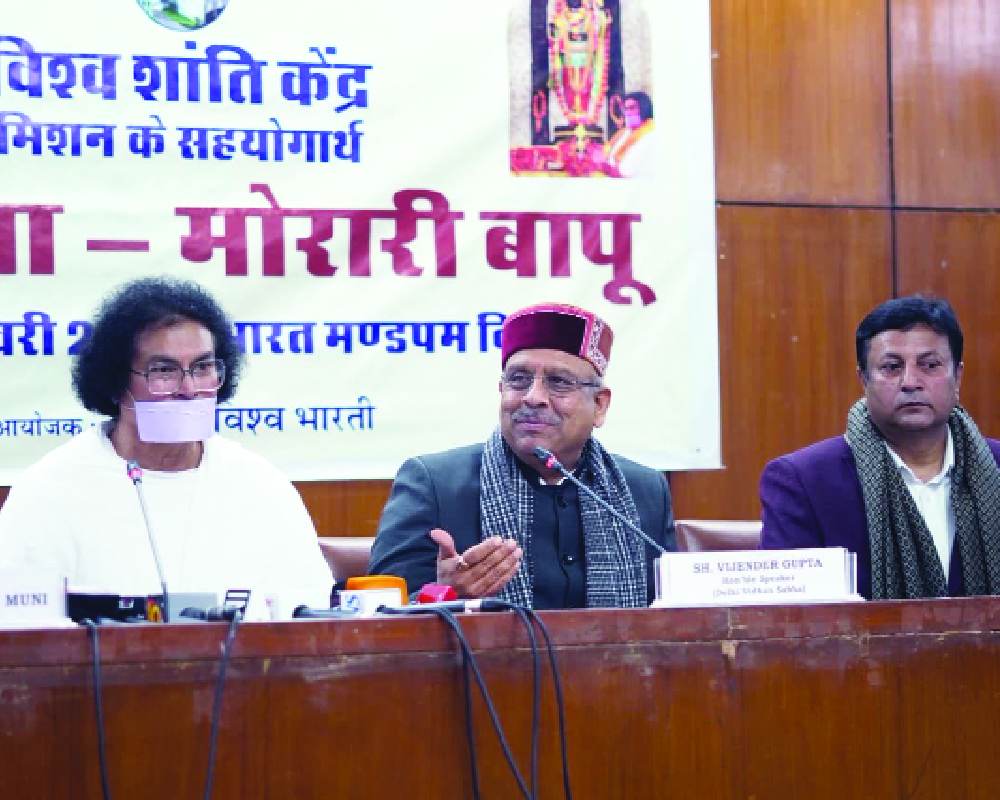
Addressing a press conference, Delhi Assembly Speaker Vijender Gupta announced that the winter session will commence on January 5. “The first day will begin with the address of the Lieutenant Governor, and the session will conclude on January 8,” he said.
The winter session will begin with an address by Lieutenant Governor Vinai Kumar Saxena.
Sources in the government said that apart from discussions on Action Taken Reports related to the Comptroller and Auditor General (CAG) reports, the session may also witness deliberations on the Government’s initiatives to combat pollution.
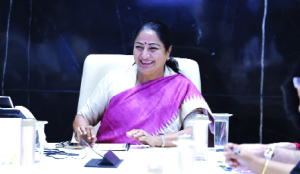
The modalities of the Electric Vehicle (EV) Policy may also come up for discussion, apart from Chief Minister Rekha Gupta presenting updates on Ayushman Arogya Mandirs, Atal Canteens and Pink Mobility cards for women commuters travelling free on Delhi Transport Corporation (DTC) buses. Earlier, as part of preparations for the session, Gupta reviewed the status of action taken on reports of the Comptroller and Auditor General of India.
Gupta stated that all administrative and procedural arrangements are being finalised in advance, including coordination across Secretariat branches, and logistical support to facilitate the uninterrupted conduct of business.
He added that the Secretariat is ensuring that the four-day session proceeds in a disciplined and well-organised manner, enabling the House to transact its legislative and procedural agenda efficiently.
He also noted that several important papers are proposed to be laid before the House during this session, and necessary arrangements have been made accordingly.
During the press briefing, Speaker Gupta, along with Acharya Lokesh Ji, shared details of a major cultural and spiritual programme scheduled for January 2026. Acharya Lokesh Ji, an eminent Jain saint and founder of Ahimsa Vishwa Bharati, stated that from 17 January to 25 January, a nine-day Ram Katha will be organised at Multipurpose Hall, Bharat Mandapam. He further shared that devotees from across India, as well as from countries such as the United States, the United Kingdom, Canada, Australia, Singapore and the United Arab Emirates, are expected to participate in large numbers. Gupta appreciated the initiative and said Ram Katha reflects India’s tradition of interfaith harmony and shared civilisational values. The teachings remain relevant for public life and the younger generation, he added.
Soon after the government formation in February, the Delhi government announced that 14 CAG reports would be tabled, exposing the reality of Kejriwal and his party during their time in power.
During the budget session, two CAG reports were presented in the Delhi assembly—one on health and another on excise. Later, in March, another report was issued.