Why Valentine’s Day in India causes strife and disputes about Indian culture and Western influence
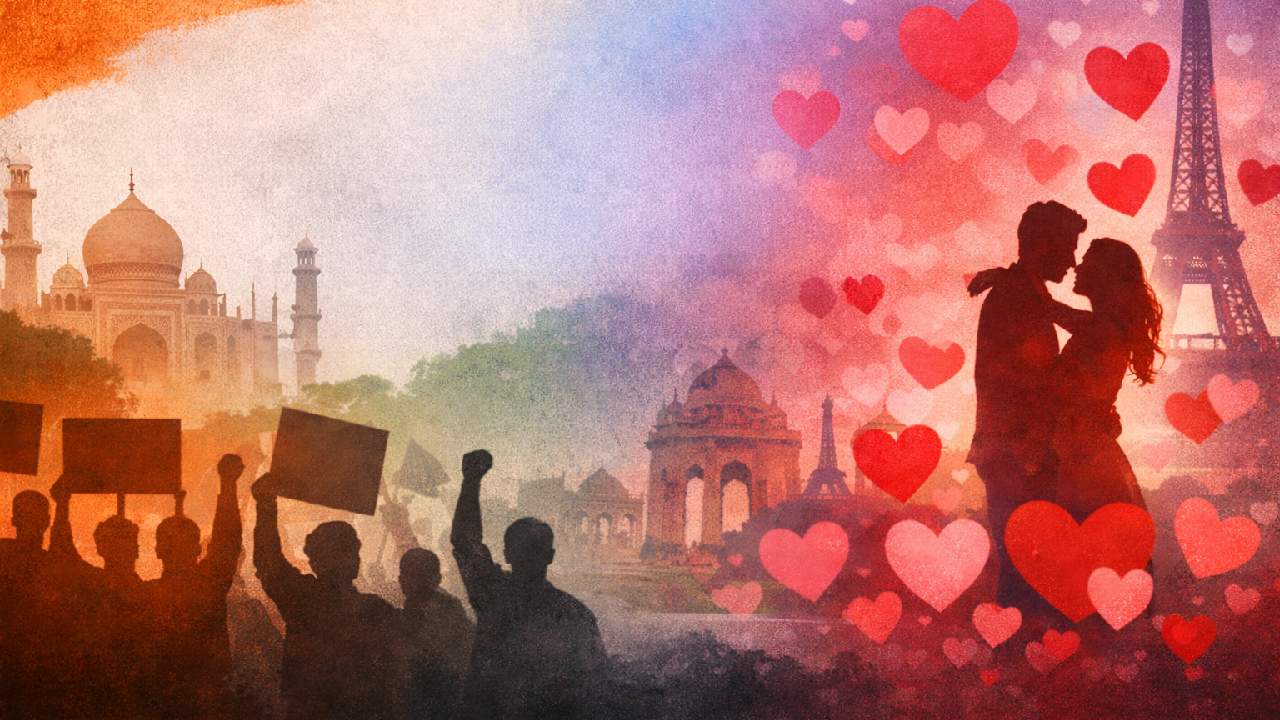
On February 14, Valentine’s Day in India arrives like a pop-up festival, bright and impossible to ignore, yet still not “official” in any civic sense. It isn’t a public holiday. Schools run, offices stay open, Government counters work their usual hours, and traffic looks the same by noon. And still, the day matters, especially in big cities. For many young Indians, it has become a yearly ritual that fits neatly around lectures, shifts, and metro rides. That’s also why it sparks mixed reactions: excitement, eye-rolls, and, in some places, backlash.
The argument around the day often says more about modern India than the day itself. The transformation of a typical workday into a modern ritual for urban youth is noteworthy. Valentine’s Day in India doesn’t pause the calendar; it squeezes into it. The celebration is often less about grand gestures and more about timing. The celebration often involves a quick meet before class, a small surprise at lunch, a lengthy call in between meetings, and a plan that begins after dark.
Urban life makes that pattern feel normal. College schedules and entry-level office routines can be strict, so couples treat February 14 like a weekday birthday. There’s a sense of “don’t miss it,” but also “don’t get late to work.” The result is a celebration that looks casual on the surface yet is carefully planned underneath.Public spaces also shape the day. Malls, cafés, parks, bookstores, and metro stations become the backdrop, not because people want attention, but because cities offer neutral places to meet. Many young adults also prefer settings that feel safe and ordinary, where they can blend in.
At the same time, the day doesn’t land the same way everywhere. In some neighbourhoods, it’s just another Tuesday. In others, it’s visible from morning, with roses outside stations and “special menus” chalked on café boards. What february 14 looks like when offices and colleges stay open the day often begins small. A chocolate bar slipped into a backpack, a note folded into a diary, a single rose handed over near the college gate.
Some couples meet for a short coffee between classes, then return to campus like nothing happened. The main focus is on the evenings. After work, restaurant tables fill fast, cafés get louder, and flower stalls do steady business. In many cities, the celebration spills into the nearest weekend, because february 14 might fall mid week. That’s when movie plans, day trips, or longer dates happen with less pressure.
Social media plays its part, but not always in the loud way people assume. Some post photos, some post jokes, and some post nothing. Many couples keep it private on purpose. Privacy isn’t only about family expectations; it can also be about comfort and safety. Choosing quieter venues, meeting in groups, or avoiding crowded public parks can be a practical decision, not a sign of shame. The significance of the day resonates most strongly with young, urban Indians.
City life gives young people more chances to meet and date. That doesn’t mean everyone has full freedom, but it does mean there are more social circles, more mixed-gender spaces, and more room for personal choice. A set date like february 14 becomes a simple prompt to say what might otherwise stay unsaid.
Media exposure matters too. Films, TV, music, and the internet have carried the idea of Valentine’s Day for decades, making it familiar even to those who don’t celebrate. In colleges, peer culture adds fuel. When friends plan dinners and exchange gifts, opting out can feel like missing a shared moment, even for people who don’t care much about the holiday.
Across regions and smaller towns, the picture varies. Some places celebrate quietly, some ignore it, and some face more social pushback. Still, the urban pattern is clear: for many young adults, Valentine’s Day has become a modern marker on the calendar, like a yearly reminder to speak up.
The 1990s shift that made romance a product, and why it worked. The growth of Valentine’s Day in India was not accidental. Economic liberalisation in the early 1990s changed what was available in markets and how brands spoke to consumers. As shopping culture expanded, special days became easier to sell. Valentine’s Day fits that need because it’s simple: one date, one theme, one emotion.
Businesses didn’t invent love, but they packaged it into straightforward choices. A person doesn’t have to write a long letter when a greeting card says it in five lines. A busy couple doesn’t need a full plan when a restaurant offers a set menu and a “couple table” option. Convenience sells, especially in cities where time is tight.
This commercial layer also helped standardize the celebration. It turned a once-niche idea into a predictable season, with the same colours, the same offers, and the same gift cues returning each february. Businesses built the season through various means, from greeting cards to big discounts. In many Indian cities, the market signals start early. Roses appear at traffic signals, heart-shaped boxes show up in shop windows, and bakeries advertise themed cakes. Gift options span both the familiar and the new: chocolates, greeting cards, jewellery, watches, perfume, beauty services, and curated hampers.
Restaurants and cafés often run february 14 bookings, special menus, and small add-ons like a free dessert. Malls and local markets create photo corners and bundle offers. Delivery apps and online stores add speed to the tradition, making last-minute gifting easier than ever. Promotions often run for a full week, sometimes longer. Social media influencers and short videos add extra heat, turning gift ideas into trends that travel fast between friend groups.
When love turns into a checklist, it loses its significance.? When romance is sold like a preset kit, it can start to feel like homework. Some people feel pressure to spend, post, and prove. Others feel left out if they’re single, broke, heartbroken, or simply uninterested. The loudest version of the day can shrink the space for quieter relationships. Still, the commercial side isn’t all negative. Small businesses earn well in february, from florists to home bakers. Many couples genuinely enjoy having an excuse to plan something sweet in the middle of a busy year.
The backlash is part of the story, but it does not prevent the celebration of the day. Valentine’s Day in India also carries a recurring conflict. Every few years, debates flare up about “Indian culture” and “Western influence.” Some conservative and right-wing voices argue that this day promotes behaviour they see as improper, especially in public. The focus often lands on young couples, public displays of affection, and the fear that social norms are loosening too fast.
This tension is not uniform. It can vary by city, neighbourhood, and mood of a given year. In many places, nothing happens beyond online arguments. In some places, couples choose to be more careful, not because they doubt their feelings, but because they don’t want trouble. Some groups resist Valentine’s Day, and the debate surrounding it continues to resurface.
The objections tend to repeat: Valentine’s Day is framed as imported, overly sexual, or against tradition. For critics, it can feel like a symbol of unwanted change, with young people considered copying the West. There’s also a public space issue. In crowded cities, people have different comfort levels around affection.
When norms clash, the debate shifts to determining who sets the rules and whose choices are visible. A practical middle ground: respect in public, choice in private A workable approach is simple: adults can celebrate without trying to shock others, and critics can disagree without policing or harassing people.
Respect in public doesn’t mean hiding; it means behaving with basic sense and consent. India already has many ways to express love, through family bonds, friendships, and partnerships. Valentine’s Day can sit alongside those traditions as one option, not a replacement. The line should be clear: no one owes anyone a performance, and no one deserves intimidation for a personal choice.
The day will keep changing, shaped by city routines, markets, and social attitudes. The simplest takeaway holds steady: freedom matters more than moral panic, and meaning matters more than marketing. What would february 14 look like if more people treated it as a quiet chance to be kind?
Writer is a veteran journalist and freelance writer based in Brampton Canada